











Venezuela at a Crossroads: Interim President Sworn In as Maduro Pleads Not Guilty, Nation Faces Uncertain Exit Paths
Venezuela swears in interim president Delcy Rodríguez after Nicolás Maduro pleads not guilty in a U.S. court. The country now faces multiple exit paths including elections, negotiations, or prolonged instability.

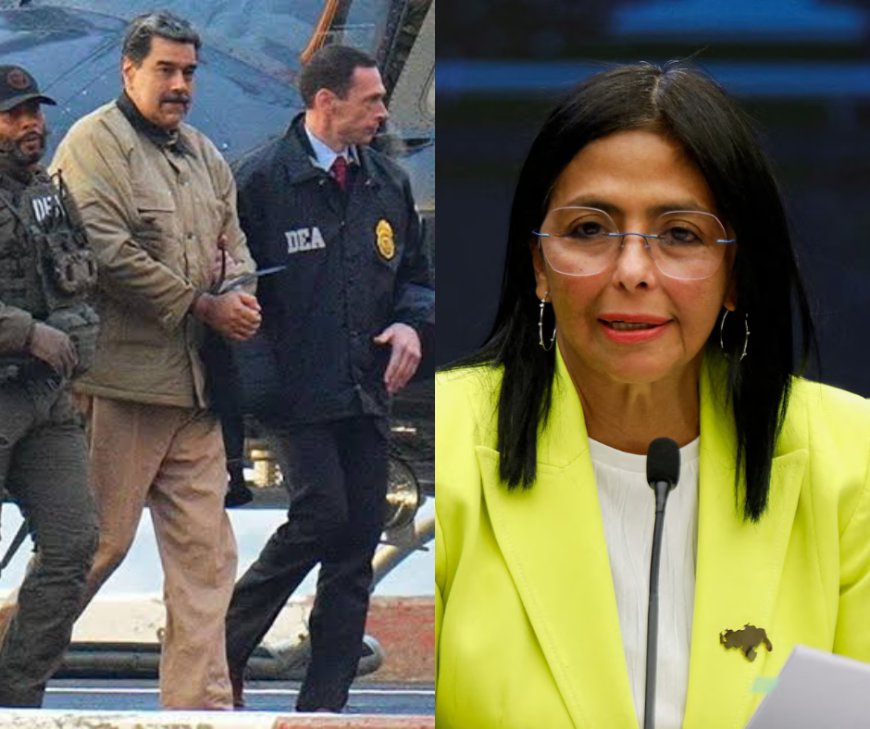
Venezuela has entered a decisive and turbulent chapter after former President Nicolás Maduro pleaded not guilty in a U.S. federal court, even as Delcy Rodríguez was sworn in as the country’s interim president in Caracas. The rapid shift in leadership follows Maduro’s capture in a U.S.-led operation, an event that has shaken Venezuela’s political foundations and triggered global debate over sovereignty, legality, and regional stability.
Rodríguez, previously Venezuela’s vice president and oil minister, assumed office with the backing of the Supreme Court and the National Assembly. In her first address, she called for calm, continuity of governance, and dialogue, while condemning foreign intervention. Her appointment, however, has done little to ease uncertainty on the streets, where Maduro loyalists protest his detention and opposition groups question the legitimacy of the transition.
Meanwhile in New York, Maduro struck a defiant tone during his court appearance, rejecting all charges and insisting he remains Venezuela’s rightful leader. His plea has complicated diplomatic efforts, as several countries continue to recognize Maduro, while others cautiously engage with the interim government.
Possible Ways Out of the Crisis
Venezuela now faces multiple potential exit paths — none without risk:
Negotiated Political Transition
One route involves talks between Rodríguez’s interim administration, opposition leaders, and international mediators. This could lead to a transitional unity government and internationally supervised elections, a scenario favored by several Latin American and European nations.
Early Elections
The interim government may announce snap presidential elections to seek legitimacy. However, questions over voter trust, institutional control, and international recognition remain major hurdles.
Prolonged Power Struggle
If Maduro’s supporters continue to reject the interim leadership and the military fractures, Venezuela could slide into extended political paralysis, marked by protests, sanctions pressure, and economic instability.
Increased Foreign Pressure or Mediation
The United States and its allies may push for sanctions relief in exchange for democratic reforms, while rivals like Russia and China could seek a diplomatic role to prevent further escalation.
Economic-Driven Reset
Facing deep economic distress, the interim government could prioritize oil sector reforms and humanitarian relief, using economic recovery as a bridge toward political stabilization.
For now, Venezuela remains suspended between confrontation and compromise. Delcy Rodríguez’s ability to balance domestic unrest, international pressure, and a fragile economy will determine whether the country moves toward recovery or deeper crisis. With Maduro’s legal battle unfolding abroad and legitimacy contested at home, the coming weeks may prove decisive for Venezuela’s future.
What's Your Reaction?
 Like
0
Like
0
 Dislike
0
Dislike
0
 Love
0
Love
0
 Funny
0
Funny
0
 Angry
0
Angry
0
 Sad
0
Sad
0
 Wow
0
Wow
0