


































Elon Musk Faces Fresh AI Rival as Chinese Smartphone Giant Prepares to Launch Humanoid Robot
A leading Chinese smartphone manufacturer is preparing to enter the rapidly expanding humanoid robotics market, marking a major shift beyond consumer electronics. The company's AI-powered robot initiative is expected to intensify competition with Tesla's Optimus project and other global robotics developers, highlighting China's growing ambitions in artificial intelligence and next-generation automation.

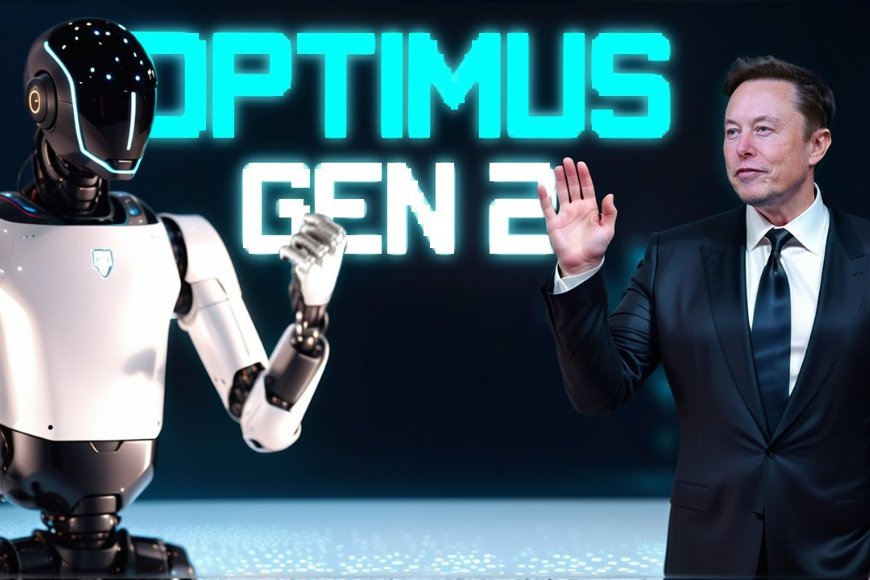
The global race to dominate artificial intelligence is entering an entirely new phase, with a leading Chinese smartphone company preparing to launch its first AI-powered humanoid robot. The move signals a significant expansion beyond smartphones and consumer electronics into advanced robotics, a sector widely regarded as the next frontier of technological innovation. The announcement also places the company in direct competition with Tesla CEO Elon Musk, whose Optimus humanoid robot project has long been viewed as one of the most ambitious robotics initiatives in the world.
Over the past decade, Chinese smartphone manufacturers have transformed from hardware makers into technology ecosystems focused on artificial intelligence, cloud computing, smart homes, wearable devices, and connected vehicles. The latest step into humanoid robotics reflects a broader strategy of integrating AI across multiple product categories. Industry experts believe that the future of consumer technology will not revolve around smartphones alone but around intelligent machines capable of assisting people in both homes and workplaces.
The company's upcoming humanoid robot is expected to combine large language models, computer vision, voice interaction, and autonomous navigation. Unlike conventional industrial robots designed for repetitive factory tasks, AI-powered humanoid robots are intended to interact naturally with humans, understand spoken instructions, recognize objects and environments, and perform a wide variety of everyday activities. Such robots could eventually assist with household chores, customer service, healthcare support, office work, retail operations, and educational tasks.
Although official technical specifications remain limited, analysts expect the robot to benefit from technologies already developed for smartphones, including powerful AI processors, advanced cameras, motion sensors, facial recognition, speech recognition, and cloud connectivity. Smartphone companies possess extensive expertise in hardware design, battery optimization, operating systems, and software integration, giving them a strong foundation for expanding into robotics.
Artificial intelligence has become the central pillar of competition among global technology companies. Until recently, AI innovation focused mainly on chatbots, smartphones, and cloud software. However, companies are now racing to bring AI into the physical world through intelligent robots capable of performing real-world tasks. This shift represents one of the biggest technological transitions since the introduction of smartphones.
China has rapidly emerged as one of the world's largest robotics markets. Supported by strong manufacturing capabilities, extensive supply chains, semiconductor development, and government-backed AI initiatives, Chinese companies are accelerating humanoid robot development at an impressive pace. Several technology firms have already introduced humanoid prototypes, while others continue investing billions of dollars into AI-powered hardware research.
The growing momentum presents increasing competition for Tesla and Elon Musk. Tesla's Optimus robot has been promoted as a future workforce assistant capable of handling repetitive, dangerous, and physically demanding tasks. Musk has repeatedly described humanoid robots as potentially becoming more valuable than Tesla's electric vehicle business in the long term. However, scaling production while maintaining affordability remains a major challenge for every robotics manufacturer.
Industry observers believe smartphone manufacturers enjoy several strategic advantages when entering robotics. They already operate large-scale manufacturing facilities, possess global supply chains, have experience designing compact AI hardware, and maintain millions of existing customers through interconnected digital ecosystems. These strengths could accelerate commercial deployment of consumer robots compared to traditional robotics startups.
The future humanoid robot is also expected to integrate deeply with smart home ecosystems. Users may eventually control household appliances, security systems, lighting, entertainment devices, and personal digital assistants through a single AI-powered robotic companion. As artificial intelligence becomes more personalized, robots could learn user preferences, schedules, and routines, making interactions increasingly natural over time.
Healthcare represents another promising application. AI-powered humanoid robots may assist elderly individuals with medication reminders, emergency monitoring, mobility support, and daily communication. Hospitals could eventually deploy such robots for logistics, patient guidance, and administrative support, helping medical professionals manage growing workloads.
Retail, hospitality, education, manufacturing, and logistics are additional industries expected to benefit from intelligent robots. Businesses are increasingly exploring automation solutions to address labor shortages, improve productivity, and reduce operational costs. AI-powered humanoids capable of interacting naturally with customers could transform how services are delivered across multiple sectors.
Despite rapid technological progress, experts caution that several challenges remain before humanoid robots become mainstream consumer products. Safe human-robot interaction, battery life, reliable mobility, affordability, cybersecurity, privacy protection, and regulatory oversight continue to present significant engineering and policy hurdles. Developers must ensure robots can operate safely alongside humans while protecting sensitive personal information collected through onboard sensors and AI systems.
Ethical considerations are also becoming increasingly important. As robots gain greater autonomy and conversational abilities, governments and technology companies must establish clear rules governing data collection, decision-making, accountability, and responsible AI deployment. Public trust will play a crucial role in determining how quickly humanoid robots are adopted across society.
The competition between American and Chinese technology companies is expected to intensify further as robotics becomes a strategic industry alongside electric vehicles, semiconductors, and artificial intelligence. While Tesla continues advancing the Optimus platform, several Chinese firms are rapidly unveiling their own humanoid robots supported by highly competitive manufacturing ecosystems.
Market analysts believe the coming decade could witness the emergence of a multi-billion-dollar global humanoid robotics industry. Just as smartphones transformed communication and computing, AI-powered robots may redefine daily life by becoming intelligent assistants capable of performing physical tasks, learning continuously, and collaborating with humans across homes, offices, factories, hospitals, and public spaces.
The Chinese smartphone company's entry into humanoid robotics reflects a broader transformation taking place throughout the technology sector. Devices are evolving beyond traditional screens toward AI systems that can perceive, reason, and interact with the physical world. Whether these new robots can successfully challenge Tesla's long-term ambitions remains to be seen, but one thing is increasingly clear: the global AI race is no longer limited to software—it has entered the age of intelligent machines.
What's Your Reaction?
 Like
0
Like
0
 Dislike
0
Dislike
0
 Love
0
Love
0
 Funny
0
Funny
0
 Angry
0
Angry
0
 Sad
0
Sad
0
 Wow
0
Wow
0