

























Iran War LIVE Updates: UAE Condemns ‘Brazen’ Attack on Its Oil Tankers as Middle East Tensions Spiral
The United Arab Emirates has strongly condemned what it described as a "brazen" Iranian attack on two of its oil tankers in the Strait of Hormuz, calling it a serious violation of international law. The incident, which reportedly killed one Indian crew member and injured eight others, comes as the United States continues airstrikes on Iranian military targets, raising fears of a wider conflict across the Middle East.

Iran War LIVE Updates: UAE Condemns ‘Brazen’ Attack on Its Oil Tankers as Middle East Tensions Spiral
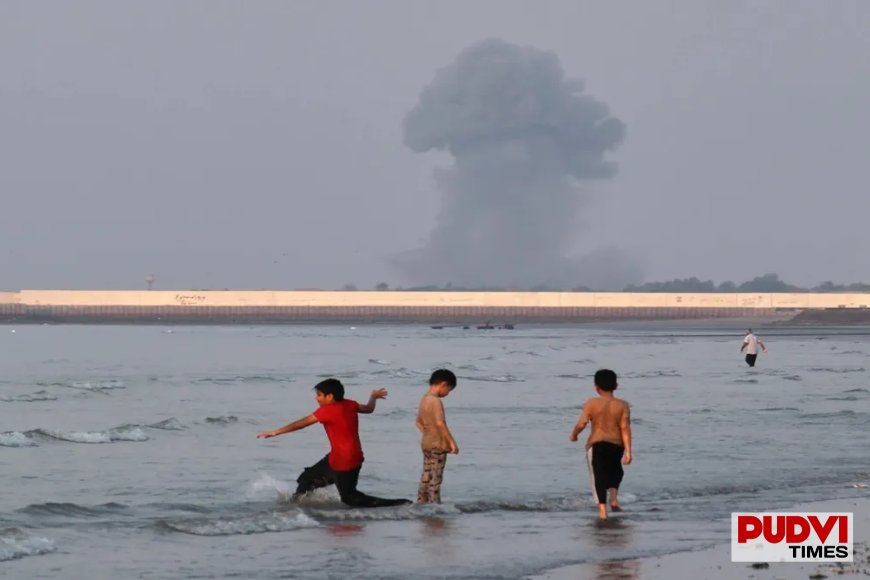
The security situation in the Middle East has deteriorated further after the United Arab Emirates strongly condemned what it called a "brazen" attack on two of its national oil tankers in the Strait of Hormuz. The incident marks another major escalation in the ongoing confrontation involving Iran, the United States, and several Gulf nations, raising fresh concerns about regional stability, global energy security, and international shipping.
According to the UAE Ministry of Defence, the two Emirati oil tankers—Mombasa and Al Bahiyah—were struck by cruise missiles while transiting the southern shipping lane of the Strait of Hormuz in Omani territorial waters. The attack resulted in the death of one Indian crew member and injuries to eight others, including four who were reported to be seriously wounded. Fires broke out on both vessels but were later brought under control by emergency response teams.
Following the attack, the UAE issued one of its strongest statements since the latest wave of hostilities began. The government described the strike as a grave violation of international law and an unacceptable attack on civilian maritime navigation. Officials stressed that targeting commercial shipping threatens global trade, regional security, and the freedom of navigation through one of the world's most strategically important waterways. The UAE also declared that it reserves the right to take all necessary measures to protect its sovereignty and national interests.
The tanker incident came amid an already volatile military confrontation between the United States and Iran. American forces have continued launching airstrikes against Iranian military infrastructure, targeting missile facilities, air defense systems, naval installations, and other strategic assets. Washington says the operations are intended to reduce Iran's capability to threaten commercial shipping and regional allies while ensuring freedom of navigation through the Strait of Hormuz.
Iran has strongly condemned the American military campaign and has accused the United States of violating regional stability. Iranian military officials have defended their actions by claiming they are responding to what they describe as repeated acts of aggression. The Islamic Revolutionary Guard Corps has also claimed responsibility for striking the tankers, alleging that the vessels ignored military warnings while operating in sensitive waters. Those claims remain part of the broader dispute between the two sides.
The Strait of Hormuz remains one of the world's most vital maritime chokepoints. Nearly one-fifth of globally traded crude oil passes through the narrow waterway connecting the Persian Gulf to the Gulf of Oman. Any disruption to shipping in the area immediately affects international energy markets, freight costs, insurance premiums, and global supply chains. The latest attack has therefore intensified concerns among governments, shipping companies, and energy traders worldwide.
Financial markets reacted quickly to the worsening security situation. International oil prices moved higher as investors feared that continued attacks on commercial vessels could disrupt crude oil exports from the Gulf. Analysts warned that prolonged instability around the Strait of Hormuz could increase transportation costs, fuel inflation, and create fresh uncertainty for the global economy. Several shipping operators are also reviewing security procedures before allowing vessels to enter the region.
The attack has drawn widespread international attention. Several countries have urged all parties to avoid further escalation and return to diplomatic dialogue. Maritime organizations have emphasized that commercial shipping must remain protected under international law and warned that continued attacks on civilian vessels could undermine confidence in one of the world's busiest shipping corridors.
The death of an Indian crew member has also added an international humanitarian dimension to the crisis. Authorities are coordinating assistance for the injured crew members, while diplomatic channels are expected to remain active as governments monitor developments closely. The incident highlights the risks faced by civilian seafarers operating in conflict-prone maritime regions.
Security experts believe the latest developments represent one of the most dangerous phases of the current Middle East crisis. With repeated American airstrikes, Iranian retaliation, attacks on commercial shipping, and increasing military deployments across the Gulf, the possibility of a broader regional confrontation cannot be ruled out. Analysts say every new incident raises the risk of miscalculation that could draw additional countries into the conflict.
Diplomatic efforts to reduce tensions now face significant challenges. Previous attempts to establish temporary understandings aimed at protecting maritime trade appear to have broken down amid continuing military exchanges. Governments across Europe, Asia, and the Middle East continue to call for restraint, warning that prolonged conflict would have serious geopolitical and economic consequences far beyond the Gulf region.
As the conflict continues to evolve, the international community remains focused on the Strait of Hormuz, where commercial shipping, energy security, and regional stability are increasingly interconnected. The coming days are expected to be critical in determining whether diplomatic initiatives can prevent further escalation or whether the crisis will deepen into a wider regional conflict with global consequences.
What's Your Reaction?
 Like
0
Like
0
 Dislike
0
Dislike
0
 Love
0
Love
0
 Funny
0
Funny
0
 Angry
0
Angry
0
 Sad
0
Sad
0
 Wow
0
Wow
0