


























'Historic New Frontier': PM Modi Hails Skyroot's Vikram-1 Ahead of Maiden Launch
Prime Minister Narendra Modi has lauded private space startup Skyroot Aerospace ahead of the maiden launch of its Vikram-1 rocket, calling it a "historic new frontier" for India's space ambitions. The launch marks a major milestone for India's private space sector and reflects the country's growing capabilities in commercial space technology.

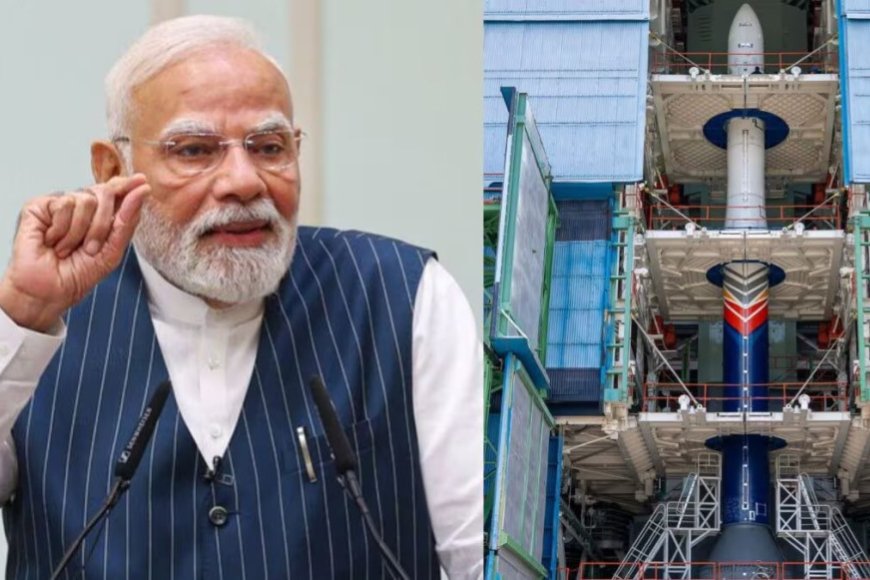
Prime Minister Narendra Modi has congratulated Skyroot Aerospace ahead of the highly anticipated maiden launch of its Vikram-1 rocket, describing the mission as a "historic new frontier" in India's space journey. His message highlights the growing role of private companies in shaping the country's future in space exploration and commercial launch services.
The Vikram-1 mission is expected to become one of the most significant milestones for India's rapidly expanding private space industry. While the Indian Space Research Organisation (ISRO) has long been the driving force behind the nation's space achievements, recent policy reforms have opened the sector to private participation. Skyroot Aerospace is among the first Indian startups to capitalize on these reforms, and the successful launch of Vikram-1 could redefine India's position in the global commercial space market.
In his message, Prime Minister Modi praised the dedication and innovation of the engineers, scientists, and entrepreneurs behind the project. He emphasized that India's space ecosystem is no longer limited to government institutions but now includes dynamic private enterprises capable of competing on the world stage. According to the Prime Minister, the Vikram-1 launch symbolizes the confidence, innovation, and technological excellence of a new generation of Indian entrepreneurs.
Skyroot Aerospace, headquartered in Hyderabad, has emerged as one of India's leading private space startups. Founded by former ISRO scientists, the company aims to provide affordable and reliable satellite launch services for customers worldwide. It gained international attention in 2022 after successfully launching Vikram-S, India's first privately developed rocket. That mission demonstrated the startup's engineering capabilities and laid the foundation for more ambitious projects like Vikram-1.
Unlike the sub-orbital Vikram-S mission, Vikram-1 is an orbital launch vehicle designed to carry satellites into Low Earth Orbit (LEO). The rocket has been developed using advanced technologies, including lightweight composite materials, 3D-printed rocket engine components, and modular architecture. These innovations are expected to reduce launch costs while improving efficiency and reliability.
The Vikram-1 rocket has been named in honor of Dr. Vikram Sarabhai, the father of India's space program. The mission represents not only technological progress but also a tribute to the visionary scientist who laid the foundation of India's space ambitions decades ago.
The launch is expected to carry multiple payloads, including satellites from domestic and international customers. This reflects the increasing global confidence in India's emerging private launch capabilities. If successful, Vikram-1 will strengthen India's reputation as a competitive destination for cost-effective satellite launches and provide a significant boost to the country's growing space economy.
Industry experts believe the mission could transform India's commercial space landscape. The global demand for launching small satellites has increased rapidly due to the expansion of communication networks, Earth observation missions, scientific research, and defense applications. Companies like Skyroot Aerospace are positioning themselves to meet this demand with flexible and affordable launch solutions.
The Indian government's space sector reforms have played a crucial role in enabling such innovations. The establishment of organizations like IN-SPACe and policy measures encouraging private participation have created opportunities for startups to collaborate with ISRO while developing independent launch capabilities. These reforms have attracted significant domestic and international investment into India's space technology ecosystem.
Prime Minister Modi has repeatedly emphasized the importance of innovation-led growth and technological self-reliance under the vision of Atmanirbhar Bharat. The Vikram-1 mission aligns closely with this vision by showcasing India's ability to design, manufacture, and launch advanced space vehicles using indigenous technology.
Beyond commercial opportunities, the success of Vikram-1 could inspire a new generation of scientists, engineers, and entrepreneurs. India's growing startup ecosystem has already witnessed remarkable growth in sectors such as artificial intelligence, biotechnology, and fintech. Space technology is now emerging as another area where Indian startups are demonstrating world-class capabilities.
The international space industry is becoming increasingly competitive, with private companies playing a larger role than ever before. Firms such as SpaceX, Rocket Lab, and several European launch providers have transformed the commercial launch market. Skyroot Aerospace aims to position India among these global players by offering reliable, cost-effective launch services while leveraging India's engineering expertise and manufacturing capabilities.
As the countdown to the maiden launch continues, excitement is building across India's scientific community and startup ecosystem. A successful mission would not only validate years of research and development but also signal India's arrival as a major force in the global private space industry.
With Prime Minister Modi's endorsement and the nation's hopes riding on the mission, the Vikram-1 launch represents far more than the debut of a new rocket. It marks the beginning of a new chapter where Indian private enterprises are expected to play an increasingly important role in shaping the future of global space exploration, satellite deployment, and advanced aerospace technology.
What's Your Reaction?
 Like
0
Like
0
 Dislike
0
Dislike
0
 Love
0
Love
0
 Funny
0
Funny
0
 Angry
0
Angry
0
 Sad
0
Sad
0
 Wow
0
Wow
0