























Russia Missile Strike Kills Four Indians, India Issues Stern Warning: ‘Endangering Indian Lives Is Unacceptable’
Four Indian nationals were killed in a Russian missile strike, prompting India's Ministry of External Affairs (MEA) to issue a strong warning. The government condemned the incident, emphasized the safety of Indian citizens abroad, and called for accountability while monitoring the evolving situation.

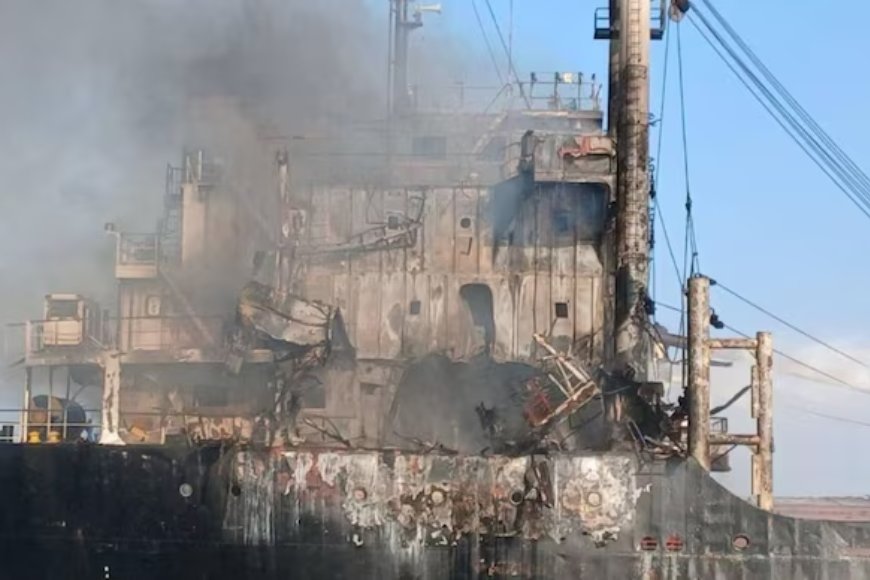
The death of four Indian nationals in a Russian missile strike has triggered a sharp diplomatic response from India, with the Ministry of External Affairs (MEA) issuing one of its strongest statements in recent months. Calling the loss of Indian lives "completely unacceptable," the Indian government stressed that the safety and security of its citizens abroad remains its highest priority and warned that any action endangering Indian nationals would not be tolerated.
The tragic incident occurred amid the ongoing conflict involving Russian military operations, where missile attacks have continued to affect civilian and strategic locations. According to initial reports, four Indian citizens lost their lives after a missile struck the area where they were present. Authorities are still assessing the circumstances surrounding the attack, while investigations continue to determine whether the victims were directly targeted or became unintended casualties of the strike.
The Ministry of External Affairs responded swiftly after confirming the deaths. In an official statement, the MEA expressed deep condolences to the families of the victims and said the government was in constant touch with local authorities and diplomatic missions to gather complete details.
The ministry also made India's position unmistakably clear by stating that putting Indian lives at risk is unacceptable under any circumstances. Officials said India expects all parties involved in the conflict to ensure the safety of foreign nationals and adhere to international humanitarian principles.
The Indian Embassy has launched efforts to assist the families of the deceased and facilitate all necessary documentation, identification procedures, and the repatriation of mortal remains. Embassy officials are also maintaining contact with other Indian citizens living or working in the affected region, urging them to remain vigilant and follow official advisories.
The incident has once again highlighted the growing risks faced by foreign nationals residing in conflict zones. Thousands of Indians live and work across different regions affected by geopolitical tensions, including professionals, students, engineers, healthcare workers, and technical specialists. While many continue their work under difficult conditions, sudden military escalations pose serious threats to civilian populations regardless of nationality.
Government sources indicated that India has sought a detailed explanation through diplomatic channels regarding the circumstances that led to the deaths. Officials emphasized that countries engaged in military operations bear a responsibility to take every possible precaution to avoid civilian casualties, particularly involving foreign nationals.
The MEA also reiterated its long-standing advisory urging Indian citizens to avoid travel to conflict-affected regions unless absolutely necessary. Those already present in such areas have been advised to remain in close contact with Indian diplomatic missions, register their presence where possible, and follow local security instructions without delay.
The tragedy has sparked widespread concern across India, with political leaders and members of the public expressing grief over the deaths. Messages of condolence poured in for the victims' families, while many called for enhanced protection mechanisms for Indian citizens working overseas in regions experiencing armed conflict.
Experts believe the incident could become an important issue in India's diplomatic engagement with Russia. Although India and Russia maintain longstanding strategic and defense ties, New Delhi has consistently maintained that the protection of Indian citizens remains non-negotiable. Analysts note that India's response reflects a careful balance between preserving bilateral relations and firmly asserting its responsibility toward its nationals.
The deaths also underscore the increasingly unpredictable nature of modern warfare. Missile attacks often occur with little warning, making it difficult for civilians to find safety even when they are not directly involved in hostilities. International humanitarian organizations have repeatedly warned that ongoing conflicts continue to expose civilian populations to significant risks.
India has previously carried out large-scale evacuation operations from conflict zones around the world, demonstrating its commitment to protecting its citizens during international crises. Missions such as Operation Ganga in Ukraine, Operation Kaveri in Sudan, and Operation Devi Shakti in Afghanistan highlighted India's ability to coordinate complex rescue efforts under challenging circumstances. While no immediate evacuation has been announced following the latest incident, authorities are closely monitoring the security situation.
Security experts suggest that Indian nationals employed in high-risk regions should remain alert, maintain updated travel documentation, stay connected with embassy advisories, and prepare emergency contingency plans. Companies employing Indian workers in conflict-prone areas are also expected to strengthen safety protocols and ensure timely communication with employees.
The international community continues to call for greater protection of civilians caught in armed conflicts. Under international humanitarian law, parties engaged in warfare are expected to distinguish between military objectives and civilian populations while minimizing collateral damage. Incidents involving foreign nationals often attract heightened diplomatic attention and can influence bilateral relations between governments.
For the families of the four victims, however, the geopolitical implications are secondary to an irreparable personal loss. Their deaths have left behind grieving relatives and communities seeking answers about how such a tragedy occurred and whether it could have been prevented.
As investigations progress, Indian authorities are expected to continue engaging with Russian officials to establish the exact sequence of events. The government has assured the families that every possible diplomatic effort will be made to ensure transparency, accountability, and necessary assistance.
The tragedy serves as another stark reminder of the devastating human cost of armed conflicts. While diplomatic negotiations and military strategies dominate international headlines, ordinary civilians—including foreign nationals working far from home—often bear the greatest burden.
India's strong response signals that the safety of its citizens abroad remains a central pillar of its foreign policy. By conveying that endangering Indian lives is unacceptable, New Delhi has sent a clear diplomatic message while reaffirming its commitment to protecting Indians wherever they may be.
As the conflict continues to evolve, the focus now remains on securing the safety of other Indian nationals in the region, supporting the bereaved families, and ensuring that such incidents do not recur.
What's Your Reaction?
 Like
0
Like
0
 Dislike
0
Dislike
0
 Love
0
Love
0
 Funny
0
Funny
0
 Angry
0
Angry
0
 Sad
0
Sad
0
 Wow
0
Wow
0