


























The Cosmic Dance: The Future Collision of the Milky Way and Andromeda Galaxies
Explore the future of our galaxy as the Milky Way and Andromeda slowly collide over billions of years, forming a massive new galaxy and reshaping the cosmic neighborhood.

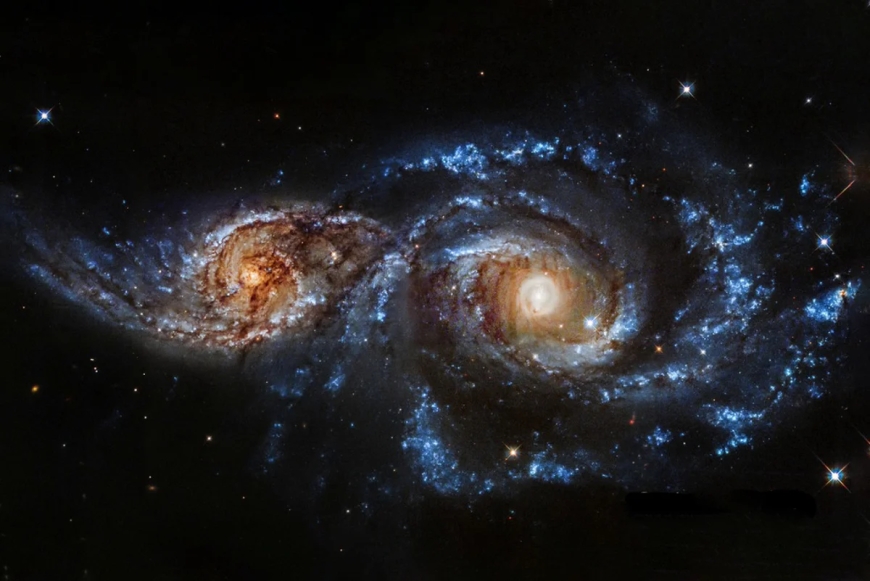
The Milky Way, our home galaxy, is not alone in the cosmos. It is part of a galactic neighborhood called the Local Group, which also includes the Andromeda Galaxy (M31), a massive spiral galaxy located about 2.5 million light-years away. While these galaxies may seem stationary on human timescales, they are actually on a slow-motion collision course that will dramatically reshape the cosmic landscape.
Astronomers predict that in about 4 to 5 billion years, the Milky Way and Andromeda will collide and merge. Despite the enormous number of stars in both galaxies—hundreds of billions each—the vast distances between stars mean that direct stellar collisions are unlikely. However, the gravitational interactions will trigger massive changes in both galaxies’ structures. Spiral arms will distort, stars will be flung into new orbits, and massive bursts of star formation will occur as clouds of gas and dust collide.
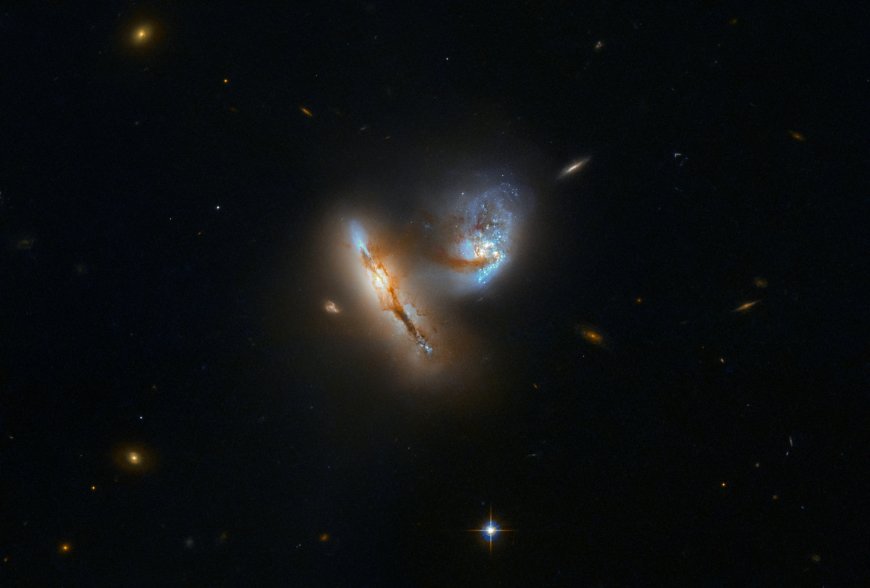
The result of this cosmic merger will likely be a single, giant elliptical galaxy, sometimes nicknamed “Milkomeda” by astronomers. This new galaxy will dominate the Local Group, absorbing smaller satellite galaxies like the Large and Small Magellanic Clouds along the way. Over the course of several billion years, the Milky Way’s current structure—including the familiar spiral arms and even our Solar System’s neighborhood—will be dramatically altered.
Interestingly, while the Solar System may survive the merger, its position in the galaxy could change drastically. It might end up far from its current location near the spiral arm, in a more distant or eccentric orbit around the new galactic core. The night sky will look completely different to any future observers, with a spectacular view of Andromeda slowly stretching and twisting as the merger progresses.
This eventual cosmic event is a reminder of the dynamic nature of the universe. Galaxies are not static islands; they interact, collide, and evolve over billions of years. While this galactic collision is unimaginably slow on human timescales, it is one of the most dramatic events in the life of galaxies, ultimately shaping the structure of our cosmic neighborhood for eons to come.
What's Your Reaction?
 Like
0
Like
0
 Dislike
0
Dislike
0
 Love
0
Love
0
 Funny
0
Funny
0
 Angry
0
Angry
0
 Sad
0
Sad
0
 Wow
0
Wow
0