



































Atlas V and Amazon Leo Launches Mark Landmark Day in Global Spaceflight
On 15 December 2025, ULA's Atlas V successfully launched ViaSat-3 F2, while Amazon's Leo satellites also took to orbit, highlighting a landmark day in global space connectivity and satellite deployment.

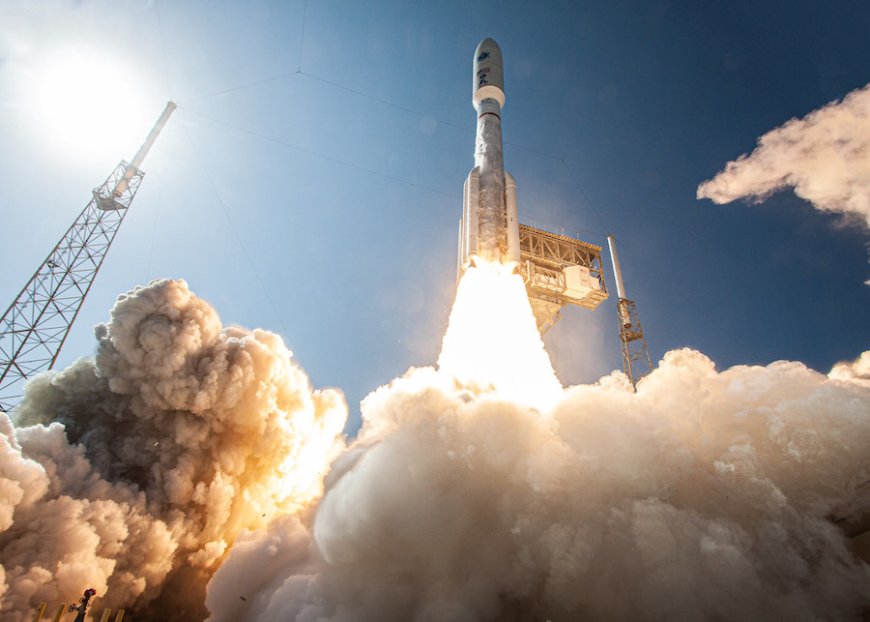
A significant day in the global spaceflight calendar, with multiple high-profile launches scheduled to advance connectivity and scientific missions. On this day, the United Launch Alliance (ULA) Atlas V rocket is set to launch a batch of Amazon Leo satellites (formerly Project Kuiper) from Space Launch Complex‑41 at Cape Canaveral Space Force Station. The mission will carry 27 Amazon LEO satellites into low-Earth orbit, expanding the global broadband constellation and providing high-speed internet services to underserved regions, in competition with other networks like SpaceX’s Starlink.
The day is notable not just for this single launch but as part of a cluster of coordinated space operations, including other commercial and scientific missions around the globe. These launches highlight the increasing pace of orbital activity, showcasing how private companies and national agencies are rapidly deploying satellites to enhance global communication networks, scientific research, and Earth observation capabilities.
The Atlas V mission continues its legacy as a reliable and versatile launch vehicle, enabling precise deployments of commercial payloads while supporting the expansion of critical infrastructure in space. By the end of 15 December, millions of people worldwide will benefit from the connectivity improvements made possible by these newly deployed satellites, making the date a key milestone in the year’s spaceflight achievements.
A United Launch Alliance (ULA) Atlas V rocket successfully lifted off from Space Launch Complex‑41 at Cape Canaveral Space Force Station, carrying the ViaSat‑3 Flight 2 (F2) satellite on a mission to significantly boost global broadband capacity. The launch late Thursday night marked another milestone for the venerable Atlas V family, which continues to support both commercial and government space initiatives.
Launch Overview
-
Launch vehicle: United Launch Alliance Atlas V 551 rocket
-
Launch date & time: November 13, 2025, at 10:04 p.m. EST
-
Launch site: Space Launch Complex‑41, Cape Canaveral Space Force Station, Florida, USA
-
Mission: ViaSat‑3 Flight 2 (F2) broadband satellite deployment
The Atlas V rocket, configured with five solid rocket boosters and the powerful RD‑180 main engine in its first stage, lifted off on schedule and delivered the ViaSat‑3 F2 payload to its geosynchronous transfer orbit (GTO) with high precision—a critical step toward its operational mission.
Mission Goals and Objectives
The primary objective of this launch is to expand and enhance global connectivity by deploying an ultra‑high‑capacity broadband satellite that will be part of the ViaSat‑3 network. Once fully operational, ViaSat‑3 F2 is expected to add significant bandwidth capacity—around 1 terabit per second (Tbps)—to the overall ViaSat constellation. This will support a wide array of services, including:
-
High‑speed internet for consumers across the Americas
-
Commercial connectivity for aviation and maritime customers
-
Secure communications for government and enterprise users
-
Improved broadband access in underserved regions around the globe
ViaSat‑3 F2’s addition further enhances the multi‑orbit network that Viasat is building to compete in the evolving broadband satellite market, enabling more resilient and flexible service delivery.
Significance of the Atlas V Platform
Although ULA is transitioning to its next‑generation Vulcan Centaur rocket, the Atlas V remains one of the most reliable and versatile launch vehicles in history. Its modular design allows mission planners to customize configurations depending on payload needs—from heavy commercial satellites to complex national security missions.
The rocket’s long legacy includes launching a range of critical missions, from planetary science spacecraft to national defense payloads and large commercial satellites. Its high‑precision Centaur upper stage and robust first‑stage performance have helped cement its reputation as a workhorse of U.S. space access.
Following separation in orbit, mission controllers will begin the satellite’s on‑orbit deployment and commissioning, which includes extending its solar arrays and antennas and conducting in‑orbit tests to verify performance and readiness for service. Once operational, ViaSat‑3 F2 will join its sister satellites to help meet the ever‑growing global demand for broadband capacity.
The Atlas V’s continued service to both commercial and mission‑critical spaceflight underscores its importance in bridging today’s launch needs with tomorrow’s advanced capabilities—even as newer launch systems take to the skies.
What's Your Reaction?
 Like
0
Like
0
 Dislike
0
Dislike
0
 Love
0
Love
0
 Funny
0
Funny
0
 Angry
0
Angry
0
 Sad
0
Sad
0
 Wow
0
Wow
0