

























Andy Burnham Set to Become UK’s Seventh Prime Minister After Years of Political Turmoil
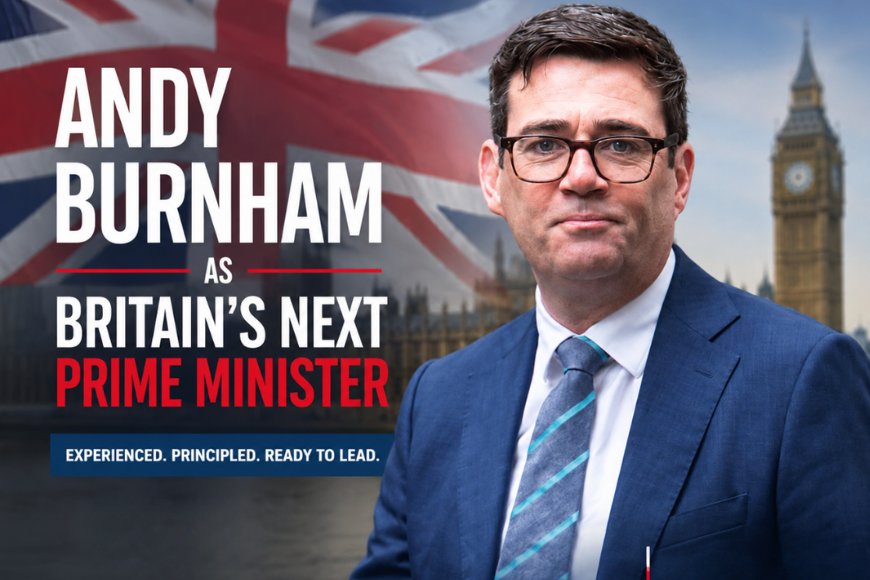
Andy Burnham is set to become the United Kingdom’s seventh prime minister after a decade marked by political instability, leadership changes, economic challenges, and public frustration. His rise signals a major shift in British politics as the country looks for a new direction.

The United Kingdom is set for a major political transition as Andy Burnham prepares to become the country’s seventh prime minister after a decade of political uncertainty and repeated changes in leadership. His expected rise comes at a time when Britain is facing several major challenges, including economic pressure, public dissatisfaction, questions over government stability, and demands for stronger leadership.
Burnham’s journey from a senior Labour politician to the country’s top political office marks a significant moment in British politics. Known for his long experience in government and his role as the Mayor of Greater Manchester, he has built a reputation as a politician focused on public services, regional development, and connecting with communities outside London.
The past decade has been one of the most politically turbulent periods in modern British history. The United Kingdom has witnessed multiple prime ministers, major policy shifts, internal party conflicts, Brexit-related divisions, economic uncertainty, and growing debates over the future direction of the country.
The frequent changes in leadership have created concerns among voters about political stability and long-term planning. Against this backdrop, Burnham’s arrival is being viewed by supporters as an opportunity for a fresh approach and a more community-focused style of leadership.
Andy Burnham, a former cabinet minister and experienced Labour figure, has spent years in frontline politics. Before becoming Mayor of Greater Manchester, he held important positions within the Labour Party and served in government roles, including work related to health and social policy.
During his time as mayor, Burnham gained national attention for advocating greater powers for regional governments and pushing for more investment outside traditional political centres. His leadership style has often focused on local issues, public transport, healthcare, and economic opportunities for working communities.
His supporters argue that his experience managing a major UK city region gives him practical understanding of everyday issues faced by citizens. They believe this background could help him address concerns around the cost of living, public services, and regional inequality.
However, becoming prime minister will bring much greater challenges. Burnham will face pressure to deliver immediate solutions on economic growth, inflation concerns, healthcare reform, housing shortages, and restoring confidence in political institutions.
One of the biggest tests for the new leadership will be rebuilding trust between citizens and government. Years of political disputes and leadership changes have contributed to frustration among many voters. The new prime minister will need to demonstrate stability, transparency, and effective decision-making.
The economy is expected to be one of the central priorities. Britain has experienced slow growth, pressure on household budgets, and concerns about investment and productivity. Businesses and investors will closely watch the government’s economic plans and approach to taxation, spending, and industrial policy.
Public services will also remain a major issue. The National Health Service (NHS), education system, and local government services have faced significant pressure in recent years. Burnham’s previous focus on healthcare and social issues is likely to shape his government’s priorities.
Another important area will be Britain’s role on the global stage. The UK continues to navigate its post-Brexit relationship with European countries while maintaining alliances with major international partners. Foreign policy, defence commitments, and trade relations will require careful management.
Burnham’s leadership also represents a broader debate about the future of British politics. Many analysts believe voters are increasingly looking for leaders who understand regional challenges rather than focusing only on Westminster politics.
His success in Greater Manchester has been highlighted as evidence that regional leadership can play a bigger role in national decision-making. Supporters say his approach could bring a different style of governance to Downing Street.
However, critics will closely examine whether his local government experience can translate into managing the complexities of national leadership. Running a city region and leading an entire country involve very different responsibilities, especially during periods of economic and political uncertainty.
The transition also comes at a crucial time for political parties across the UK. The Labour Party will be under pressure to prove that it can provide effective national leadership, while opposition parties will look for opportunities to challenge Burnham’s policies and decisions.
Public expectations are high. After years of political instability, many citizens want a government that focuses on practical issues rather than internal disputes. Jobs, healthcare, housing, and the economy are likely to dominate public discussions in the early days of the new administration.
For Burnham, becoming prime minister would represent the culmination of decades in politics. From his early parliamentary career to his leadership in Greater Manchester, his political journey has been shaped by debates over social justice, public services, and regional empowerment.
As Britain enters a new political chapter, all eyes will be on how Andy Burnham handles the responsibilities of national leadership. His ability to unite different sections of society, deliver economic improvements, and restore confidence in government will determine how history remembers his premiership.
The coming months will be critical for the new prime minister as he attempts to move Britain beyond a decade of political turbulence and towards a period of greater stability and public confidence.
What's Your Reaction?
Like
0
Dislike
0
Love
0
Funny
0
Angry
0
Sad
0
Wow
0