

















Delhi Braces for Double Protest Today: CJP Demonstration at Jantar Mantar, Farmers Resume March from Shambhu and Khanauri Borders
The national capital is on high alert as two major demonstrations unfold simultaneously. While the CJP stages a protest at Jantar Mantar over its key demands, farmers gather at the Shambhu and Khanauri borders to revive their march toward Delhi, prompting heavy security arrangements and traffic restrictions.

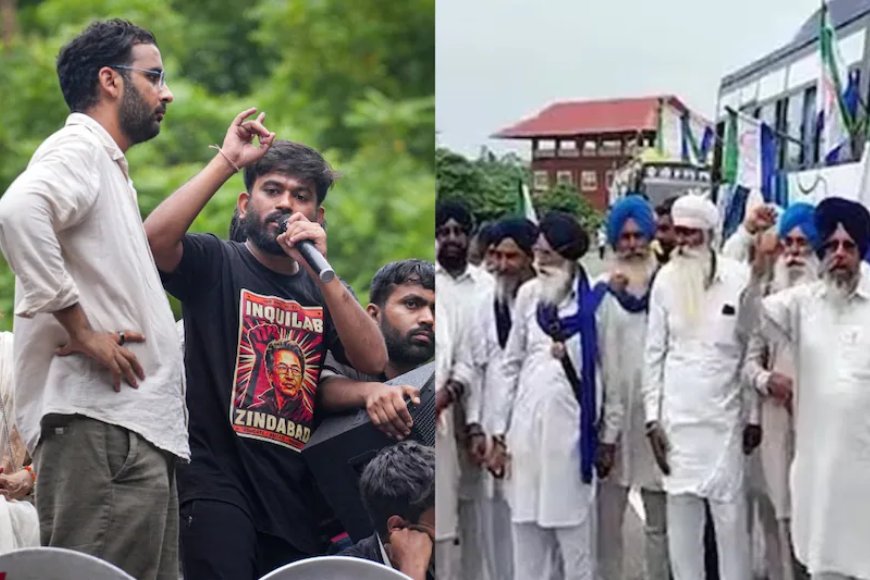
Delhi is witnessing a day of heightened political activity and security as two large-scale demonstrations take place simultaneously in and around the national capital. On one side, members of the CJP have assembled at Jantar Mantar to press the government over their pending demands, while on the other, farmers from Punjab and Haryana have resumed their planned march toward Delhi from the Shambhu and Khanauri border points.
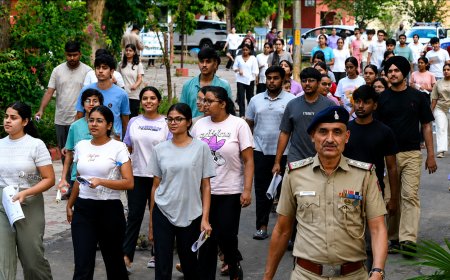
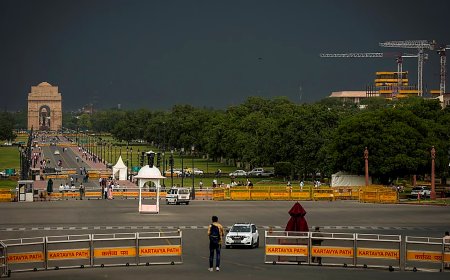
The dual protests have prompted authorities to implement extensive security arrangements across Delhi and the adjoining National Capital Region (NCR). Multiple layers of barricading, deployment of paramilitary forces, traffic diversions, and strict monitoring of sensitive routes have been put in place to maintain law and order while ensuring minimal disruption to public life.
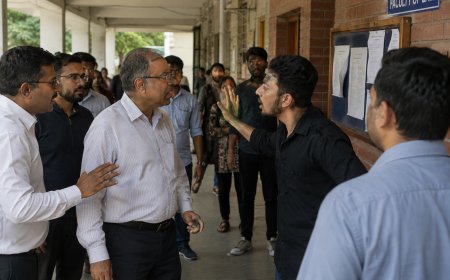
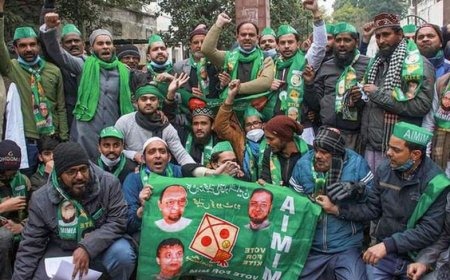
At Jantar Mantar, the CJP has organized a sit-in protest to raise concerns over issues it says require immediate government intervention. Protesters carrying banners and placards gathered early in the morning, demanding dialogue with the Centre and calling for action on their charter of demands. Organizers maintained that the demonstration would remain peaceful and urged participants to cooperate with law enforcement agencies.
Meanwhile, a parallel and potentially larger mobilization is taking shape at the Shambhu and Khanauri borders, where farmers have once again begun assembling for a renewed march toward Delhi. Farmer leaders say the movement aims to push the government to address long-pending agricultural concerns through meaningful negotiations.
The farmers' march follows several rounds of discussions between representatives of farmer unions and government officials that have yet to produce a comprehensive agreement. Union leaders argue that many promises made during earlier negotiations remain unfulfilled, compelling them to return to the streets.
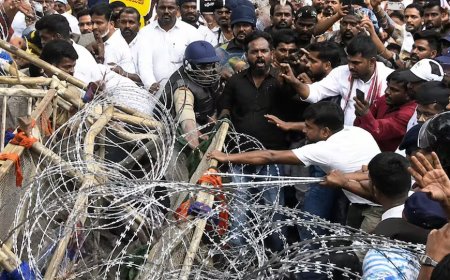
Authorities have fortified the Shambhu and Khanauri border points with concrete barricades, multi-layer security checkpoints, and heavy police deployment to regulate the movement of protesters. Security personnel have been stationed at strategic locations to prevent any attempt to breach restricted zones while ensuring public safety.
Senior police officials have said adequate arrangements have been made to handle large gatherings peacefully. Drone surveillance, CCTV monitoring, rapid action teams, and reserve police units have been deployed to monitor developments in real time. Emergency medical services and fire response teams have also been placed on standby.
Traffic movement across several parts of Delhi, especially routes leading to central administrative areas and border entry points, is expected to remain affected throughout the day. Commuters have been advised to use alternate routes and allow additional travel time due to diversions and increased security checks.
The Delhi Traffic Police issued advisories asking residents to avoid unnecessary travel near protest locations. Public transport services are expected to continue operating, although delays may occur on roads surrounding Jantar Mantar, central Delhi, and the highways connecting Punjab and Haryana to the capital.
Farmer organizations insist that their march is intended to remain peaceful and democratic. They have repeatedly stated that they are willing to engage in dialogue if the government demonstrates seriousness in addressing their concerns. Several farmer leaders have said negotiations remain their preferred path, but they also emphasized that sustained public demonstrations are necessary to keep pressure on policymakers.
Similarly, CJP organizers have described their gathering as a constitutional exercise aimed at drawing attention to issues affecting their members. Protest leaders have appealed to supporters to avoid confrontation and follow directions issued by police personnel during the demonstration.
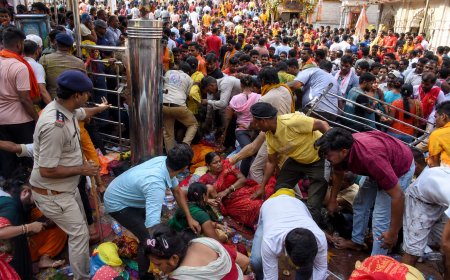
Political observers believe the simultaneous protests represent a significant challenge for authorities, as both gatherings involve large numbers of participants and attract national attention. The government's handling of these demonstrations is expected to be closely watched by opposition parties, civil society organizations, and the wider public.
The protests also highlight the continuing role of organized public movements in India's democratic landscape. Whether concerning agricultural reforms, policy implementation, employment, or governance, protest movements continue to serve as an important means of expressing collective demands.
Security agencies have coordinated closely with neighboring state administrations in Punjab and Haryana to monitor the movement of demonstrators. Border checkpoints have witnessed increased inspections, while intelligence units continue to assess crowd size and movement patterns to prevent unexpected escalation.
Officials have urged protesters to maintain peace and refrain from actions that could disrupt essential public services or inconvenience ordinary citizens. Authorities have reiterated that while peaceful protest is a democratic right, maintaining public order remains equally important.
Businesses and offices in central Delhi are also keeping a close watch on developments. Many organizations have advised employees to leave early or work remotely where possible to avoid congestion caused by road closures and diversions.
Residents living near demonstration sites have reported increased police presence since early morning, with security personnel conducting routine checks and managing traffic flow. Temporary restrictions have also been imposed around several high-security government buildings as a precautionary measure.
Experts note that simultaneous demonstrations of this scale require careful coordination between protest organizers and law enforcement agencies. Successful crowd management depends on effective communication, designated protest zones, emergency response planning, and continuous dialogue between both sides.
The outcome of today's demonstrations may influence future negotiations between the government and the protesting groups. If constructive dialogue resumes, there may be opportunities to reduce tensions through further discussions. However, if no breakthrough is achieved, organizers have indicated that future protest programs could be announced in the coming days.
As events continue to unfold, authorities remain on high alert while emphasizing their commitment to ensuring both public safety and the constitutional right to peaceful protest. Citizens are advised to follow official traffic advisories, avoid rumor-based information on social media, and rely on verified updates from government agencies.
The twin demonstrations at Jantar Mantar and the Shambhu-Khanauri borders underline the continued significance of public mobilization in shaping national conversations. Whether through negotiations or sustained protests, today's developments are expected to remain at the center of political discourse as Delhi navigates one of its busiest protest days in recent months.
What's Your Reaction?
 Like
0
Like
0
 Dislike
0
Dislike
0
 Love
0
Love
0
 Funny
0
Funny
0
 Angry
0
Angry
0
 Sad
0
Sad
0
 Wow
0
Wow
0