

















Farmers Suspend Delhi March After Breakthrough Talks with Centre, Consensus Reached on Two Key Demands
The proposed farmers' march to Delhi has been put on hold after a fresh round of talks between farmer leaders and the Central government resulted in a consensus on two major demands. Both sides have agreed to continue dialogue, offering temporary relief from escalating tensions at the Shambhu and Khanauri borders.

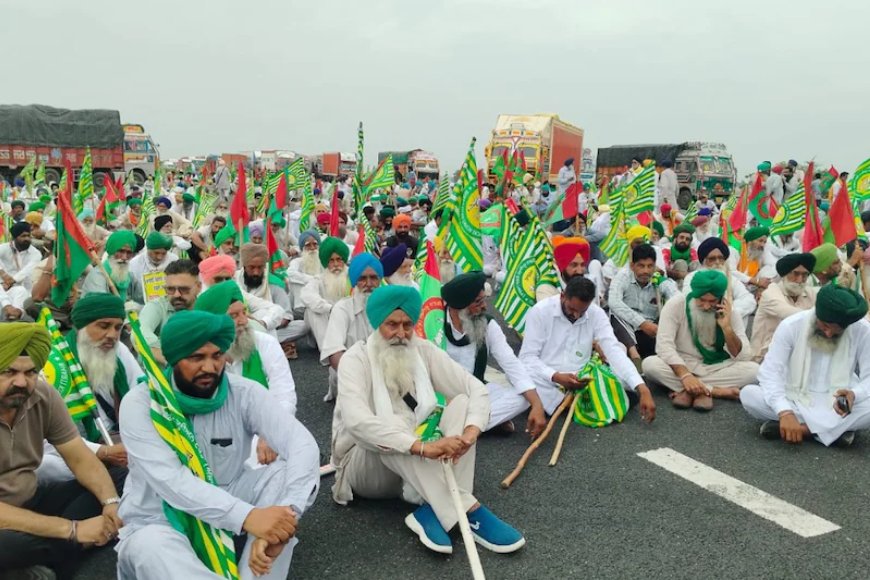
The planned farmers' march to Delhi has been temporarily suspended after a significant breakthrough was achieved during high-level talks between representatives of farmer unions and the Central government. The development comes after weeks of preparations for the renewed agitation, with both sides reaching an understanding on two key demands that had remained at the center of the ongoing protest movement.
The decision to defer the march has brought immediate relief to authorities in Delhi, Punjab, and Haryana, where extensive security arrangements had been made in anticipation of thousands of farmers attempting to enter the national capital. With negotiations yielding positive results, farmer leaders announced that the protest march would remain on hold for now, while the dialogue process continues.
According to farmer union representatives, the latest round of discussions was more constructive than previous meetings, with the government showing greater willingness to address concerns that had remained unresolved for months. While not all demands have been accepted, leaders described the outcome as an important step toward finding a negotiated solution.
Government officials also termed the discussions productive, stating that both sides had agreed to continue engaging through formal dialogue rather than confrontation. Officials emphasized that maintaining peace while addressing farmers' concerns remained the government's priority.
The breakthrough reportedly centered around two major issues that had dominated recent negotiations. Although discussions on several broader agricultural and policy matters are still ongoing, the consensus on these two demands was considered sufficient by farmer organizations to temporarily suspend the planned march toward Delhi.
Farmer leaders clarified that the decision should not be interpreted as the end of the protest movement. Instead, they described it as a goodwill gesture aimed at providing the government with an opportunity to implement the agreed measures. They stressed that if progress stalls or commitments are not fulfilled, further protest programs could be announced in the future.
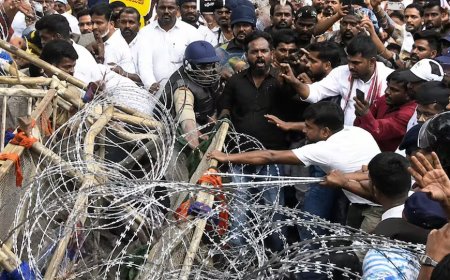
The announcement came as thousands of farmers had already gathered near the Shambhu and Khanauri border points, preparing to resume their march. Heavy police deployment, multiple barricades, concrete blockades, surveillance drones, and paramilitary personnel had been positioned along key highways leading into Delhi to prevent any unauthorized entry into the capital.
Following the successful negotiations, many of these security measures are expected to be gradually reviewed, although authorities remain cautious until the situation fully stabilizes.
The temporary suspension of the march also provides significant relief to commuters and businesses in the National Capital Region. Delhi Traffic Police had already issued advisories warning of possible congestion and diversions across several major routes. With the protest now postponed, large-scale traffic disruptions are expected to ease.
Farmer organizations have consistently maintained that their movement has been peaceful and focused on securing long-term solutions to agricultural challenges. Union representatives reiterated that dialogue remains their preferred method of resolving disputes, provided negotiations are conducted sincerely and result in concrete action.
Government negotiators welcomed the decision, saying constructive engagement helps avoid unnecessary confrontation while creating an environment conducive to policy discussions. Officials indicated that technical committees and ministerial-level consultations would continue examining the remaining demands raised by farmer unions.
The latest agreement reflects the importance of sustained dialogue between stakeholders. In previous rounds of negotiations, differences over implementation timelines and policy commitments had prevented a breakthrough. However, both sides appeared more willing during the latest discussions to explore practical solutions acceptable to all parties.
Political observers believe the temporary resolution could help reduce tensions that had been building over recent weeks. The prospect of another large-scale farmers' march had generated considerable political attention, particularly because similar protests in previous years resulted in prolonged demonstrations around Delhi's borders.
The renewed emphasis on negotiations may also create space for broader discussions on agricultural reforms, procurement systems, crop diversification, market access, rural infrastructure, and farmer welfare programs. While these larger issues remain under consideration, the immediate priority for both sides appears to be implementing the commitments already agreed upon.
Experts note that confidence-building measures are often essential in resolving long-running disputes. By postponing the march, farmer organizations have signaled their willingness to evaluate the government's response before deciding on future protest strategies.
At the same time, analysts caution that maintaining trust will require timely implementation of agreed decisions. Any significant delays or disagreements regarding execution could once again strain relations between the government and protesting farmers.
Throughout the negotiations, officials from the Union government, Punjab administration, Haryana authorities, and farmer representatives remained engaged in continuous communication to prevent escalation. Their coordinated approach played an important role in reaching the current understanding.
Citizens living near the Shambhu and Khanauri border points also welcomed the temporary easing of tensions. Local businesses, transport operators, and residents had been preparing for possible disruptions if the march proceeded toward Delhi.
The agreement has also reduced immediate pressure on law enforcement agencies, which had mobilized thousands of personnel to manage security arrangements. Police officials have nevertheless stated that they will continue monitoring the situation until the protest sites are fully cleared and normal movement resumes.
Farmer leaders have appealed to supporters to remain disciplined and await further instructions from union representatives. They emphasized that the movement remains united and that future decisions will depend on the government's implementation of the commitments made during the latest talks.
The Central government, meanwhile, has reiterated its commitment to maintaining open channels of communication with farmer organizations. Officials believe that continued dialogue offers the best opportunity to resolve remaining differences without further confrontation.
As negotiations move into the next phase, both sides will now focus on translating verbal understandings into concrete policy measures. The coming weeks are expected to determine whether the current breakthrough evolves into a lasting resolution or whether unresolved issues trigger fresh demonstrations.
For now, however, the suspension of the Delhi march represents a significant de-escalation in tensions. It demonstrates that sustained negotiations can still produce common ground even after prolonged disagreements, offering hope for a peaceful resolution to one of the country's most closely watched protest movements.
What's Your Reaction?
 Like
0
Like
0
 Dislike
0
Dislike
0
 Love
0
Love
0
 Funny
0
Funny
0
 Angry
0
Angry
0
 Sad
0
Sad
0
 Wow
0
Wow
0