





















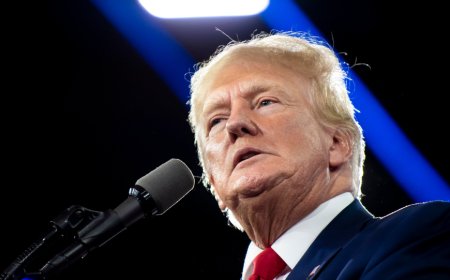








Iran Strikes US Bases, Trump Responds with Massive Retaliation: Shocking Satellite Images Reveal Extent of Destruction
Tensions between Iran and the United States have escalated dramatically after Iran reportedly launched missile attacks on multiple American military bases. In response, former US President Donald Trump ordered a series of devastating retaliatory strikes, with newly released satellite images revealing widespread destruction across strategic military installations. The latest developments have sparked fears of a wider regional conflict in the Middle East.

Long Description (1000–1200 Words)
The already fragile security situation in the Middle East has once again reached a dangerous turning point after Iran allegedly carried out missile attacks targeting several American military bases across the region. The strikes marked one of the most significant direct confrontations between Tehran and Washington in recent years, triggering an immediate and forceful response from the United States under the leadership of former President Donald Trump. As satellite images continue to emerge, they paint a grim picture of damaged infrastructure, scorched military facilities, and the growing scale of destruction caused by the latest exchange of attacks.
According to multiple international reports, Iran launched a coordinated barrage of ballistic missiles aimed at US military installations located in strategic areas of the Middle East. While Iranian officials described the operation as a "defensive retaliation" against previous American actions, US authorities condemned the strikes as an unprovoked act of aggression that endangered military personnel and regional stability.
The missile attacks reportedly targeted facilities used for logistics, intelligence gathering, and troop deployment. Although American defense officials stated that several incoming missiles were intercepted by advanced air-defense systems, some projectiles managed to reach their intended targets, resulting in structural damage to military infrastructure. The Pentagon has maintained that casualty figures remain limited, though assessments continue as military teams inspect affected locations.
Within hours of the attacks, Donald Trump announced that the United States would respond with "overwhelming strength." Soon afterward, American forces launched a series of precision airstrikes against what officials described as Iranian military infrastructure, missile storage facilities, command centers, and strategic defense positions. US officials argued that the objective of the operation was to degrade Iran's offensive capabilities while avoiding civilian casualties.
One of the biggest talking points following the escalation has been the release of high-resolution satellite imagery showing the aftermath of the attacks. Images circulating through international intelligence agencies and commercial satellite providers reveal extensive damage at several locations. Large craters, destroyed buildings, damaged runways, scorched landscapes, and burned military equipment can be seen across multiple strategic sites.
Defense analysts believe these satellite photographs provide independent confirmation of the intensity of both Iran's missile strikes and the subsequent American retaliation. Experts studying the imagery noted that some military installations suffered significant infrastructure losses, including destroyed warehouses, damaged aircraft shelters, and impacted communication facilities.
Military experts say satellite intelligence has become one of the most reliable methods of verifying battlefield developments in modern warfare. Unlike official statements issued by governments, satellite images offer visual evidence that can help confirm or challenge competing narratives presented by both sides. In this latest confrontation, imagery has played a crucial role in understanding the actual scale of the conflict.
Iran, meanwhile, has defended its military operation by claiming it was responding to repeated violations of its sovereignty and attacks allegedly carried out against Iranian interests. Iranian officials warned that any further American military action would invite an even stronger response. They also insisted that their missile strikes were carefully planned to target military objectives rather than civilian infrastructure.
On the American side, officials have reiterated that protecting US troops stationed across the Middle East remains their highest priority. Pentagon spokespersons emphasized that additional defensive assets, including fighter aircraft, missile-defense systems, and naval forces, have been deployed to strengthen security at American bases throughout the region.
The latest confrontation has triggered widespread concern among world leaders. Several governments have called for immediate restraint, warning that continued military escalation between Iran and the United States could destabilize the entire Middle East. The United Nations has urged both countries to return to diplomatic dialogue and avoid actions that could further inflame regional tensions.
Financial markets have also reacted sharply to the developments. Global oil prices witnessed sudden volatility amid concerns that a prolonged conflict could disrupt energy supplies passing through key shipping routes, particularly the Strait of Hormuz. Investors shifted toward traditional safe-haven assets, reflecting growing uncertainty about geopolitical risks.
Security experts warn that the confrontation extends far beyond direct military exchanges. Cybersecurity agencies have increased monitoring for possible cyberattacks targeting critical infrastructure, financial institutions, and government networks. Intelligence agencies across multiple countries are also monitoring the activities of regional proxy groups that could become involved if tensions continue to rise.
Satellite imagery has further intensified public interest because it provides an unprecedented view of the physical consequences of modern missile warfare. Analysts have compared before-and-after images, highlighting collapsed structures, damaged storage facilities, destroyed equipment, and impact zones spread across military compounds. These visuals have become central to international discussions surrounding the effectiveness of missile-defense systems and precision-guided strikes.
Defense observers note that while both nations claim military success, independent verification remains essential. Casualty figures, operational losses, and long-term strategic impacts continue to be assessed by intelligence agencies and international observers. Many experts caution that official claims from either side should be viewed carefully until corroborated by independent sources.
Diplomatic channels remain active despite the military confrontation. Several regional powers are reportedly working behind the scenes to reduce tensions and prevent further escalation. However, analysts warn that the risk of miscalculation remains extremely high, particularly if either side launches additional retaliatory strikes.
The release of satellite images has also sparked widespread debate on social media, where millions of users are examining the visual evidence and discussing the implications of the conflict. Military analysts, geopolitical experts, and defense researchers continue to analyze each new image in an effort to understand the evolving battlefield situation.
As the crisis unfolds, the international community is closely watching whether diplomacy can prevail over military confrontation. Any further exchange of attacks could significantly reshape the geopolitical landscape of the Middle East, impact global energy markets, and increase security risks far beyond the region.
For now, satellite imagery remains one of the clearest windows into the aftermath of the latest Iran-US confrontation. The images serve as a stark reminder of how rapidly geopolitical tensions can escalate into large-scale military conflict, with consequences that extend well beyond national borders.
What's Your Reaction?
 Like
0
Like
0
 Dislike
0
Dislike
0
 Love
0
Love
0
 Funny
0
Funny
0
 Angry
0
Angry
0
 Sad
0
Sad
0
 Wow
0
Wow
0