



















Why Did NALSAR Students Oppose CJI Surya Kant as Chief Guest? Full Controversy Explained
A controversy erupted at Hyderabad’s NALSAR University after a section of students opposed the decision to invite Chief Justice of India Surya Kant as the chief guest at the university’s convocation. The matter escalated after the Bar Council of India took action affecting the 2026 graduating batch, before later withdrawing its decision following strong opposition.

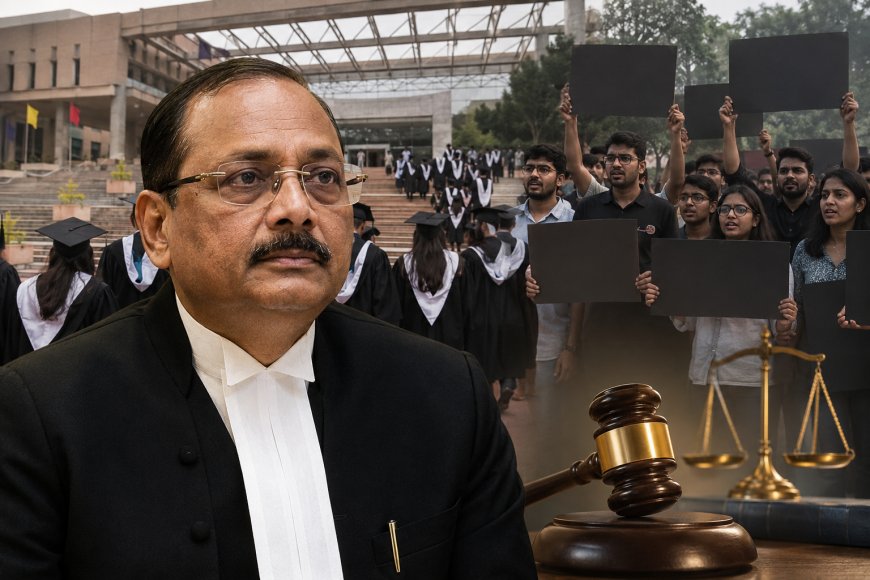
A controversy surrounding the convocation ceremony of Hyderabad’s National Academy of Legal Studies and Research (NALSAR) has triggered a wider debate over student dissent, academic institutions and the legal profession.
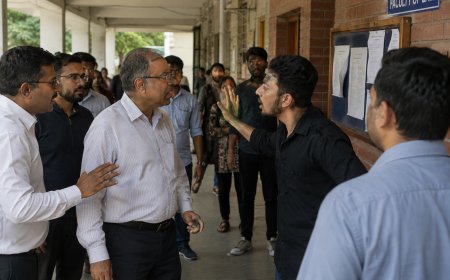
The controversy began after a section of NALSAR students objected to the decision to invite Chief Justice of India Justice Surya Kant as the chief guest for the university’s convocation ceremony. The students reportedly raised objections linked to issues concerning the judiciary and expressed their disagreement with the decision to have the CJI preside over the event.
What began as a disagreement over the choice of a chief guest soon developed into a much larger issue when the Bar Council of India (BCI) took a decision affecting the 2026 batch of NALSAR law graduates.
The BCI’s action created considerable concern among students because enrolment with the Bar is an important step for law graduates seeking to begin their careers as advocates. Any restriction affecting an entire graduating batch therefore raised questions about the professional future of the students.
The decision triggered strong opposition from students and sections of the legal community. Critics questioned whether students should face professional consequences because of their objections to the choice of a chief guest at an academic ceremony.
The controversy also brought renewed attention to the relationship between law universities and regulatory bodies such as the Bar Council of India. While universities provide legal education, the BCI plays a key role in regulating the legal profession and matters related to advocates’ enrolment.
Amid the growing backlash, the Bar Council of India reconsidered its position and eventually reversed its decision, providing relief to the affected students.
The U-turn brought an immediate sense of relief among the 2026 graduates, but the larger debate remains. The episode has raised important questions about the limits of student dissent, institutional autonomy and whether disagreement expressed by students at an academic event should have consequences for their professional careers.
NALSAR is among India’s leading national law universities, and its graduates regularly enter the legal profession, judiciary, academia and public service. This is why the controversy attracted considerable attention within legal circles.
At the heart of the dispute is a broader question: How should universities and regulatory institutions respond when students strongly disagree with an institutional decision?
For now, the BCI’s reversal has eased the immediate concerns of the graduating batch. However, the NALSAR episode is likely to remain a significant example in discussions about student expression, institutional decision-making and the independence of legal education in India.
What's Your Reaction?
 Like
0
Like
0
 Dislike
0
Dislike
0
 Love
0
Love
0
 Funny
0
Funny
0
 Angry
0
Angry
0
 Sad
0
Sad
0
 Wow
0
Wow
0