


























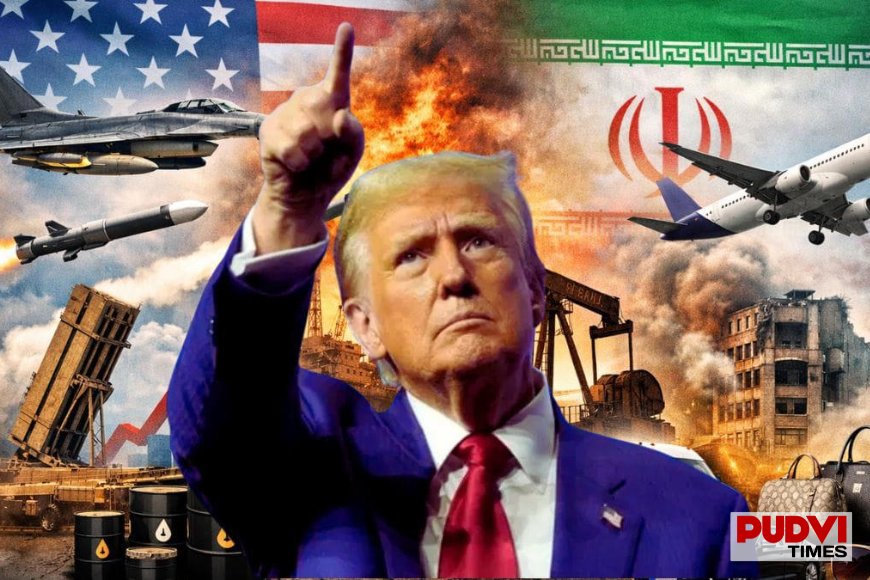
'If Iran Assassinated Me...': Trump Warns US Would Unleash '1,000 Missiles Locked and Loaded' in Devastating Response
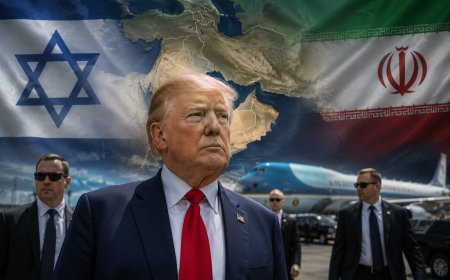
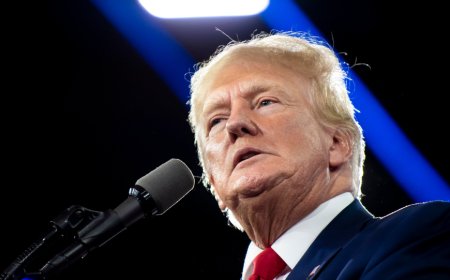
Former US President Donald Trump issued a stern warning that if Iran were behind any assassination attempt against him, the United States would retaliate with overwhelming military force. Declaring that "1,000 missiles are locked and loaded," Trump signaled that any such attack would trigger a devastating response, reigniting global concerns over escalating US-Iran tensions.

'If Iran Assassinated Me...': Trump Warns US Would Unleash '1,000 Missiles Locked and Loaded' in Devastating Response
Former US President Donald Trump has once again intensified geopolitical tensions with a powerful warning directed at Iran, stating that any successful assassination attempt against him allegedly orchestrated by Tehran would provoke an overwhelming military response from the United States. Trump claimed that America has "1,000 missiles locked and loaded" and would completely devastate Iran if such an attack were ever carried out.
The statement has quickly gained international attention, sparking fresh debate over the already fragile relationship between Washington and Tehran. Security analysts believe Trump's remarks reflect the continuing hostility between the two countries, a rivalry that has shaped Middle East geopolitics for decades and remains one of the world's most volatile security challenges.
Trump made the comments while discussing alleged threats against his life, reiterating accusations that Iran continues to pose a serious security risk. Although Iranian authorities have consistently denied involvement in any assassination plots targeting American leaders, US intelligence agencies have previously warned of potential threats linked to Iranian actors following the killing of Iranian General Qassem Soleimani in 2020.
The former president asserted that the United States possesses overwhelming military superiority and warned that any attack on an American leader would trigger a response unlike anything Iran has experienced before. His "1,000 missiles locked and loaded" remark was widely interpreted as a symbolic message emphasizing America's military capabilities rather than describing a specific operational plan.
The comments come at a time when tensions between the United States and Iran remain elevated due to disputes over Iran's nuclear program, regional proxy conflicts, sanctions, maritime security in the Persian Gulf, and broader strategic competition across the Middle East. Diplomatic relations between the two countries have remained strained for decades, with repeated cycles of sanctions, military confrontations, and indirect conflicts involving regional allies.
Security experts note that threats involving senior political leaders carry significant implications for international stability. Any credible assassination attempt against a current or former US president would almost certainly provoke a major national security response. However, analysts caution that political rhetoric should not necessarily be interpreted as an indication of imminent military action.
Trump has frequently adopted strong language regarding Iran throughout his political career. During his presidency, his administration pursued a "maximum pressure" campaign that included strict economic sanctions, withdrawal from the 2015 Iran nuclear agreement, and targeted military actions against Iranian-backed groups operating in the region. Those policies significantly altered US-Iran relations and increased military tensions across the Middle East.
Iran, meanwhile, has repeatedly criticized American sanctions and military policies, accusing Washington of destabilizing the region. Tehran has consistently rejected allegations that it is actively plotting attacks against former US officials, although American intelligence and law enforcement agencies have periodically disclosed investigations into alleged Iranian-linked threats targeting current and former US government figures.
The latest remarks are expected to fuel renewed political debate both domestically and internationally. Supporters argue that strong deterrence is essential to discourage hostile actions against American leaders and national interests. Critics, however, contend that such statements risk escalating already sensitive geopolitical tensions and may complicate diplomatic efforts aimed at reducing conflict in the region.
International observers are also closely monitoring how America's allies and Middle Eastern partners respond to the renewed rhetoric. Countries across the region have consistently sought greater stability following years of conflict involving proxy groups, missile attacks, and disputes over maritime security. Any further escalation between Washington and Tehran could have significant implications for global energy markets, shipping routes, and regional security.
The statement has also generated widespread discussion across social media platforms, where supporters praised Trump's uncompromising stance while critics questioned whether such language could heighten diplomatic tensions. Videos and excerpts of the remarks quickly circulated online, becoming one of the day's most discussed international political stories.
Foreign policy specialists emphasize that deterrence has long been a central component of US strategic doctrine. Successive American administrations have maintained that attacks against US officials, military personnel, or national interests would invite decisive retaliation. Trump's latest warning aligns with that broader deterrence philosophy, although its unusually forceful wording has attracted exceptional media attention.
The issue also highlights the continuing importance of intelligence cooperation among Western allies. Governments have increasingly strengthened coordination on identifying and preventing potential threats against high-profile political leaders, particularly amid growing concerns over transnational security risks and state-sponsored activities.
Despite the sharp rhetoric, diplomatic channels between global powers continue to play a critical role in preventing military escalation. International organizations and allied governments generally encourage dialogue, de-escalation, and adherence to international law whenever tensions rise between major geopolitical rivals.
Analysts believe that the future trajectory of US-Iran relations will depend on multiple factors, including developments surrounding Iran's nuclear program, regional security dynamics, changes in political leadership, and broader diplomatic negotiations. Any significant deterioration in relations could have consequences extending beyond the Middle East, affecting international trade, energy prices, and global financial markets.
For now, Trump's remarks have once again placed US-Iran relations under the international spotlight, reinforcing concerns about the fragile security environment in the region. Whether the comments remain political rhetoric or influence future policy discussions, they have underscored the enduring mistrust that continues to define one of the world's most complex geopolitical rivalries.
Conclusion
Donald Trump's warning that the United States would unleash an overwhelming military response if Iran were responsible for any assassination attempt against him has reignited international attention on US-Iran tensions. While his declaration of "1,000 missiles locked and loaded" underscores a message of deterrence and military strength, it also reflects the persistent volatility that characterizes relations between Washington and Tehran. As geopolitical uncertainties continue, global leaders and security experts will be watching closely to ensure that heightened rhetoric does not translate into further regional instability.
What's Your Reaction?
 Like
0
Like
0
 Dislike
0
Dislike
0
 Love
0
Love
0
 Funny
0
Funny
0
 Angry
0
Angry
0
 Sad
0
Sad
0
 Wow
0
Wow
0