






























Fake Medicines Sold Under Top Pharma Brands Busted in Dehradun, Factory Sealed in Major Crackdown
A joint team of the Food Safety and Drug Administration (FSDA), Uttar Pradesh officials, and police has busted a counterfeit medicine factory in Dehradun. The unit allegedly manufactured fake medicines using the names of leading pharmaceutical companies, raising serious concerns over public health and drug safety.

Fake Medicines Sold Under Top Pharma Brands Busted in Dehradun, Factory Sealed in Major Crackdown
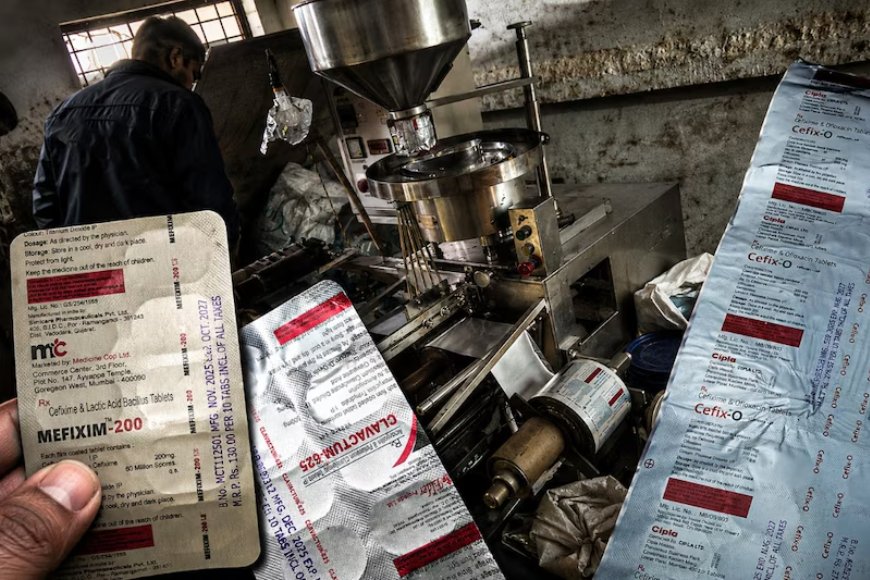
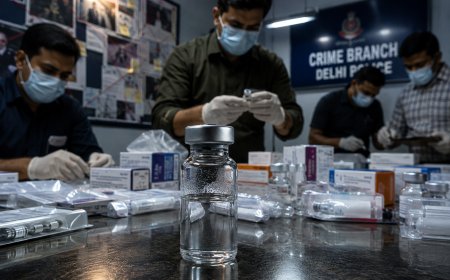
A major counterfeit medicine racket has been exposed in Uttarakhand after authorities uncovered an illegal factory in Dehradun allegedly manufacturing fake medicines using the names and packaging of some of India's leading pharmaceutical companies. Acting on intelligence inputs, a joint team of the Food Safety and Drug Administration (FSDA), the Uttar Pradesh Drug Department, and the Crime Branch conducted a raid at the premises and seized a large quantity of counterfeit medicines, packaging material, labels, and manufacturing equipment. The factory has been sealed, and an investigation is underway to identify the entire network involved in the illegal operation.
According to officials, the accused were allegedly producing fake medicines by copying the branding, packaging, and labels of reputed pharmaceutical companies such as Cipla and Lupin. The counterfeit products were designed to closely resemble genuine medicines, making it difficult for consumers and even retailers to distinguish between authentic and fake products. Authorities suspect that the medicines were being supplied to different states through an organized distribution network.
During the raid, officials recovered large quantities of finished medicines, empty strips, fake labels, holograms, cartons, raw materials, and machinery used in manufacturing and packaging. Investigators believe the operation had been running for a considerable period and may have supplied counterfeit medicines to wholesalers and medical stores in several regions. Samples of the seized medicines have been sent for laboratory testing to determine their composition and assess the potential health risks they pose.
The discovery has raised serious concerns about public health and patient safety. Counterfeit medicines may contain incorrect ingredients, insufficient active pharmaceutical compounds, harmful chemicals, or no medicinal content at all. Such drugs not only fail to treat diseases effectively but can also worsen patients' conditions, delay recovery, or even prove fatal in serious medical cases. Health experts have repeatedly warned that fake medicines are among the biggest threats to healthcare systems worldwide.
Officials involved in the investigation stated that the factory operators allegedly used sophisticated printing techniques and duplicate packaging to imitate genuine pharmaceutical products. Everything from the company's logo to batch numbers, expiry dates, and packaging design was reportedly copied to make the fake medicines appear authentic. Authorities are now trying to determine whether any insiders or distributors helped the accused procure packaging materials or circulate the counterfeit products in the market.
The raid was carried out after intelligence agencies received information regarding suspicious manufacturing activities at the location. Following surveillance and verification, officials conducted a joint operation that led to the seizure of the illegal manufacturing unit. Investigators are now examining financial transactions, supplier records, transport details, and distribution channels to identify others connected to the racket.
The Food Safety and Drug Administration has appealed to the public not to panic but to remain vigilant while purchasing medicines. Consumers have been advised to buy medicines only from licensed pharmacies, carefully check the packaging, verify batch numbers, and immediately report any suspicious products to local drug authorities. Doctors have also urged patients to avoid purchasing medicines from unauthorized sellers or unverified online platforms.
Leading pharmaceutical companies whose brand names were allegedly misused are expected to cooperate with the investigation. Officials may seek technical assistance from the companies to verify counterfeit products and identify packaging differences. Such collaboration can help authorities trace the source of fake labels and improve future enforcement against counterfeit drug manufacturers.
Counterfeit medicine rackets are considered one of the most serious forms of organized economic crime because they directly endanger human lives while undermining public confidence in the healthcare system. Law enforcement agencies believe these networks often operate across multiple states and involve manufacturers, transporters, distributors, and retailers. As a result, investigators are expanding the probe to determine whether the Dehradun factory is linked to a larger interstate network.
Authorities have registered a case under relevant provisions of the Drugs and Cosmetics Act and the Indian Penal Code. Depending on the findings of the investigation, additional charges related to fraud, forgery, criminal conspiracy, and public endangerment may also be added. Officials indicated that more arrests are likely as the investigation progresses and additional suspects are identified.
The incident has once again highlighted the urgent need for stronger monitoring of pharmaceutical supply chains, stricter inspections of manufacturing units, and improved coordination between state drug regulators and law enforcement agencies. Experts believe that technological solutions such as track-and-trace systems, QR code verification, and digital authentication could significantly reduce the circulation of counterfeit medicines in the market.
As laboratory testing continues and investigators trace the distribution network, authorities have assured the public that strict action will be taken against everyone involved in the racket. The crackdown in Dehradun serves as a reminder of the growing challenge posed by counterfeit medicines and the importance of strong regulatory oversight to safeguard public health. Officials have urged citizens to report any suspicious medicines immediately, emphasizing that public awareness remains one of the most effective tools in combating the spread of fake pharmaceutical products.
What's Your Reaction?
Like
0
Dislike
0
Love
0
Funny
0
Angry
0
Sad
0
Wow
0