





























Iran-US War LIVE: 50 Reportedly Killed in US Strikes This Month, Iran Claims to Have Downed MQ-9 Reaper Drone as Explosion Rocks Strait of Hormuz
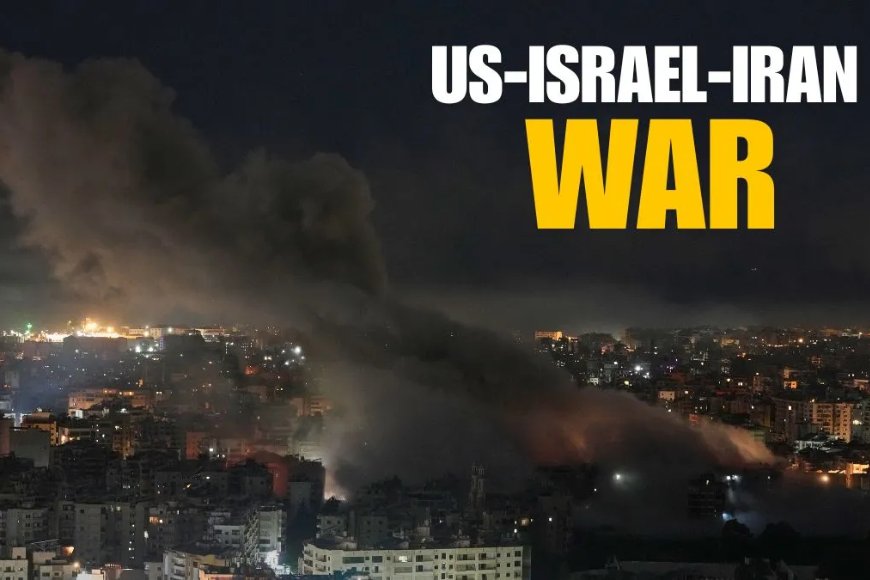
The conflict between Iran and the United States has intensified, with reports claiming that around 50 people have been killed in US military strikes this month. Iran has also announced that it shot down an American MQ-9 Reaper drone, while a major explosion near the Strait of Hormuz has raised fresh concerns over regional security and global energy supplies.

Iran-US War LIVE: 50 Reportedly Killed in US Strikes This Month, Iran Claims to Have Downed MQ-9 Reaper Drone as Explosion Rocks Strait of Hormuz
The Middle East continues to witness escalating tensions as the confrontation between Iran and the United States enters another critical phase. Reports emerging from the region indicate that approximately 50 people have reportedly been killed in American military strikes during the month, while Iran claims to have successfully shot down a US MQ-9 Reaper surveillance drone. Adding to global concerns, a powerful explosion has also been reported near the strategically important Strait of Hormuz, one of the world's busiest energy shipping routes.
The developments have significantly heightened fears of a broader regional conflict, prompting governments, international organizations, and financial markets to closely monitor the rapidly changing situation.
Rising Casualties Amid Continuing Military Operations
According to regional reports, US military operations targeting Iranian-linked military infrastructure have continued throughout the month, resulting in the reported deaths of around 50 individuals. The exact identities of those killed and the circumstances surrounding each strike have not been independently verified, and official casualty figures remain subject to confirmation.
The reported strikes are believed to have targeted military positions, logistics facilities, and strategic assets associated with Iran's regional security operations. Washington has consistently maintained that its military actions are aimed at protecting American personnel and interests while responding to perceived threats in the region.
Iran, however, has strongly condemned the strikes, describing them as violations of its sovereignty and warning that continued military pressure will be met with a firm response.
Iran Claims to Down US MQ-9 Reaper Drone
In one of the most significant developments, Iranian authorities announced that their air defense forces had successfully intercepted and destroyed an American MQ-9 Reaper drone.
The MQ-9 Reaper is one of the US military's most advanced unmanned aerial systems, capable of conducting long-endurance surveillance, intelligence gathering, and precision strike missions. Its deployment has played a major role in American military operations across the Middle East over the past two decades.
Iranian officials stated that the drone had violated Iranian-controlled airspace before being targeted by domestic air defense systems. They claimed the interception demonstrated the country's readiness to defend its territorial integrity against any foreign military presence.
At the time of reporting, US defense officials had not publicly confirmed Iran's claim. Independent verification of the reported drone incident remains unavailable.
Explosion Near the Strait of Hormuz Raises Global Alarm
Further escalating regional concerns, reports emerged of a major explosion in or near the Strait of Hormuz, one of the world's most strategically significant maritime passages.
The Strait of Hormuz serves as a vital gateway for global oil exports, with nearly one-fifth of the world's seaborne crude oil passing through the narrow waterway every day. Any disruption in this region has immediate implications for international energy markets and global shipping.
Authorities have not yet officially confirmed the exact cause of the explosion. Initial reports suggest the incident may have involved either a commercial vessel, military activity, or an infrastructure-related event. Investigations are continuing, and officials have urged caution until verified information becomes available.
Shipping companies operating in the Gulf have increased monitoring of vessel movements while maritime security agencies remain on heightened alert.
Strategic Importance of the Strait of Hormuz
The Strait of Hormuz connects the Persian Gulf to the Gulf of Oman and the Arabian Sea, making it one of the world's most important maritime trade routes.
Major oil-exporting countries including Saudi Arabia, Iraq, Kuwait, Qatar, the United Arab Emirates, and Iran rely heavily on the strait for international energy exports.
Any military confrontation affecting this narrow shipping corridor could significantly disrupt global energy supplies, increase freight insurance costs, and push international crude oil prices sharply higher.
Energy analysts warn that prolonged instability in the region could have long-term consequences for global markets, particularly for countries heavily dependent on imported oil.
Regional Military Preparedness Increases
In response to the evolving security situation, several countries have strengthened military readiness across the Gulf region.
The United States has maintained an expanded naval presence while reinforcing surveillance operations to monitor potential threats. Regional allies have also increased air defense coordination and intelligence sharing to safeguard critical infrastructure.
Iran, meanwhile, continues to emphasize that its armed forces remain prepared to respond to any perceived military aggression.
Military analysts note that both sides appear to be adopting defensive postures while simultaneously preparing for the possibility of further escalation.
International Community Calls for Restraint
The latest developments have prompted renewed diplomatic efforts aimed at preventing the conflict from expanding further.
Several governments have urged both Washington and Tehran to avoid actions that could trigger a wider regional war. International organizations have also appealed for dialogue, warning that continued military escalation would pose serious risks to civilian populations, regional stability, and the global economy.
Diplomatic channels remain active, although no major breakthrough has yet been announced.
Foreign policy experts believe that communication between regional powers will be critical in preventing unintended military confrontations.
Global Markets Watching Closely
Financial markets reacted cautiously to reports of the latest developments.
Oil traders remain particularly sensitive to any security incident involving the Strait of Hormuz due to its importance in global energy transportation.
Energy prices could experience increased volatility if military operations intensify or if shipping through the Gulf faces significant disruption.
Shipping companies are also reviewing security protocols for commercial vessels operating in nearby waters, while insurance providers continue assessing regional risk levels.
What Happens Next?
The situation remains highly fluid, with developments changing rapidly.
If confirmed, the reported downing of an MQ-9 Reaper drone would represent a significant military incident that could influence future strategic calculations by both Iran and the United States.
Similarly, the reported explosion near the Strait of Hormuz has intensified concerns over maritime security, highlighting the vulnerability of one of the world's most critical trade routes.
Whether the coming days witness renewed diplomatic engagement or further military escalation will largely depend on decisions taken by both governments.
For now, security forces across the Middle East remain on heightened alert, while international observers continue monitoring every development with growing concern.
The evolving confrontation between Iran and the United States has once again demonstrated how quickly regional incidents can carry global consequences. Beyond military implications, the conflict has the potential to affect international energy markets, commercial shipping, diplomatic relations, and economic stability worldwide. As governments call for restraint, the international community hopes diplomacy will ultimately prevail over confrontation.
What's Your Reaction?
 Like
0
Like
0
 Dislike
0
Dislike
0
 Love
0
Love
0
 Funny
0
Funny
0
 Angry
0
Angry
0
 Sad
0
Sad
0
 Wow
0
Wow
0