














After 20-Day Hunger Strike, Sonam Wangchuk Hospitalised; Delhi Police Clears Jantar Mantar Protest Site
Climate activist and education reformer Sonam Wangchuk was admitted to a hospital after completing a 20-day hunger strike at Delhi's Jantar Mantar. Following his hospitalization, Delhi Police cleared the protest site, bringing an end to the sit-in. The development has reignited debate over Ladakh's constitutional demands and the government's response.

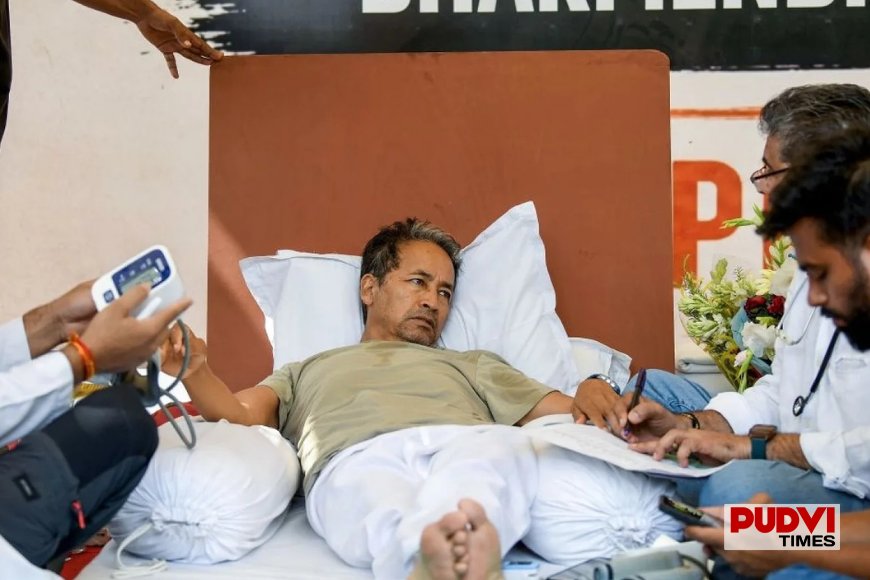
Climate activist, engineer, and education reformer Sonam Wangchuk has been admitted to a hospital after completing a 20-day hunger strike at Delhi's Jantar Mantar. His fast, centered on constitutional safeguards and greater protections for Ladakh, drew supporters from across the country and once again placed the region's long-standing demands in the national spotlight.
Following Wangchuk's hospitalization, Delhi Police cleared the protest site at Jantar Mantar, effectively ending the physical sit-in that had continued for nearly three weeks. The move marked a significant development in one of the most closely watched peaceful protest movements related to Ladakh in recent times.
The hunger strike was aimed at drawing attention to several key demands, including constitutional protection for Ladakh, safeguards for land and employment, environmental conservation, and stronger political representation for the people of the Union Territory.
A Protest Focused on Ladakh's Future
Throughout the 20-day fast, Wangchuk repeatedly stated that his movement was not directed against any political party or government but was intended to encourage dialogue on issues affecting Ladakh's future.
According to him, Ladakh's fragile Himalayan ecosystem, indigenous communities, and cultural heritage require stronger institutional and constitutional protection. He has consistently argued that rapid commercialization and unchecked development could permanently alter the ecological balance of one of India's most environmentally sensitive regions.
Supporters of the movement echoed these concerns, calling for policies that balance infrastructure development with environmental sustainability.
Health Deteriorates After Prolonged Fast
As the hunger strike entered its third week, concerns about Wangchuk's health began to grow. Medical professionals reportedly monitored his condition regularly during the protest.
After completing 20 days without food, doctors advised immediate hospitalization due to the physical strain caused by prolonged fasting. Following medical advice, Wangchuk was admitted to a hospital for further observation and treatment.
Supporters gathered outside the protest venue and later outside the hospital, expressing concern over his health while reiterating their commitment to the movement's objectives.
Delhi Police Clears Jantar Mantar
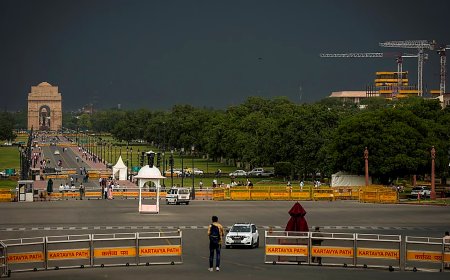
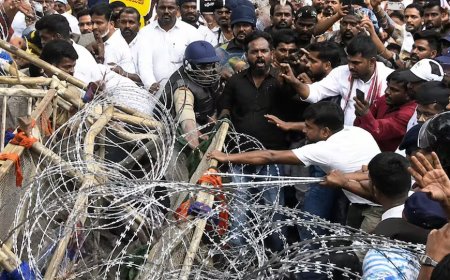
Soon after Wangchuk was shifted to the hospital, Delhi Police cleared the protest site at Jantar Mantar.
The removal of tents, banners, and protest-related materials effectively ended the ongoing demonstration at the venue. Police maintained law and order during the process, and reports indicated that the area was restored to normal public access after the clearance operation.
The police action has become another point of discussion among political leaders, activists, and civil society organizations, with differing opinions emerging over the handling of peaceful demonstrations.
The Core Demands
The movement led by Sonam Wangchuk has consistently revolved around several major issues:
- Constitutional safeguards for Ladakh, including demands linked to the Sixth Schedule.
- Protection of land rights from unchecked commercial acquisition.
- Reservation of employment opportunities for local residents.
- Greater democratic representation and institutional participation.
- Preservation of Ladakh's unique ecological and cultural heritage.
- Sustainable development policies for the Himalayan region.
Supporters argue that these measures are necessary to protect the interests of local communities while ensuring long-term environmental security.
Government's Position
Government representatives have maintained that Ladakh's development remains a priority and have pointed to ongoing investments in infrastructure, connectivity, tourism, and public services.
Authorities have also indicated that discussions with stakeholders have taken place on multiple occasions regarding the region's concerns.
However, several of the demands raised during Wangchuk's protest remain subjects of policy debate, and no comprehensive resolution has yet been announced.
Political and Public Reactions
The hospitalization of Sonam Wangchuk prompted reactions from various political leaders, environmental groups, and civil society organizations.
Supporters praised his commitment to peaceful democratic protest, describing his hunger strike as an effort to highlight issues of national importance rather than personal or political interests.
Meanwhile, political parties responded differently to the developments, with some criticizing the government's handling of the situation and others emphasizing the need for continued dialogue through constitutional and institutional mechanisms.
Environmental activists also expressed concern that climate-related issues affecting Himalayan regions deserve greater policy attention regardless of political differences.
Why Ladakh Matters
Experts have frequently described Ladakh as one of India's most ecologically fragile regions. It contains high-altitude deserts, glaciers, unique biodiversity, and water sources that are increasingly vulnerable to climate change.
Rapid infrastructure expansion, increasing tourism, and changing weather patterns have raised concerns among scientists and environmentalists regarding the long-term sustainability of development in the region.
Wangchuk has consistently argued that policies affecting Ladakh should prioritize ecological preservation alongside economic growth.
The Significance of Jantar Mantar
Jantar Mantar has historically served as one of India's most recognized venues for peaceful democratic protests.
Over the years, numerous social activists, farmers' groups, students, and civil society organizations have gathered there to raise public issues before policymakers.
Wangchuk's 20-day hunger strike has now joined the list of significant public movements associated with the iconic protest site.
What Happens Next?
Although the physical protest at Jantar Mantar has ended following Wangchuk's hospitalization and the police clearance, the larger issues raised by the movement remain unresolved.
Supporters have indicated that they will continue advocating for Ladakh's constitutional safeguards and environmental protection through democratic means.
Whether future discussions between government representatives and Ladakh-based organizations lead to policy changes remains to be seen.
Conclusion
Sonam Wangchuk's hospitalization after a 20-day hunger strike marks a major moment in the ongoing debate over Ladakh's constitutional status, environmental protection, and local governance.
While the protest at Jantar Mantar has concluded, the broader conversation surrounding Ladakh's future continues. Supporters view the movement as a peaceful call for sustainable development and stronger constitutional safeguards, while the government maintains that regional development and stakeholder engagement remain ongoing priorities.
The coming weeks may determine whether the issues raised during the protest translate into fresh dialogue or policy initiatives, but Wangchuk's campaign has once again ensured that Ladakh's concerns remain firmly in the national discourse.
What's Your Reaction?
 Like
0
Like
0
 Dislike
0
Dislike
0
 Love
0
Love
0
 Funny
0
Funny
0
 Angry
0
Angry
0
 Sad
0
Sad
0
 Wow
0
Wow
0