

































Scientists Warn Extreme Heat Could Overload Power Grids and Threaten AI Data Centres Worldwide
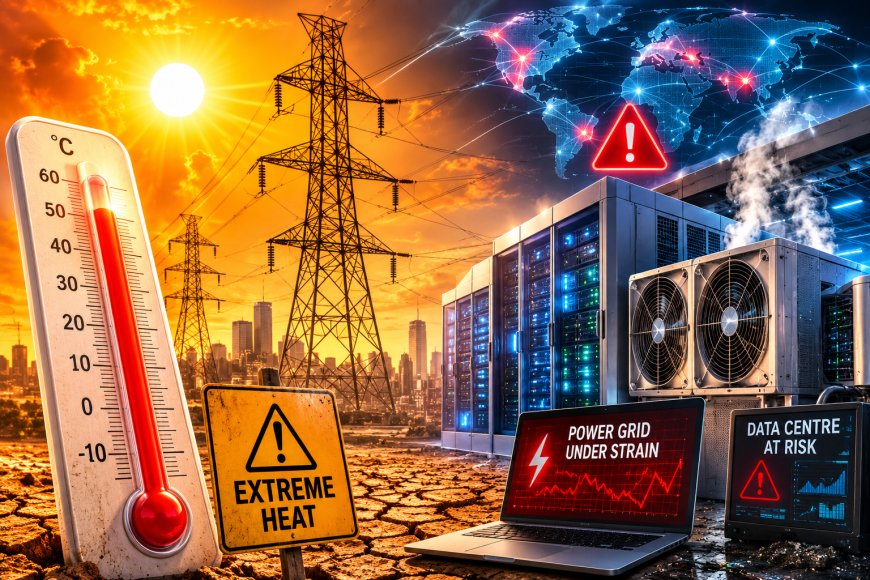
Scientists are warning that intensifying heatwaves driven by climate change could place unprecedented pressure on electricity grids and AI data centres worldwide. Rising temperatures are increasing cooling demands, raising energy consumption, and threatening the reliability of critical digital infrastructure.

Scientists Warn Extreme Heat Could Push Power Grids and AI Data Centres to Their Limits
Scientists are raising fresh concerns over the growing impact of extreme heat on the world's critical infrastructure, warning that increasingly frequent and intense heatwaves could overwhelm power grids while putting enormous strain on AI-powered data centres. As global temperatures continue to rise due to climate change, experts believe governments, utility providers, and technology companies must urgently prepare for higher electricity demand and greater risks of infrastructure failure.
The warning comes as several countries continue to experience record-breaking temperatures, with heatwaves becoming more frequent, longer-lasting, and more severe than in previous decades. Climate researchers argue that these events are no longer isolated incidents but part of a broader global warming trend that is transforming how energy systems operate.
Why Extreme Heat Is Becoming a Bigger Problem
Heatwaves directly affect electricity demand because millions of homes, businesses, hospitals, factories, and commercial buildings rely heavily on air conditioning and cooling systems during periods of extreme temperatures.
When temperatures remain unusually high for several consecutive days, electricity consumption rises sharply. If power generation and transmission systems cannot keep pace with demand, utilities may be forced to implement emergency measures such as controlled power cuts or load shedding to prevent widespread blackouts.
Scientists warn that climate change is making these situations increasingly common.
Power Grids Under Growing Pressure
Electricity grids were designed decades ago for different climate conditions and consumption patterns. Today's energy systems are now being tested by rising temperatures, rapid urbanization, widespread electrification, and the growing adoption of electric vehicles.
Extreme heat can also reduce the efficiency of power plants, transformers, transmission lines, and renewable energy systems. High temperatures cause transmission lines to sag, reduce equipment efficiency, and increase the likelihood of technical failures.
As a result, electricity providers face the dual challenge of meeting record demand while operating infrastructure that becomes less efficient during heatwaves.
AI Data Centres Face a New Challenge
Artificial intelligence has rapidly increased the demand for high-performance computing, leading to the construction of thousands of large-scale data centres around the world.
These facilities operate continuously, processing enormous amounts of information while generating significant heat. To maintain safe operating temperatures, data centres require sophisticated cooling systems that consume large quantities of electricity.
As outside temperatures rise, cooling systems must work harder, increasing operational costs and placing even greater pressure on local power grids.
Experts warn that if cooling systems fail during prolonged heatwaves, servers could overheat, reducing performance, damaging equipment, and disrupting essential digital services.
Energy Demand Continues to Rise
The rapid expansion of cloud computing, artificial intelligence, digital banking, streaming platforms, online education, and e-commerce has dramatically increased global electricity consumption.
At the same time, climate change is pushing cooling requirements to record levels. This combination creates a growing challenge for governments seeking to ensure reliable electricity supplies while reducing greenhouse gas emissions.
Energy analysts believe demand from AI infrastructure alone could become one of the fastest-growing sources of electricity consumption over the next decade.
Climate Change Is Reshaping Infrastructure Planning
Infrastructure planners are increasingly recognizing that future energy systems must be designed for more extreme weather conditions.
Scientists recommend modernizing aging electricity grids, expanding renewable energy generation, improving battery storage capacity, and investing in smarter grid technologies capable of responding to sudden changes in electricity demand.
Technology companies are also exploring more energy-efficient server designs, advanced cooling technologies, and new locations with naturally cooler climates to reduce operating costs.
Economic Consequences Could Be Significant
Extreme heat does not only threaten infrastructure—it also carries major economic consequences.
Large-scale power outages can disrupt manufacturing, healthcare services, financial systems, transportation networks, telecommunications, and internet services. Businesses dependent on cloud computing and AI platforms may experience service interruptions if data centres are affected by prolonged heat events.
In addition, higher electricity demand often leads to increased energy prices, placing additional financial pressure on households and industries.
Governments Face Urgent Decisions
Experts believe governments must accelerate investments in climate-resilient infrastructure before extreme heat events become even more severe.
Recommended measures include strengthening national power grids, expanding renewable energy capacity, improving emergency response systems, upgrading transmission networks, and encouraging energy-efficient cooling technologies.
Public awareness campaigns promoting energy conservation during peak demand periods could also help reduce pressure on electricity systems.
What the Future Could Look Like
Climate models indicate that extreme heat events are likely to become more frequent and intense throughout the coming decades if global greenhouse gas emissions remain high.
This means electricity demand for cooling will continue to increase, while AI-driven digital infrastructure will require even larger amounts of reliable power.
Scientists emphasize that adapting energy infrastructure today will be far less costly than responding to widespread failures in the future.
The latest scientific warning highlights a growing challenge facing both governments and the technology industry. As climate change drives more frequent and intense heatwaves, power grids and AI data centres are likely to face unprecedented pressure from rising electricity demand and cooling requirements.
Without significant investments in resilient infrastructure, smarter energy systems, and sustainable technologies, the risk of power shortages, service disruptions, and economic losses could increase substantially in the years ahead. Experts agree that preparing for a hotter future is no longer optional—it has become an urgent global priority.
What's Your Reaction?
Like
0
Dislike
0
Love
0
Funny
0
Angry
0
Sad
0
Wow
0