






























Indian-Origin Gangster Nitish Kaushal Arrested in U.S. Days After Making FBI’s Most Wanted List
The FBI has arrested Indian-origin alleged gangster Nitish Kaushal, also known as 'Lala', in Vermont, USA. Kaushal was recently added to the FBI’s Most Wanted list and is accused of being involved in an international organized crime network linked to murder, kidnapping, drug trafficking, extortion, weapons trafficking, money laundering, and human trafficking. The case will now proceed through the U.S. federal court system.

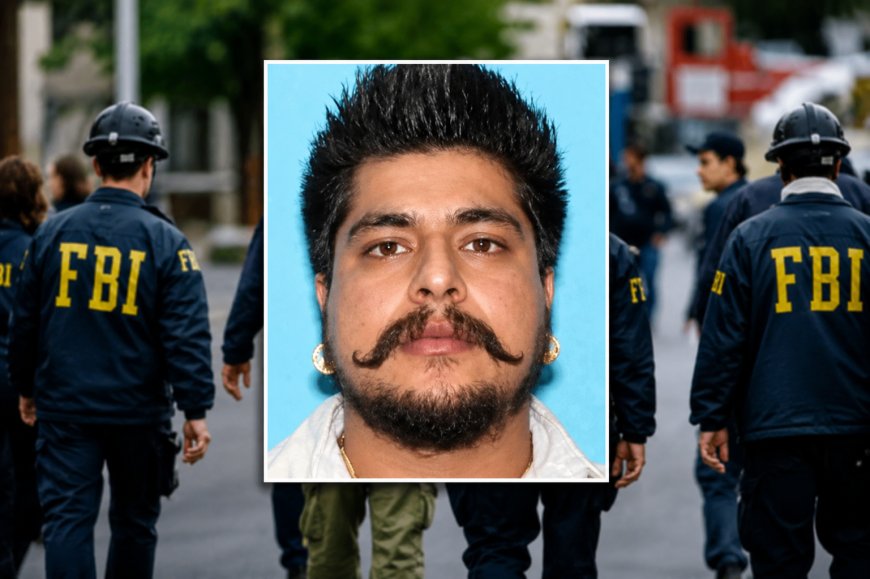
The Federal Bureau of Investigation (FBI) has arrested Indian-origin alleged gangster Nitish Kaushal, also known by the alias 'Lala', in the U.S. state of Vermont. The arrest comes just days after the FBI placed him on its Most Wanted list, marking a significant breakthrough in an ongoing investigation into international organized crime. U.S. authorities describe the operation as a major success in their efforts to dismantle transnational criminal networks operating across multiple countries.
According to the FBI, Nitish Kaushal is alleged to have played a key role in an international organized crime syndicate with links to the Jaggu Bhagwanpuria Organized Crime Group, a criminal network believed to have originated in Punjab, India. Investigators claim the group expanded its operations beyond India, establishing connections in several countries, including the United States. Authorities allege that Kaushal acted on behalf of the organization in carrying out violent criminal activities and helping coordinate illegal operations.
The FBI has accused Kaushal of involvement in a wide range of serious offenses, including murder, conspiracy to commit murder, kidnapping, drug trafficking, extortion, firearms trafficking, money laundering, and human trafficking. U.S. investigators believe these alleged crimes were part of a larger organized criminal enterprise rather than isolated incidents. However, it is important to note that these are allegations, and Kaushal is presumed innocent until proven guilty in a court of law.
Only days before his arrest, the FBI publicly announced that Nitish Kaushal had been added to its Most Wanted list and released his photograph along with details of the charges against him. At the same time, a U.S. federal court issued an arrest warrant under the Racketeer Influenced and Corrupt Organizations (RICO) Act, a powerful federal law used to prosecute members of organized crime syndicates and criminal enterprises.
The RICO Act has long been one of the most effective legal tools available to U.S. law enforcement agencies in combating organized crime. Unlike traditional criminal charges that focus on individual offenses, RICO allows prosecutors to target entire criminal organizations by demonstrating a pattern of illegal activity. This enables investigators to pursue not only those who commit crimes directly but also those who finance, coordinate, or benefit from organized criminal operations.
According to U.S. authorities, the Jaggu Bhagwanpuria network allegedly expanded its activities through an international network of associates who coordinated criminal operations across borders. Investigators believe some members operated from overseas while directing or supporting illegal activities in multiple jurisdictions. These allegations prompted the FBI and other federal agencies to launch a coordinated investigation aimed at identifying individuals connected to the organization.
Following his arrest in Vermont, Kaushal has been taken into federal custody and is expected to appear before a U.S. court, where prosecutors will formally present the charges against him. He will have the opportunity to respond to those allegations through the judicial process. Investigators are also expected to question him extensively regarding his alleged associates, financial transactions, communication channels, and possible links to other suspects involved in the case.
The FBI confirmed the arrest through its official communication channels, stating that the operation was carried out successfully without disclosing further operational details. Federal authorities have indicated that the investigation remains active and that additional arrests or legal actions could follow if new evidence emerges during the course of the inquiry.
Law enforcement officials allege that Kaushal participated in several violent incidents on behalf of the criminal organization. These alleged activities include kidnappings, assaults, extortion schemes, and the movement of illegal narcotics and firearms. Investigators are also examining financial records to determine whether proceeds from criminal activities were laundered through international channels. However, these allegations remain subject to judicial review, and the evidence will ultimately be assessed by the court.
Security experts say the arrest reflects growing cooperation between the United States and India in combating transnational organized crime. Over the past several years, law enforcement agencies from both countries have increased intelligence sharing, coordinated investigations, and strengthened legal cooperation to address criminal networks that operate across international borders.
Experts also point out that modern organized crime has become increasingly sophisticated. Criminal organizations now use encrypted communication platforms, global financial systems, and international logistics networks to expand their reach. As a result, no single country can effectively combat these organizations alone. International cooperation between investigative agencies has become essential in tracking suspects, gathering evidence, and disrupting criminal operations.
Legal analysts note that if prosecutors successfully prove the RICO conspiracy charges in court, the penalties could be severe. Convictions under the RICO Act often carry lengthy prison sentences, substantial financial penalties, and the forfeiture of assets linked to criminal enterprises. Nevertheless, any such outcome will depend entirely on the evidence presented during the trial and the court's final judgment.
Investigators are also working to determine whether Kaushal maintained operational links with other alleged members of the organization currently residing in different countries. Authorities believe the ongoing investigation may uncover additional individuals connected to the network, potentially leading to further arrests and international legal proceedings.
The case has drawn considerable attention in both India and the United States because of its alleged links to cross-border organized crime. Security observers believe the arrest could represent a significant step toward dismantling larger criminal networks operating internationally. At the same time, legal experts stress the importance of allowing the judicial process to proceed independently and ensuring that all allegations are tested in court.
For now, Nitish Kaushal remains in U.S. federal custody as authorities continue their investigation. His upcoming court appearances are expected to determine the next stages of the legal process. Investigators will continue gathering evidence while examining whether additional suspects or criminal enterprises are connected to the case.
Although the FBI has described the arrest as a major milestone in its investigation into organized crime, the allegations against Nitish Kaushal have not yet been proven in court. Under the U.S. legal system, every defendant is presumed innocent unless and until proven guilty beyond a reasonable doubt. The final outcome of the case will depend on the evidence presented during judicial proceedings and the decision of the federal court.
What's Your Reaction?
 Like
0
Like
0
 Dislike
0
Dislike
0
 Love
0
Love
0
 Funny
0
Funny
0
 Angry
0
Angry
0
 Sad
0
Sad
0
 Wow
0
Wow
0