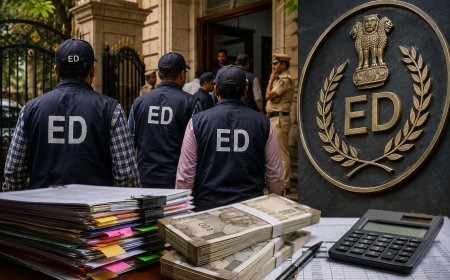



































Major ATS Crackdown in Gujarat: Jaish-Inspired Terror Module Busted, Suspects Allegedly Preparing Bomb Blasts for Two Years
In a major counter-terrorism operation, the Gujarat Anti-Terrorism Squad (ATS) has busted an alleged terror module believed to be inspired by the banned terror outfit Jaish-e-Mohammed (JeM). Investigators claim the accused had allegedly been conducting bomb-making experiments and blast trials for nearly two years. Several suspects have been arrested, and the investigation is ongoing.


Gujarat ATS Busts Alleged Jaish-Inspired Terror Module; Suspects Accused of Conducting Bomb Blast Trials for Two Years
India's security agencies have achieved a significant breakthrough in a major counter-terrorism operation after the Gujarat Anti-Terrorism Squad (ATS) uncovered an alleged terror module believed to be inspired by the banned terrorist organization Jaish-e-Mohammed (JeM). According to investigators, the suspects had allegedly spent nearly two years experimenting with explosive materials and conducting bomb blast trials as part of an alleged conspiracy. The operation has once again highlighted the continuing efforts of Indian security agencies to detect and dismantle potential terror networks before they can pose a serious threat to public safety.
The ATS launched the operation following intelligence inputs and an extensive investigation into suspicious activities. Officials claim that the accused were allegedly involved in acquiring explosive materials, learning methods of preparing improvised explosive devices (IEDs), and conducting small-scale explosion tests at isolated locations. Investigators believe these activities may have been intended to improve their technical knowledge and capabilities.
Authorities have arrested multiple suspects during the operation, while searches have been carried out at several locations linked to the investigation. Security officials have reportedly recovered electronic devices, digital records, and other materials that are now being examined by forensic experts. Investigators are attempting to determine whether the suspects had any operational plans or connections with larger extremist networks operating inside or outside India.
According to preliminary findings, the accused were allegedly influenced by extremist propaganda associated with Jaish-e-Mohammed, one of the world's most notorious terrorist organizations. Investigators are examining digital communications, online activities, and electronic evidence to establish whether the suspects maintained direct contact with any foreign handlers or were merely influenced by online radical content.
Officials have emphasized that the investigation is still at an early stage and several aspects of the alleged conspiracy remain under examination. At present, authorities are working to identify every individual who may have been involved in the network, along with the source of funding, procurement of materials, and communication channels allegedly used by the suspects.
Security experts note that terrorism has increasingly evolved in the digital era. Unlike earlier decades, extremist organizations now frequently use encrypted messaging platforms, social media applications, and online propaganda to spread radical ideology and recruit supporters. This has significantly increased the importance of cyber intelligence and digital surveillance in modern counter-terrorism operations.
The Gujarat ATS operation demonstrates how intelligence-led investigations can help prevent potential threats before they develop into major security incidents. Early intervention allows law enforcement agencies to disrupt suspicious activities, gather evidence, and neutralize possible risks without waiting for an attack to occur.
The investigation also focuses on the alleged bomb-making experiments reportedly conducted over the last two years. According to investigators, these trials involved the use of explosive substances in limited quantities to test techniques and understand the functioning of improvised explosive devices. Officials are now examining whether these experiments were isolated activities or part of preparations for a larger conspiracy.
India has significantly strengthened its anti-terror framework over the past decade by improving intelligence sharing, increasing coordination among state and central agencies, and expanding digital forensic capabilities. Specialized units such as state Anti-Terrorism Squads, the National Investigation Agency (NIA), Intelligence Bureau (IB), and other law enforcement agencies regularly work together to monitor extremist activities and identify emerging threats.
Experts believe that online radicalization has become one of the biggest challenges for security agencies worldwide. Individuals can now access extremist literature, bomb-making manuals, and propaganda through the internet, making early detection more difficult. As a result, cyber monitoring has become a crucial element of national security operations.
The Gujarat ATS case has once again highlighted the importance of vigilance at every level of law enforcement. Intelligence gathering, public cooperation, and technological surveillance continue to play a vital role in identifying suspicious activities before they escalate into larger security concerns.
Officials have not yet disclosed whether the alleged module had selected specific targets. Investigators are carefully examining every piece of evidence to understand the full scope of the alleged conspiracy. Digital devices recovered during the raids are expected to provide further insights into communication records, planning, and possible links with other individuals.
Counter-terrorism experts stress that investigations involving alleged extremist modules require careful examination of evidence and due legal process. Arrests made during the investigation represent the beginning of judicial proceedings, and all allegations must ultimately be tested in court. Under the legal system, every accused individual is presumed innocent until proven guilty through due process.
The latest operation also demonstrates the continuing efforts of Indian security agencies to remain alert against evolving security threats. As extremist organizations adapt their recruitment methods and communication techniques, law enforcement agencies are increasingly relying on advanced technology, artificial intelligence, forensic science, and cyber investigations to stay ahead.
For the public, the Gujarat ATS operation serves as a reminder of the importance of national security preparedness. While most counter-terrorism operations remain unseen by ordinary citizens, intelligence-based interventions often prevent incidents before they can endanger lives.
The investigation is expected to continue in the coming weeks as forensic analysis, interrogation of the accused, and examination of digital evidence progress. Authorities are also working to determine whether the alleged network had wider national or international links.
The operation underscores India's continued commitment to combating terrorism through intelligence-driven policing, coordinated investigations, and strict enforcement of anti-terror laws. Security agencies have reiterated that protecting public safety remains their highest priority.
As investigators continue to uncover details surrounding the alleged Jaish-inspired terror module, the Gujarat ATS operation stands out as a significant counter-terrorism effort. The coming days will reveal whether the investigation uncovers a larger network or confirms that the alleged conspiracy was limited to those already in custody.
What's Your Reaction?
 Like
0
Like
0
 Dislike
0
Dislike
0
 Love
0
Love
0
 Funny
0
Funny
0
 Angry
0
Angry
0
 Sad
0
Sad
0
 Wow
0
Wow
0