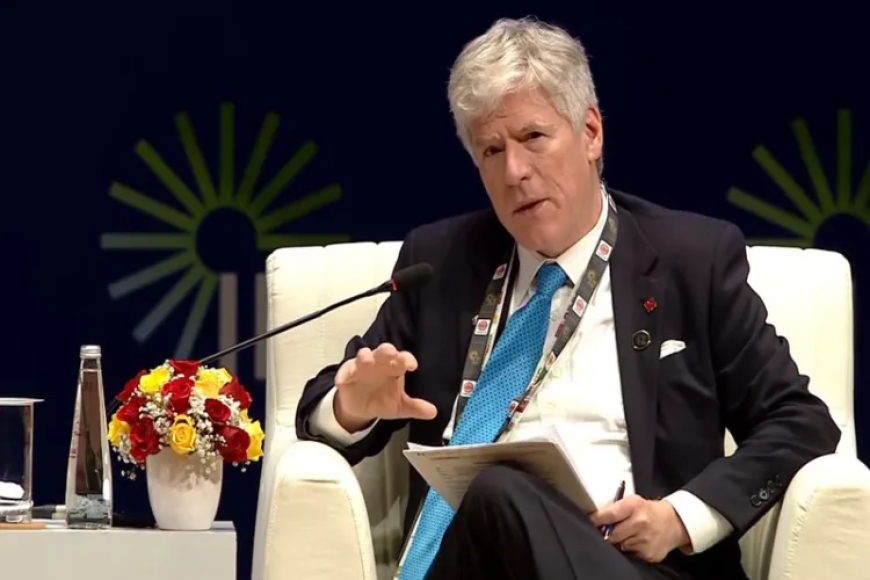
Calling it a landmark moment in global trade diplomacy, Canada’s energy minister has described the India-European Union free trade agreement (FTA) as a “perfect example” of countries pushing back against so-called hegemons that weaponise tariffs to exert influence and control.
Speaking on the shifting dynamics of global commerce, the minister said the India-EU pact reflects a growing willingness among major economies to prioritise fair, rules-based trade over coercive practices. According to him, the agreement demonstrates how like-minded partners can come together to reduce dependence on dominant powers that use trade barriers and tariff threats as strategic leverage.
The minister noted that India and the EU, by navigating complex negotiations and longstanding differences, have sent a broader message about economic sovereignty and mutual respect. The deal, he argued, is not just about lowering tariffs or expanding market access, but about reinforcing the idea that trade partnerships should be based on cooperation rather than intimidation.
He also suggested that such agreements could reshape global supply chains, encourage diversification, and give emerging and mid-sized economies greater confidence to assert their interests. In an increasingly fragmented global economy, the India-EU FTA stands out as a signal that countries are willing to chart independent paths and collectively resist coercive trade tactics.
The remarks underline how trade agreements are now seen not only as economic instruments, but also as geopolitical statements in a world where tariffs and sanctions are increasingly used as tools of power politics.




























 Like
0
Like
0
 Dislike
0
Dislike
0
 Love
0
Love
0
 Funny
0
Funny
0
 Angry
0
Angry
0
 Sad
0
Sad
0
 Wow
0
Wow
0