































Pakistan’s Central Bank Receives $1.2B IMF Tranche for Climate Resilience — Regional Implications for India
Pakistan’s central bank received $1.2 billion from the IMF under macroeconomic and climate resilience programs. The funds aim to stabilize Pakistan’s economy and strengthen climate adaptation, with important economic and regional implications for India and South Asia.


Pakistan’s central bank announced on Thursday that it has received $1.2 billion from the International Monetary Fund (IMF) after the lender’s Executive Board approved the release of fresh funds under its ongoing economic support arrangements, including a climate-focused financing facility. The disbursement reflects progress in Pakistan’s reform commitments but raises important geopolitical and economic considerations for neighboring India.
IMF Support Package and Climate Resilience Goals
The $1.2 billion tranche includes $1 billion under the Extended Fund Facility (EFF)—aimed at stabilizing macroeconomic conditions—and $200 million under the Resilience and Sustainability Facility (RSF), a climate-focused program designed to help economies better cope with climate-related shocks such as floods, droughts, and extreme weather events.
The funds are expected to be reflected in the State Bank of Pakistan’s foreign exchange reserves for the week ending December 12. This latest disbursement brings total IMF support under the combined EFF and RSF programs to approximately $3.3 billion, part of a broader $7 billion, 37-month bailout package agreed to in late 2024.
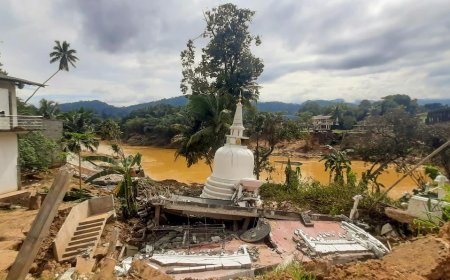
IMF officials have noted that Pakistan’s reform efforts—including fiscal discipline, structural policy changes, and resilience planning—have enabled the release of the funds despite recent economic challenges. The RSF financing is specifically aimed at promoting long-term climate resilience, following devastating floods in 2022 that caused widespread loss of life and billions in economic damages.
Economic Stability and Regional Impacts
For Pakistan, the IMF support comes at a critical moment when foreign exchange reserves remain tight and inflationary pressures persist. Strengthening reserves and fiscal buffers is key to maintaining macroeconomic stability and ensuring Pakistan can meet its debt obligations while investing in vital infrastructure and climate adaptation.
From a regional perspective, India will be watching closely how Pakistan uses these funds. A stable Pakistan economy can reduce the risk of sudden economic shocks that reverberate across the subcontinent. However, New Delhi remains attentive to how Islamabad balances economic recovery with its defense and foreign policy priorities, especially given periodic tensions along the India–Pakistan border. India has previously raised concerns in international forums about financial assistance going to countries facing security challenges when not matched with clear governance benchmarks, particularly given the complex security dynamics in South Asia.
Climate Resilience and Cross-Border Environmental Concerns
The RSF component’s focus on climate resilience has both domestic and regional implications. South Asia is one of the most climate-vulnerable regions in the world, and extreme weather events often impact multiple countries, including India. Strengthening disaster preparedness, water resource management, and adaptive capacity in Pakistan can reduce transboundary environmental risks—such as shared river basin management challenges and cross-border displacement caused by floods or drought.
Geopolitical and Economic Outlook
While the IMF’s approval signals confidence in Pakistan’s reform trajectory, it also underscores the importance of sustained policy discipline. Continued macroeconomic reforms, transparent fiscal governance, and effective use of climate financing will be essential to ensure long-term stability. For India, a more economically stable Pakistan could reduce volatility along the frontier and create openings for enhanced economic cooperation, though strategic competition will likely persist.
The IMF has emphasized that further disbursements will depend on Pakistan meeting ongoing performance benchmarks, urging continued efforts to tighten fiscal policy, modernize public finances, and strengthen resilience to climate and external shocks.
What's Your Reaction?
 Like
0
Like
0
 Dislike
0
Dislike
0
 Love
0
Love
0
 Funny
0
Funny
0
 Angry
0
Angry
0
 Sad
0
Sad
0
 Wow
0
Wow
0