






















Taslima Nasrin Set to Return to Kolkata After 20 Years; Exiled Bangladeshi Author to Attend Anti-Radicalism Event
Exiled Bangladeshi author Taslima Nasrin is set to return to Kolkata after nearly two decades to participate in an anti-radicalism programme at Rabindra Sadan. Her visit marks a significant moment, as she was forced to leave the city in 2007 following violent protests over her writings.

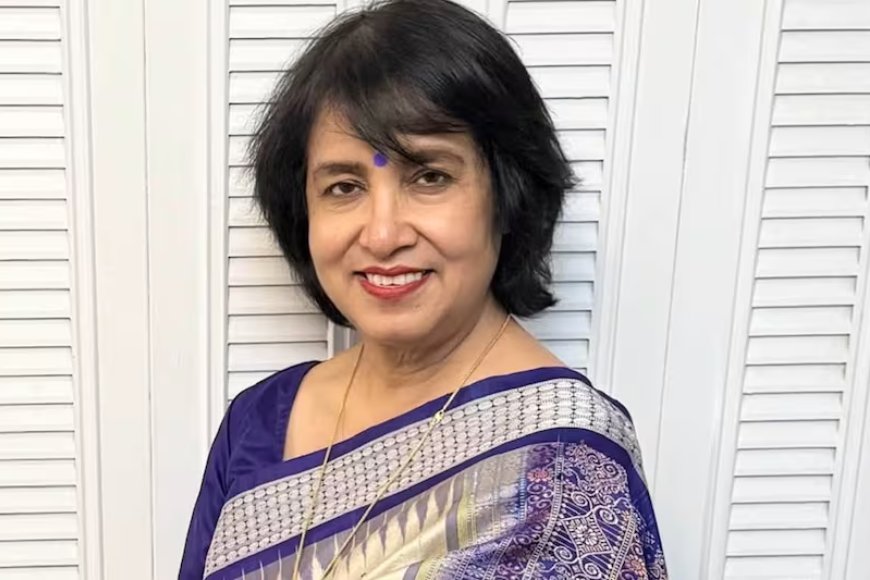
Exiled Bangladeshi author and activist Taslima Nasrin is preparing to return to Kolkata after nearly 20 years, marking a highly symbolic moment in her long and turbulent relationship with the city she once called home. Nasrin is expected to attend an anti-radicalism programme at Kolkata's Rabindra Sadan, a visit that has generated widespread attention in literary, political, and social circles.
For Taslima Nasrin, Kolkata has always held deep emotional significance. After being forced to flee Bangladesh in 1994 because of death threats from religious extremists over her writings, she spent several years living in Europe and the United States before moving to Kolkata in 2004. Sharing a common Bengali language and cultural heritage, she often described the city as her second home and hoped to continue her literary career there.
However, her stay in Kolkata was cut short in 2007 after violent protests erupted against her writings. Demonstrations by radical groups created a major law-and-order situation, forcing authorities to move her out of the city. She was later relocated to New Delhi under heavy security, effectively ending her life in Kolkata. Since then, Nasrin has repeatedly expressed her desire to return to the city where she believed she truly belonged.
Her upcoming visit is therefore being viewed as much more than a routine public appearance. It represents the possibility of reconnecting with a city that played a crucial role in her literary journey. According to reports, she will participate in a programme focusing on opposition to religious radicalism, promotion of free speech, and democratic values.
Taslima Nasrin rose to international prominence during the early 1990s through her novels, essays, and newspaper columns that advocated women's rights, secularism, and freedom of expression. Her writings frequently criticized religious fundamentalism, gender discrimination, and social inequality, making her one of South Asia's most controversial literary figures.
Her 1993 novel "Lajja" (Shame) became one of the most widely discussed books in South Asia. The novel portrayed communal violence and religious intolerance in Bangladesh, leading to severe backlash from extremist groups. The book was banned in Bangladesh, and multiple fatwas were issued against Nasrin, forcing her into exile in 1994. Since then, she has lived outside her homeland under security protection.
Despite decades in exile, Nasrin has continued writing extensively on feminism, secularism, human rights, and freedom of speech. Her autobiography, essays, poetry, and novels have been translated into numerous languages and continue to attract readers worldwide. However, many of her books remain controversial and have faced bans in different countries.
Kolkata occupies a unique place in Nasrin's personal life. During the three years she lived there, she contributed regularly to Bengali newspapers and literary magazines while actively participating in the city's vibrant cultural life. She often described Kolkata as the place where she felt linguistically and emotionally connected despite not being allowed to return to Bangladesh.
Over the years, Nasrin has repeatedly appealed for permission to live in Kolkata permanently. She has stated in several interviews that Bengali literature remains central to her identity and that Kolkata is the city where she feels most at home. Political leaders and writers have occasionally supported her request, arguing that freedom of expression should be protected in a democratic society.
Her return also comes against the backdrop of renewed debates over freedom of speech, secularism, and the role of writers in challenging social and religious orthodoxy. Supporters regard Nasrin as a courageous voice who has consistently defended women's rights and secular values despite facing threats and exile. Critics, however, have argued that some of her writings have offended religious sentiments, making her one of the most polarizing authors in South Asia.
The anti-radicalism programme she is expected to attend is likely to focus on combating extremism while promoting dialogue, tolerance, and constitutional values. Organizers believe that Nasrin's personal experiences with religious intolerance make her an important voice in discussions on freedom of expression and democratic rights.
Security arrangements for her visit are also expected to remain tight given her history of receiving threats from extremist organizations. In the past, authorities have taken special precautions during her public appearances in India due to security concerns.
The announcement of her return has generated mixed reactions. Many writers, intellectuals, and supporters have welcomed the development, calling it a symbolic moment for literature and free expression. Others continue to debate her views and the controversies surrounding her work. Nevertheless, there is broad recognition that Taslima Nasrin remains one of the most influential and debated literary figures in South Asia.
For many observers, her return to Kolkata carries emotional significance beyond politics. It reflects the enduring bond between an exiled writer and the city where she once rebuilt her life after leaving her homeland. Whether the visit eventually leads to a longer stay remains uncertain, but it undoubtedly marks an important chapter in her decades-long journey.
As Kolkata prepares to welcome Taslima Nasrin after nearly twenty years, her visit is expected to revive conversations about literature, secularism, democracy, and the importance of protecting freedom of expression. Regardless of differing opinions about her writings, her return underscores the continuing relevance of debates surrounding human rights, artistic freedom, and the role of writers in shaping public discourse.
What's Your Reaction?
 Like
0
Like
0
 Dislike
0
Dislike
0
 Love
0
Love
0
 Funny
0
Funny
0
 Angry
0
Angry
0
 Sad
0
Sad
0
 Wow
0
Wow
0