

































Three Workers Die After Inhaling Toxic Gas Inside Septic Tank at Delhi's Mundka Factory
Three labourers lost their lives after inhaling toxic gases while cleaning a septic tank inside a factory in Delhi's Mundka industrial area. The tragic incident has once again raised serious concerns over workplace safety and the continued violation of safety norms during confined-space cleaning operations.

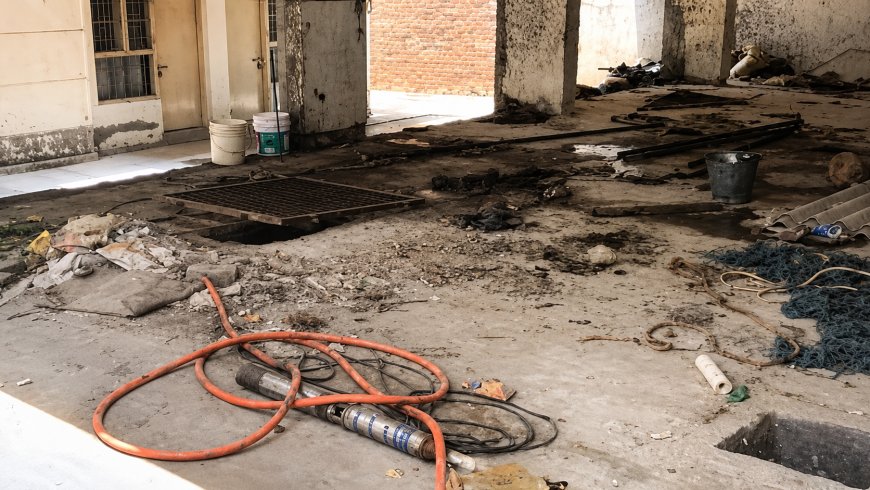
New Delhi: A tragic industrial accident claimed the lives of three labourers after they allegedly inhaled toxic gases while cleaning a septic tank inside a factory in Delhi's Mundka industrial area on Friday. The incident has once again highlighted the dangers faced by sanitation and industrial workers and raised questions over adherence to workplace safety regulations.
According to officials, the accident occurred during routine cleaning work inside a septic tank at a factory located in Outer Delhi's Mundka area. Initial reports suggest that one worker entered the tank first and lost consciousness after being exposed to poisonous gases. In an attempt to rescue him, two other workers entered the confined space one after another, but they too were overcome by the toxic fumes and collapsed inside the tank.
Local authorities were immediately informed, following which teams from the Delhi Police, Fire Department, and emergency rescue services rushed to the spot. Rescue personnel managed to pull all three workers out of the septic tank and shifted them to a nearby hospital. However, doctors declared all three brought dead.
Police have identified the deceased as daily wage labourers who had been hired for the cleaning work. Their bodies have been sent for post-mortem examination, while the exact cause of death will be confirmed after forensic and medical reports. Preliminary findings indicate that the workers likely died due to oxygen depletion and exposure to toxic gases such as hydrogen sulphide and methane, which commonly accumulate inside enclosed septic tanks.
Authorities have launched an investigation to determine whether the factory management and contractor followed mandatory safety protocols before allowing the workers to enter the septic tank. Investigators are examining whether gas detection tests were conducted, whether protective equipment such as oxygen masks, safety harnesses, and breathing apparatus were provided, and whether standard operating procedures for confined-space entry were followed.
Police officials said legal action will be initiated if negligence or violation of safety regulations is established during the investigation.
Industrial safety experts note that septic tanks and underground chambers are classified as confined spaces where toxic gases can build up rapidly. Entering such spaces without proper ventilation, gas monitoring equipment, and protective gear can prove fatal within seconds due to oxygen deficiency or poisoning.
The incident has once again drawn attention to workplace safety in India's industrial sector. Despite strict guidelines issued under occupational safety laws and the prohibition of hazardous manual cleaning practices, similar accidents continue to occur in different parts of the country, often due to negligence and the failure to implement basic safety measures.
Experts emphasize that cleaning septic tanks should ideally be carried out using mechanized equipment. In situations where manual entry becomes unavoidable, employers are legally and ethically responsible for ensuring workers receive proper safety training and are equipped with certified protective equipment. Emergency rescue teams must also be present before anyone enters a confined space.
The deaths have left the victims' families devastated, with relatives demanding strict action against those responsible and adequate financial compensation. Family members alleged that if proper safety measures had been followed, the tragedy could have been prevented.
Labour rights groups have also called for stricter enforcement of industrial safety standards, arguing that repeated accidents involving septic tanks and sewer systems expose systemic failures in worker protection. They urged authorities to hold employers accountable and ensure that hazardous cleaning work is fully mechanized wherever possible.
The tragic incident in Mundka serves as another grim reminder of the risks faced by workers performing hazardous jobs without adequate protection. As investigations continue, attention remains focused on whether negligence contributed to the deaths and what steps authorities will take to prevent similar incidents in the future.
The Delhi Police have registered a case and are continuing their probe. Further action will depend on the findings of the investigation, post-mortem reports, and statements from factory officials, contractors, and eyewitnesses.
The incident has reignited the debate over industrial safety, workplace accountability, and the urgent need for stricter compliance with safety norms to ensure that no worker loses their life while performing routine maintenance duties.
What's Your Reaction?
 Like
0
Like
0
 Dislike
0
Dislike
0
 Love
0
Love
0
 Funny
0
Funny
0
 Angry
0
Angry
0
 Sad
0
Sad
0
 Wow
0
Wow
0