


















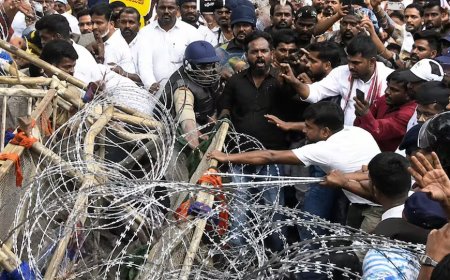

What Is the E20 Janata Party? Why Is Social Media Buzzing Over the Demand for 100% Petrol? Explained
The newly emerged E20 Janata Party has gone viral across social media, with thousands of users demanding the return of 100% petrol instead of the current E20 ethanol-blended fuel. The digital campaign has sparked a nationwide debate over fuel efficiency, vehicle compatibility, mileage, and government ethanol-blending policies. Here's everything you need to know about the movement and why it is gaining momentum.

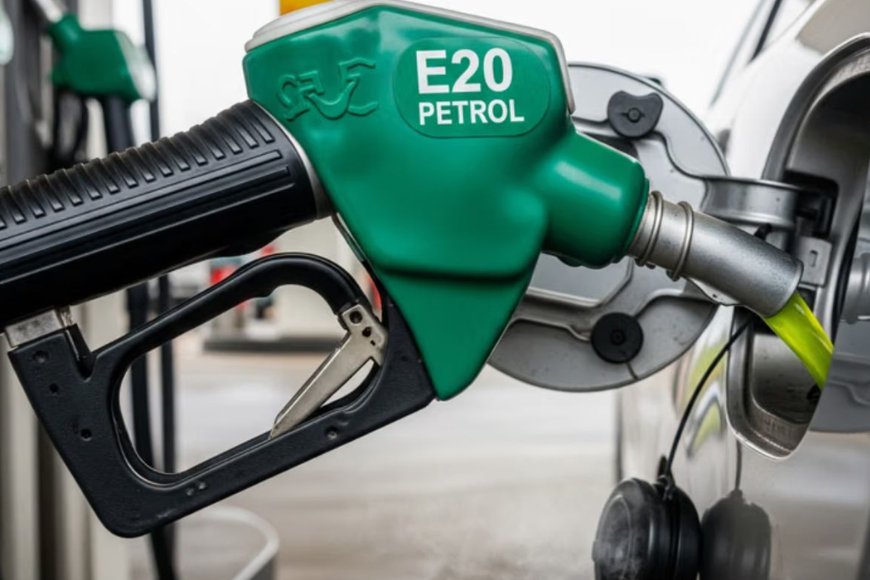
What Is the E20 Janata Party? Why Is Social Media Buzzing Over the Demand for 100% Petrol? Here's the Complete Story
A new digital campaign called the E20 Janata Party has taken social media by storm, becoming one of the most discussed topics among Indian vehicle owners. Despite its political-sounding name, the E20 Janata Party is not a registered political organisation. Instead, it is a citizen-driven online movement launched to protest the increasing use of E20 fuel—petrol blended with 20% ethanol—and to demand the availability of 100% pure petrol at fuel stations.
Within days of its emergence, the campaign attracted thousands of supporters across platforms such as X, Instagram, Facebook, and YouTube. Memes, videos, opinion posts, and hashtags have flooded timelines, with users expressing concerns over declining mileage, engine performance, maintenance costs, and the compatibility of older vehicles with ethanol-blended fuel. The campaign has also triggered discussions among automobile experts, environmentalists, policymakers, and fuel companies about the future of India's transport sector.
What Is the E20 Janata Party?
The E20 Janata Party is an informal, social media-driven campaign rather than a conventional political party. It was created by a group of vehicle owners and digital creators who argue that consumers should have the option to choose between ethanol-blended fuel and conventional petrol.
Supporters say their objective is not to oppose renewable energy or ethanol production but to demand consumer choice. According to the campaign, motorists who own vehicles not specifically designed for E20 fuel should have access to regular petrol without ethanol blending.
Because of its unusual name and viral branding, many people initially assumed it was a new political outfit. However, its organisers have clarified that the initiative is a public awareness movement focused on fuel policy rather than electoral politics.
What Is E20 Fuel?
E20 petrol refers to fuel containing 20% ethanol and 80% conventional petrol. Ethanol is a renewable biofuel primarily produced from sugarcane, maize, damaged food grains, and agricultural feedstock.
The Indian government has promoted ethanol blending as part of its strategy to reduce dependence on imported crude oil, improve energy security, lower greenhouse gas emissions, and increase farmers' income by creating additional demand for agricultural products.
India originally planned to achieve the 20% ethanol blending target by 2030 but later advanced the deadline after rapid progress in blending levels and ethanol production capacity.
Why Is the Government Promoting Ethanol Blending?
The ethanol blending programme has several long-term policy objectives.
First, India imports a significant portion of its crude oil requirements. Increasing domestic ethanol production reduces dependence on expensive oil imports and helps improve energy security.
Second, ethanol is considered a cleaner-burning fuel than conventional petrol, helping reduce certain vehicle emissions.
Third, the policy provides an additional market for agricultural produce, especially sugarcane and maize, thereby creating new income opportunities for farmers and ethanol producers.
Fourth, blending ethanol with petrol supports India's broader climate commitments by encouraging the use of renewable fuels.
Government officials have repeatedly described ethanol blending as a strategic economic and environmental initiative rather than merely a fuel policy.
Why Is the E20 Janata Party Opposing It?
The campaign is centred on concerns raised by a section of motorists rather than outright opposition to renewable fuels.
Many vehicle owners claim that they have experienced reduced fuel efficiency after switching to E20 petrol. Since ethanol contains less energy per litre than petrol, some users report lower mileage, although the actual impact varies depending on engine design and driving conditions.
Owners of older motorcycles, scooters, and cars are also worried about long-term compatibility. Some fear that rubber components, fuel lines, seals, or engine parts in older vehicles may not be fully designed to handle higher ethanol concentrations over extended periods.
Another concern relates to maintenance costs. Some motorists believe they could face higher repair expenses if their vehicles are not optimised for E20 fuel.
The campaign therefore argues that consumers should be allowed to purchase regular petrol if they prefer, particularly those driving vehicles manufactured before widespread E20 compatibility standards were introduced.
What Does the Automobile Industry Say?
Most major automobile manufacturers have been preparing for India's transition towards E20 fuel for several years. Newer vehicle models are increasingly being designed and certified to operate safely with E20 petrol.
Manufacturers have advised customers to check their owner's manuals and confirm whether their specific vehicle model is compatible with E20 fuel. Many companies have also introduced engineering modifications to ensure compliance with the government's blending roadmap.
However, experts note that compatibility differs between vehicle generations. While many recently manufactured vehicles are designed for E20 fuel, older models may require closer attention to manufacturer recommendations.
Is E20 Fuel Harmful?
There is no simple yes-or-no answer.
For vehicles specifically designed or approved for E20 fuel, manufacturers generally consider it safe under normal operating conditions.
For older vehicles that were never engineered for higher ethanol blends, the situation may vary depending on the make, model, age, and maintenance history. Experts recommend following the vehicle manufacturer's official guidance rather than relying solely on social media claims.
Mileage differences also depend on engine tuning, driving style, road conditions, and vehicle technology. Some users notice little change, while others report a measurable difference.
Why Has the Campaign Gone Viral?
Several factors have contributed to the campaign's rapid popularity.
The name "E20 Janata Party" immediately attracted attention because it resembles a political organisation.
Secondly, fuel prices remain a sensitive issue for millions of Indians, making any discussion related to petrol highly engaging on social media.
Thirdly, motorists frequently share personal experiences regarding mileage and maintenance, helping the campaign spread through user-generated content.
Finally, memes and humorous videos have amplified public participation, making the campaign trend far beyond traditional automotive communities.
Is the Government Likely to Change Its Policy?
As of now, there has been no indication that the government plans to reverse its ethanol blending programme.
Officials continue to emphasise the economic, environmental, and strategic benefits of increasing ethanol usage while encouraging automobile manufacturers to ensure vehicle compatibility.
However, the viral discussion has highlighted the importance of public awareness, transparent communication, and consumer education regarding fuel compatibility. Industry experts believe that clearer labelling, manufacturer guidance, and public information campaigns could help address many consumer concerns.
The Road Ahead
The E20 Janata Party has transformed what might have remained a niche technical discussion into a nationwide conversation about fuel policy, consumer rights, and the future of mobility in India.
Whether the campaign ultimately influences policy remains uncertain, but it has succeeded in drawing attention to questions that many vehicle owners are asking. As India continues its transition towards cleaner and more sustainable fuels, balancing environmental goals with consumer confidence will remain an important challenge.
For now, the debate reflects two competing priorities—reducing fossil fuel dependence through renewable alternatives while ensuring that vehicle owners have clear information and practical choices. Regardless of where one stands on the issue, the rise of the E20 Janata Party demonstrates how social media can rapidly shape public discourse around national policy.
What's Your Reaction?
 Like
0
Like
0
 Dislike
0
Dislike
0
 Love
0
Love
0
 Funny
0
Funny
0
 Angry
0
Angry
0
 Sad
0
Sad
0
 Wow
0
Wow
0