






















Ahead of 8th Pay Commission, IAS Officers Seek Higher Compensation for Remote Postings and Raise Pension Concerns
As discussions around the 8th Pay Commission gather momentum, sections of the Indian Administrative Service (IAS) have reportedly pushed for enhanced financial incentives for officers serving in remote and strategically important regions such as Ladakh and the North-East. Concerns regarding the National Pension System (NPS) and long-term retirement benefits have also emerged as key issues.

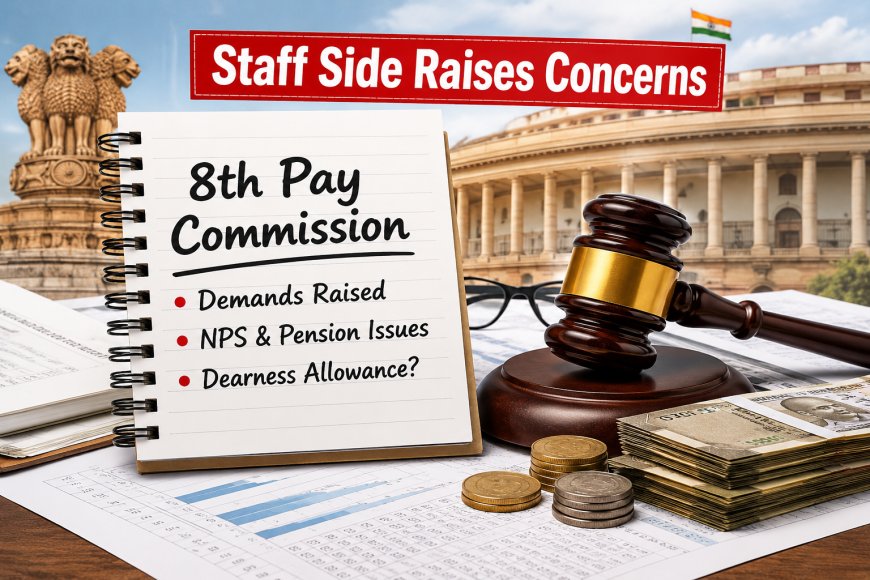
The debate over salaries, allowances, and retirement benefits for India's civil servants has intensified ahead of the proposed 8th Pay Commission, with members of the Indian Administrative Service (IAS) reportedly advocating for a revised compensation structure that better reflects the challenges of serving in difficult and remote locations.
According to officials familiar with the discussions, one of the key demands relates to higher financial incentives for officers posted in regions such as Ladakh and the North-Eastern states. These areas are often characterized by difficult terrain, extreme weather conditions, logistical challenges, and limited access to urban infrastructure. Officers argue that the current compensation framework does not adequately account for the hardships associated with such postings.
The demand comes as the government increasingly emphasizes administrative efficiency and development in border and strategically sensitive regions. Supporters of the proposal contend that enhanced incentives could encourage experienced officers to accept and remain in challenging assignments, thereby improving governance and public service delivery in these areas.
Another major issue being raised concerns the National Pension System (NPS), which replaced the traditional defined-benefit pension scheme for most central government employees joining service after January 1, 2004. Some officers have reportedly expressed concerns over retirement security under the market-linked pension model and are seeking a review of certain provisions. They argue that greater predictability and long-term financial protection should form part of future reforms.
The discussions are taking place against the backdrop of expectations surrounding the 8th Pay Commission, which is expected to review salary structures, allowances, pension benefits, and other service-related provisions for millions of central government employees and pensioners. Historically, Pay Commissions have played a significant role in determining government compensation policies and often influence salary structures across state governments and public sector institutions.
While no final recommendations have been released, experts note that any significant changes to salaries or allowances would need to balance employee welfare with fiscal considerations. The government faces the challenge of ensuring competitive compensation for public servants while managing the financial implications of large-scale pay revisions.
The evolving debate highlights broader questions about workforce motivation, regional development, and retirement security within India's civil services. As consultations continue, stakeholders across the bureaucracy will be closely watching how the 8th Pay Commission addresses these concerns and shapes the future compensation framework for government employees.
What's Your Reaction?
 Like
0
Like
0
 Dislike
0
Dislike
0
 Love
0
Love
0
 Funny
0
Funny
0
 Angry
0
Angry
0
 Sad
0
Sad
0
 Wow
0
Wow
0