























Can Mumbai Finally Clean the Mithi? Big-Budget River Revival Faces Ground-Level Reality Check
Mumbai is spending thousands of crores to revive the polluted Mithi river, but experts warn that massive engineering projects alone may not stop sewage, flooding and ecological damage without localised, nature-based solutions

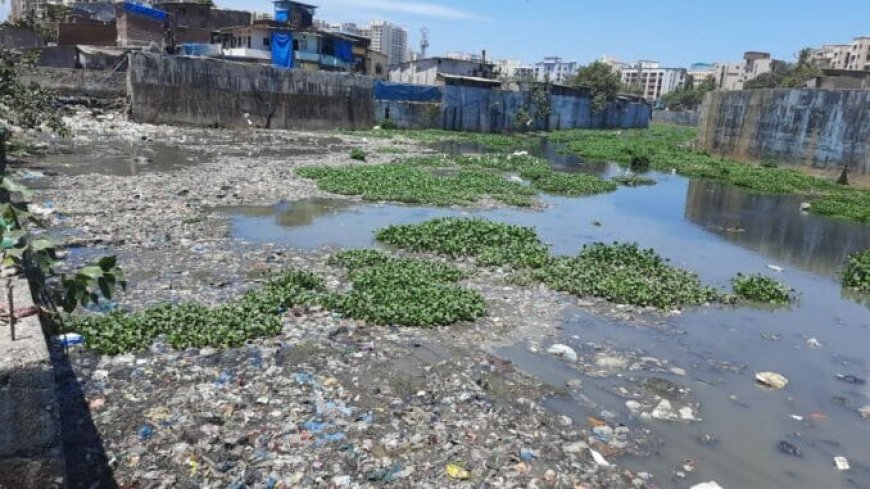
Even as Mumbai’s civic authorities pour thousands of crores of rupees into ambitious plans to rejuvenate the heavily polluted Mithi River, a fundamental question continues to linger: will these projects finally put an end to the sewage flows, flooding, and unbearable stench that have plagued the river for decades?
While experts acknowledge that the scale of current interventions is unprecedented, many argue that simpler, localized solutions—such as installing basic waste screens at sewage outfalls—could have delivered tangible improvements much earlier.
‘Engineering Alone Is Not a Silver Bullet’
Rakesh Kumar, former director of the National Environmental Engineering Research Institute (NEERI) and head of the Supreme Court-appointed expert committee on the Mithi, welcomed the renewed focus on sewage diversion but urged caution.
“Projects based on interception, diversion, and treatment are extremely complex and rarely provide instant solutions,” Kumar said. “They take years to complete and often fail to achieve full effectiveness.”
He emphasized that stopping sewage at its source is far more effective than rerouting waste through long underground tunnels. This approach, he noted, aligns with recommendations from IIT Bombay, which has advocated for decentralized treatment and reuse systems to help maintain year-round flow in the river.
Kumar added that the expert committee’s 2018 report had also proposed several nature-based interventions, which remain largely unimplemented.
Pollution Goes Beyond Sewage
According to Kumar, sewage is only one part of the problem. “A significant portion of the river’s degradation comes from unmanaged municipal waste, plastic, industrial effluents, sludge, and construction debris,” he said.
“Unless these pollutants are controlled at the neighborhood level, no amount of large-scale engineering will deliver a truly clean river.”
He also warned of uncertainties surrounding mega tunnelling projects. “There is no guarantee that a diversion tunnel of this scale will produce 100% results. Over the last two decades, we’ve tried channelization, widening, desilting, and flood-control works—yet the core issue remains unresolved.”
‘A City That Builds Everything Except a Clean River’
AD Sawant, former pro-vice chancellor of Mumbai University and a civil society representative on the expert committee, pointed to a striking contradiction.
“Mumbai has built some of the most complex infrastructure projects—the Coastal Road, deep underground metros, and massive tunnels,” he said. “Yet it has failed to clean a 17-kilometer river.”
Sawant stressed that much of the pollution is human-induced and warned against further development around the river. “If we are serious about reviving Mithi, the river basin must be treated as a strict no-development zone.”
Ecology Ignored, Concrete Prioritised
Architect and urban planner PK Das, another member of the committee, argued that the river’s ecological collapse is being overlooked.
“The Mithi has been reduced to a concrete-lined drain,” Das said. “This has destroyed natural processes and relationships that keep rivers alive.”
He criticized the authorities’ focus on large engineering budgets, noting that global best practices increasingly favor removing concrete embankments, restoring floodplains, and creating eco-sensitive riverfronts.
“Technology alone cannot save the river,” Das said. “Without ecological restoration, no project will succeed.”
Risk of a Bone-Dry River
Environmental activist Rishi Agarwal, co-founder of Mithi Sansad, warned of unintended consequences from aggressive sewage interception.
“If dry-weather flows are fully diverted, long stretches of the river could remain dry for most of the year,” he said.
Agarwal stressed that the real test will lie in daily operations. “Unless systems are run optimally, round-the-clock, the changes will remain on paper. Execution, not announcements, will decide Mithi’s future.
What's Your Reaction?
 Like
0
Like
0
 Dislike
0
Dislike
0
 Love
0
Love
0
 Funny
0
Funny
0
 Angry
0
Angry
0
 Sad
0
Sad
0
 Wow
0
Wow
0