




























Delhi–Meerut Namo Bharat Sees Record Ridership as 125,000 Passengers Travel in a Single Day
The Delhi–Ghaziabad–Meerut Namo Bharat corridor has recorded its highest-ever single-day ridership, with around 125,000 passengers using the service in one day. The milestone highlights the growing adoption of India's first Regional Rapid Transit System (RRTS) and its increasing role in daily commuting across the National Capital Region.

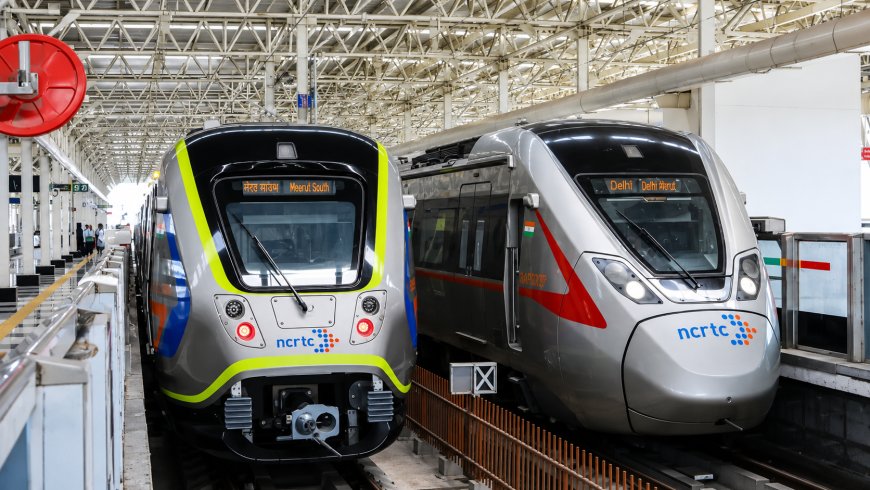
India's first Regional Rapid Transit System (RRTS), the Delhi–Ghaziabad–Meerut Namo Bharat corridor, has recorded its highest-ever daily ridership, with approximately 125,000 passengers travelling on the network in a single day.
The figure marks a significant milestone for the high-speed regional rail project, which was designed to reduce travel times across the National Capital Region (NCR) and provide an alternative to congested roads and conventional rail services.
According to the National Capital Region Transport Corporation (NCRTC), the latest ridership numbers represent the strongest daily performance since passenger services began. The achievement comes as more sections of the corridor become operational and awareness of the service continues to grow among commuters.
The Namo Bharat system connects Delhi, Ghaziabad and Meerut through a rapid transit network capable of significantly reducing journey times. Officials say the service has become increasingly popular among office workers, students and regular commuters who travel between the three cities.
The rise in passenger numbers reflects a broader shift towards public transportation in the NCR, where traffic congestion remains a major challenge. Transport experts note that faster travel times, modern stations, improved reliability and enhanced passenger amenities have contributed to the corridor's growing appeal.
The project is also viewed as a key part of India's wider infrastructure strategy. Policymakers have argued that regional rapid transit systems can help improve urban mobility, reduce dependence on private vehicles and support economic integration between cities.
While the record ridership figure is being celebrated as a sign of success, transportation analysts say the long-term impact of the project will depend on sustained passenger growth, operational efficiency and the completion of remaining sections of the corridor.
The latest milestone nevertheless provides an indication of the demand for high-capacity public transport in one of India's busiest urban regions. As the network expands, authorities expect ridership numbers to increase further, strengthening the role of Namo Bharat in the NCR's transport ecosystem.
For commuters, the record serves as evidence that rapid regional transit is becoming an increasingly important part of daily life, offering a faster and more predictable alternative to road travel in a region where mobility challenges continue to grow.
What's Your Reaction?
 Like
0
Like
0
 Dislike
0
Dislike
0
 Love
0
Love
0
 Funny
0
Funny
0
 Angry
0
Angry
0
 Sad
0
Sad
0
 Wow
0
Wow
0