






























Powerful 6.1 Magnitude Earthquake Near Cuba Shakes Caribbean Region
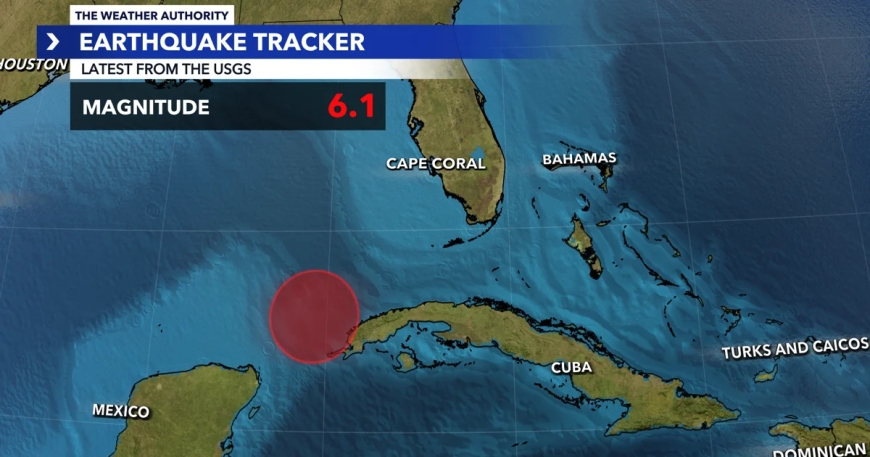
A powerful 6.1-magnitude earthquake struck off Cuba’s southern coast, sending tremors across parts of Mexico, the Cayman Islands and southern Florida. The quake has renewed concerns over seismic activity in the Caribbean, with experts describing it as one of the region’s strongest tremors in decades.

Strong Quake Strikes Off Cuba's Coast
A strong earthquake measuring 6.1 on the Richter scale struck near Cuba's southern coastline, sending tremors across several parts of the Caribbean and neighboring regions. The earthquake occurred beneath the sea floor, triggering widespread shaking that was felt far beyond the island nation. Residents reported sudden vibrations, swaying buildings and brief moments of panic as the tremor rippled through the region.
The earthquake's magnitude and reach made it one of the most significant seismic events recorded in the area in recent years, drawing the attention of emergency agencies and geological experts across the Americas.
Tremors Felt Beyond Cuba
Although the epicenter was located near Cuba, the earthquake's impact extended hundreds of kilometers from the source. Residents in parts of Mexico reported feeling light to moderate shaking, while people in southern Florida and the Cayman Islands also experienced tremors.
Social media platforms were flooded with videos and eyewitness accounts showing people evacuating buildings and gathering in open spaces as a precaution. While the shaking was brief in many locations, it was strong enough to be noticed across a wide geographical area, highlighting the power of the seismic event.
One of the Strongest Seismic Events in Decades
Seismologists noted that the earthquake ranks among the most powerful tremors to affect the region in recent decades. The Caribbean sits along a complex network of tectonic plate boundaries where the North American and Caribbean plates interact, making the region vulnerable to earthquakes.
Experts stated that while strong earthquakes are not uncommon in the Caribbean basin, an event of this magnitude capable of being felt across multiple countries remains relatively rare. The widespread reach of the tremor underscores the significant energy released beneath the Earth's surface.
Emergency Agencies Monitor Situation
Authorities in Cuba quickly began assessing the situation following the earthquake. Emergency response teams were dispatched to inspect infrastructure, public buildings, roads and coastal facilities for any signs of damage.
Government agencies urged residents to remain alert for possible aftershocks and to follow official safety advisories. Disaster management officials emphasized that inspections would continue until a complete picture of the earthquake's impact becomes available.
Neighboring countries also monitored developments closely, especially regions where the tremors were felt by local populations.
Tsunami Concerns Addressed
Following the earthquake, attention turned to the possibility of tsunami activity. Monitoring agencies evaluated seismic and oceanic data to determine whether the quake had generated dangerous waves.
While large offshore earthquakes often raise tsunami concerns, initial assessments indicated that there was no significant tsunami threat to coastal communities. Nevertheless, authorities continued monitoring sea-level activity as a precautionary measure.
Residents Describe Moments of Panic
Many residents across Cuba reported being awakened or startled by the sudden shaking. Witnesses described furniture moving, windows rattling and buildings swaying for several seconds. In some areas, people rushed outdoors fearing structural damage or further tremors.
In Mexico and Florida, where the shaking was weaker, residents still reported feeling unusual vibrations and movement. The widespread reports reflected the earthquake's remarkable reach across the Caribbean region.
Scientists Warn of Aftershocks
Geologists warned that aftershocks are a normal consequence of major earthquakes and could continue in the coming days. While most aftershocks are weaker than the main event, they can still be felt and occasionally cause additional damage if structures have already been weakened.
Experts urged residents in affected areas to remain prepared and stay informed through official channels. Emergency kits, evacuation plans and awareness of safe shelter locations remain important precautions in earthquake-prone regions.
Caribbean's Ongoing Seismic Challenge
The latest earthquake serves as another reminder of the Caribbean's vulnerability to tectonic activity. The region has experienced numerous significant earthquakes throughout history, some of which have resulted in major damage and loss of life. Scientists continue to study fault systems beneath the Caribbean Sea to better understand seismic risks and improve early-warning capabilities. As urban populations grow and coastal development expands, strengthening disaster preparedness remains a priority for governments across the region.
While initial reports suggested limited major damage, authorities continued conducting assessments in the hours following the earthquake. The full extent of any structural impacts will become clearer as inspections are completed.
For now, attention remains focused on monitoring aftershocks, ensuring public safety and evaluating whether additional emergency measures may be required. The event stands as one of the most widely felt earthquakes in the Caribbean in recent memory, demonstrating the far-reaching effects of powerful seismic activity beneath the region's waters.
What's Your Reaction?
 Like
0
Like
0
 Dislike
0
Dislike
0
 Love
0
Love
0
 Funny
0
Funny
0
 Angry
0
Angry
0
 Sad
0
Sad
0
 Wow
0
Wow
0