
























US Imposes 25% Tariff on Brazil, President Lula Hits Back at Trump: 'We Will Not Take Orders from Anyone'
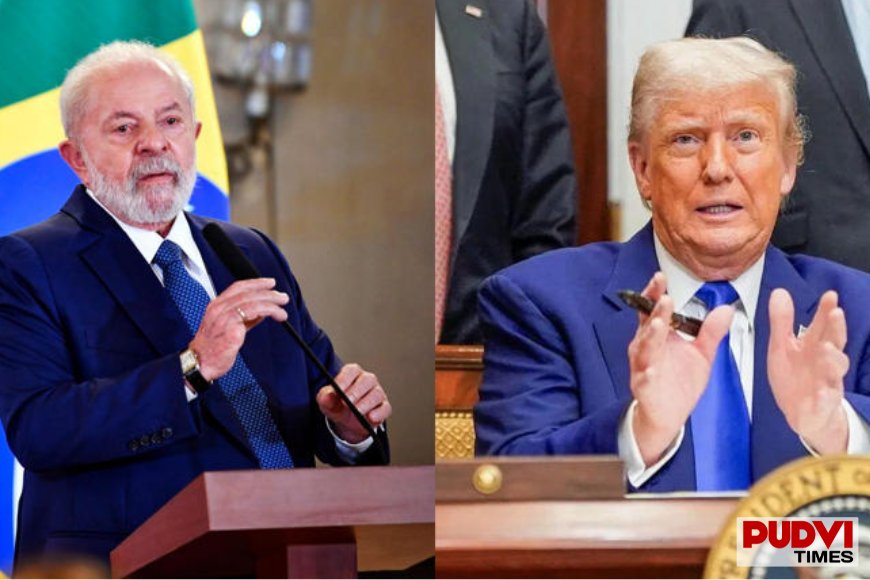
Tensions between the United States and Brazil have escalated after Washington imposed a 25% tariff on Brazilian imports. Brazilian President Luiz Inácio Lula da Silva strongly criticized Donald Trump's trade policy, asserting that Brazil is a sovereign nation that will not bow to foreign pressure.

US Imposes 25% Tariff on Brazil, President Lula Hits Back at Trump: 'We Will Not Take Orders from Anyone'
Trade tensions between the United States and Brazil have intensified after the US administration announced a 25% tariff on a range of Brazilian imports, prompting a sharp response from Brazilian President Luiz Inácio Lula da Silva. Condemning the move, Lula declared that Brazil is a sovereign nation that will not accept political or economic pressure from any foreign government. His remarks came amid growing concerns that the latest tariff decision could trigger a broader trade dispute between two of the largest economies in the Western Hemisphere. The development has attracted global attention, with economists and political analysts warning that prolonged tensions between Washington and Brasília could have implications for international trade, agricultural exports, commodity markets, and diplomatic relations.
According to the US administration, the tariff is part of its broader strategy to protect American industries and strengthen domestic manufacturing. President Donald Trump has consistently advocated an "America First" trade policy, arguing that higher tariffs are necessary to reduce trade imbalances, protect American jobs, and encourage domestic production. Over the years, similar tariff measures have been imposed on imports from countries including China, the European Union, Canada, and Mexico. Brazil has now become the latest major trading partner to face increased import duties under this approach. US officials maintain that the tariff is intended to ensure fair competition for American businesses, although critics argue that such measures could increase costs for consumers and disrupt global supply chains.
Reacting strongly to Washington's decision, President Lula rejected any suggestion that Brazil would alter its economic or foreign policy under external pressure. He emphasized that Brazil is an independent and democratic nation whose policies are determined by its Constitution and the interests of its people, not by foreign governments. In one of his strongest remarks since the tariff announcement, Lula said that Brazil "does not take orders from anyone" and that no country should attempt to dictate how another sovereign nation conducts its affairs. His comments were widely interpreted as a direct response to President Trump's aggressive trade strategy. Lula also indicated that Brazil is evaluating all available legal and diplomatic options, including raising the issue through the World Trade Organization (WTO) if necessary, while reiterating that dialogue remains the preferred path for resolving trade disagreements.
The tariff dispute comes at a time when trade plays a crucial role in the economic relationship between the two countries. The United States is one of Brazil's largest trading partners, while Brazil is a key supplier of agricultural products, minerals, steel, aluminum, and manufactured goods to the American market. Brazilian exports such as coffee, orange juice, sugar, beef, soybeans, and iron ore contribute significantly to the country's economy. A 25% tariff on selected imports could reduce the competitiveness of Brazilian products in the US market, potentially affecting exporters, producers, and workers across multiple industries. On the other hand, American businesses that rely on Brazilian raw materials and agricultural commodities may also experience higher import costs, which could ultimately be passed on to consumers through increased prices.
Economists believe the dispute extends beyond tariffs and reflects broader differences in economic philosophy and international diplomacy. President Lula has consistently advocated stronger cooperation among developing nations, expanded BRICS partnerships, and a more multipolar global order. His administration has sought to diversify Brazil's trade relationships while reducing dependence on any single market. President Trump, by contrast, has focused on prioritizing American economic interests through protectionist trade measures, arguing that higher tariffs encourage domestic investment and industrial growth. These contrasting approaches have occasionally placed the two leaders at odds on issues ranging from trade and climate policy to international governance and geopolitical strategy.
The latest tariff announcement has also raised concerns among global investors and multinational companies operating in both countries. Businesses often depend on stable trade policies and predictable regulations to plan long-term investments. Any prolonged dispute between the United States and Brazil could create uncertainty in sectors such as agriculture, aviation, mining, automotive manufacturing, and energy. Several trade associations have already urged both governments to engage in constructive negotiations rather than escalating retaliatory measures. Industry representatives argue that tariff wars rarely produce long-term winners and often result in higher costs, disrupted supply chains, and reduced economic growth for all parties involved.
Analysts also point out that the timing of the dispute is particularly significant because the global economy continues to face multiple challenges, including geopolitical instability, inflationary pressures, volatile energy prices, and ongoing supply chain disruptions. Additional trade barriers between major economies could further complicate international commerce and slow global economic recovery. Commodity markets are watching developments closely, especially because Brazil is one of the world's leading exporters of agricultural products and natural resources. Any reduction in Brazilian exports to the United States could influence global prices and redirect trade flows toward other major markets such as China, the European Union, and countries in the Middle East.
Despite the strong rhetoric from both sides, diplomatic channels remain open. Brazilian officials have indicated that they are willing to engage in discussions aimed at reaching a mutually beneficial solution. At the same time, they have stressed that Brazil will defend its economic interests if negotiations fail. Possible responses include filing a complaint through the WTO, strengthening trade partnerships with other countries, introducing reciprocal tariffs where permitted under international rules, or implementing domestic measures to support affected industries. Meanwhile, US policymakers are expected to closely monitor the economic impact of the tariff decision on American businesses and consumers before considering any further adjustments.
Political observers believe that the dispute could also carry domestic political implications in both countries. Trade policy has become an increasingly important issue in election campaigns, with leaders often presenting tariff measures as a way to protect national industries and workers. However, economists frequently caution that while tariffs may benefit certain domestic sectors in the short term, they can also increase production costs, reduce consumer choice, and invite retaliatory measures from trading partners. The ultimate outcome will depend on whether the two governments prioritize negotiation and compromise over confrontation.
For now, international markets, businesses, and policymakers will closely watch the next steps taken by Washington and Brasília. If diplomatic efforts succeed, the dispute may be resolved through negotiations without causing major disruptions to bilateral trade. However, if both sides continue to escalate their positions through additional tariffs or retaliatory measures, the conflict could evolve into a broader trade confrontation with consequences extending well beyond the United States and Brazil. As one of the world's largest economies and one of Latin America's most influential nations navigate this latest disagreement, the outcome will likely shape future trade relations and send important signals about the direction of global economic policy in the years ahead.
What's Your Reaction?
 Like
0
Like
0
 Dislike
0
Dislike
0
 Love
0
Love
0
 Funny
0
Funny
0
 Angry
0
Angry
0
 Sad
0
Sad
0
 Wow
0
Wow
0