






















South Korea Appeals Court Reduces Sentence of Former Prime Minister in High-Profile Martial Law Case
A South Korean appeals court has reduced the sentence of a former prime minister involved in a high-profile martial law-related case, reigniting national debate over political accountability, abuse of power, and the country’s democratic history. The ruling has drawn widespread attention across South Korea’s political and legal circles.

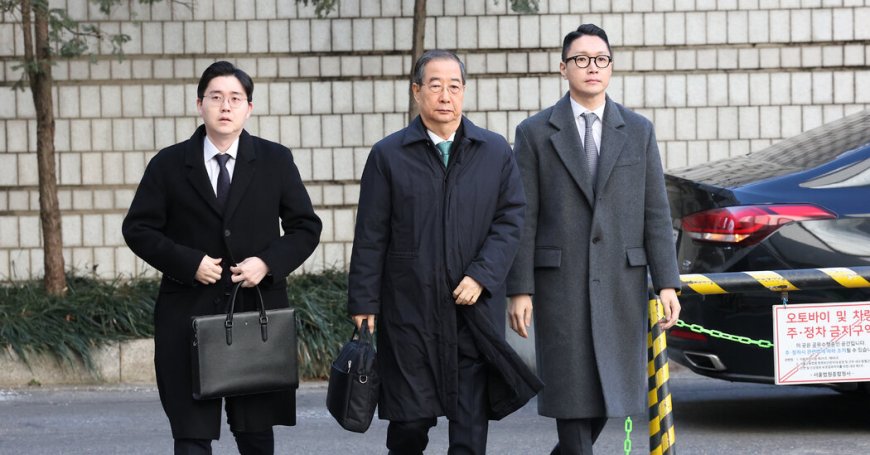
A South Korean appeals court has reduced the prison sentence of a former prime minister convicted in connection with a politically sensitive martial law-related case, a decision that has once again placed the country’s turbulent political history under public scrutiny.
The ruling, delivered by the Seoul High Court on Wednesday, partially overturned an earlier lower court judgment that had imposed a harsher punishment on the former senior official over allegations linked to abuse of authority and unconstitutional actions during a period of political unrest.
Although the court upheld key parts of the conviction, judges ruled that certain charges warranted a lighter sentence after reviewing evidence, legal arguments, and mitigating circumstances presented during the appeal process. The court stated that while the actions were serious and damaging to democratic principles, the revised sentence better reflected the defendant’s level of involvement and responsibility.
The case has remained one of South Korea’s most closely watched political trials in recent years, drawing intense media attention and public debate over the legacy of martial law and authoritarian governance in the country.
Prosecutors had accused the former prime minister and several other officials of participating in efforts to undermine democratic institutions and expand emergency powers during a politically volatile period. Investigators argued that the actions violated constitutional protections and represented an abuse of state authority.
Defense lawyers, however, maintained that the former official acted within the framework of national security concerns at the time and denied allegations of deliberate attempts to weaken democratic systems. The legal team welcomed the appeals court decision, calling it a recognition that the original punishment had been excessive.
The reduced sentence has sparked mixed reactions across South Korea’s political landscape. Opposition lawmakers criticized the ruling, arguing it could weaken accountability for powerful political figures and send the wrong message regarding abuses of power. Supporters of the former prime minister, meanwhile, described the decision as fair and legally balanced.
Political analysts say the case reflects South Korea’s continuing struggle to confront controversial chapters of its modern political history, particularly issues surrounding military influence, emergency rule, and democratic reforms that shaped the country in previous decades.
The ruling also arrives at a time of heightened political tensions in South Korea, where debates over judicial independence, executive authority, and constitutional protections have become increasingly prominent ahead of future national elections.
Legal experts believe prosecutors could still consider taking the case to the Supreme Court, though no final decision has yet been announced. If appealed further, the case may continue to influence South Korea’s political discourse for months to come.
South Korea transitioned from military-backed rule to a democratic system in the late 20th century, but historical controversies connected to martial law and political repression continue to remain highly sensitive subjects within the country’s public and political life.
What's Your Reaction?
 Like
0
Like
0
 Dislike
0
Dislike
0
 Love
0
Love
0
 Funny
0
Funny
0
 Angry
0
Angry
0
 Sad
0
Sad
0
 Wow
0
Wow
0