




















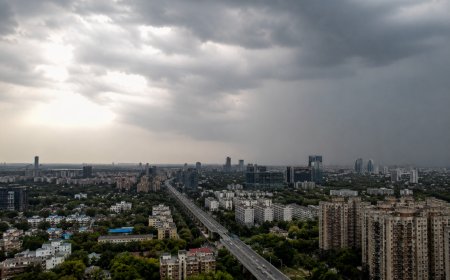














Deadly Ukrainian Drone Strikes Hit Russian Online Retail Warehouses, Killing Workers and Damaging Key Logistics Hubs
A wave of Ukrainian drone strikes targeted warehouses belonging to Russia's largest online retailer, leaving multiple workers dead and dozens injured. The attacks also hit an oil depot near Moscow, marking one of Ukraine's most significant long-range operations against Russia's logistics infrastructure.

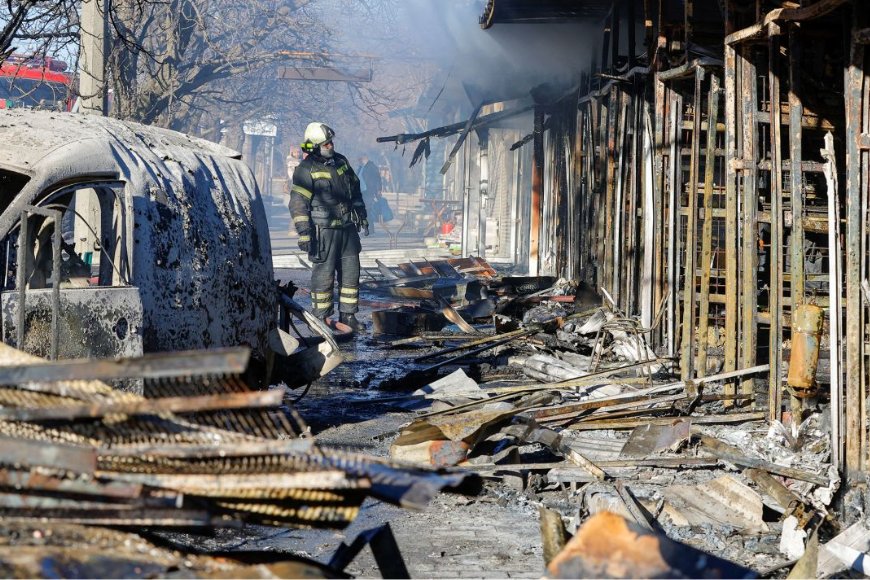
Russian Online Retail Warehouses Hit by Deadly Ukrainian Strikes
The Russia-Ukraine war entered another intense phase after a series of long-range Ukrainian drone strikes targeted key logistics facilities inside Russian territory, including warehouses operated by Russia's largest online retailer. The coordinated overnight attacks left several workers dead, dozens injured, and triggered large fires that disrupted one of the country's major commercial supply chains. The strikes also damaged an oil storage facility near Moscow, underscoring Ukraine's growing ability to conduct deep attacks against strategic infrastructure far from the battlefield. Russian officials described the incident as one of the deadliest drone attacks on civilian logistics facilities since the conflict began, while Ukraine said the targeted sites were being used to support Russia's military production and supply network.
According to Russian regional authorities, the deadliest strike occurred at a logistics center operated by Wildberries, Russia's largest e-commerce company, located in Kotovsk in the Tambov region. Officials reported that seven night-shift workers lost their lives after drones struck the warehouse, while at least 24 others were injured. Emergency services rushed to the scene as massive fires engulfed sections of the facility. Firefighters spent hours bringing the blaze under control while rescue teams searched damaged areas for survivors. Authorities said medical teams transported the injured to nearby hospitals, with several reported to be in serious condition. The attack sent shockwaves across the region, raising fresh concerns over the vulnerability of Russia's commercial infrastructure to increasingly sophisticated long-range drone operations.
A second Wildberries logistics center in Elektrostal, east of Moscow, was also struck during the same wave of attacks. Russian officials reported that another 24 people were injured as explosions and fires damaged the warehouse complex. Employees were evacuated while emergency responders worked to contain the flames and prevent further destruction. Videos circulating on social media appeared to show thick black smoke rising above the facility as firefighters battled the blaze. Although authorities have not released a full assessment of the structural damage, operations at the warehouse were significantly disrupted, affecting one of Russia's largest online retail distribution networks.
Beyond the warehouse attacks, Ukrainian drones also targeted an oil depot in Noginsk, near Moscow. The strike ignited a major fire, prompting emergency evacuations in the surrounding area, including the relocation of patients from a nearby maternity hospital as a precaution. Two people were reportedly injured in the incident. While Russian officials confirmed the fire, they did not immediately disclose the full extent of the damage to the fuel storage facility. Energy infrastructure has increasingly become a focus of Ukraine's long-range campaign, with Kyiv seeking to disrupt fuel supplies that could support Russia's military operations.
Russian authorities stated that air defense systems intercepted hundreds of Ukrainian drones across multiple regions during the overnight assault. According to the Russian Defense Ministry, 379 drones were intercepted over 19 regions, including areas around Moscow, Crimea, and the Black Sea. Despite these interceptions, several drones managed to penetrate defenses and strike their intended targets, highlighting the growing complexity and scale of Ukraine's drone campaign. The attacks demonstrate that even heavily defended regions deep inside Russia remain vulnerable to coordinated aerial operations involving large numbers of unmanned aircraft.
Ukrainian President Volodymyr Zelenskyy publicly acknowledged the strikes, stating that Ukraine deliberately targeted logistics facilities that were allegedly being used to supply sanctioned components for Russian drone production and navigation systems. According to Kyiv, the operations were intended to weaken Russia's military-industrial capabilities rather than target civilian commerce. Ukrainian officials argued that disrupting logistics networks supporting military manufacturing forms part of their broader strategy to reduce Russia's ability to sustain offensive operations against Ukrainian cities and infrastructure. Russia, however, rejected that characterization and described the attacks as strikes against civilian facilities that resulted in significant loss of life among workers.
The attacks reflect the evolving nature of the Russia-Ukraine conflict, where both sides are increasingly relying on long-range drones to strike strategic targets far behind front lines. Since the war began, drone technology has become one of the defining features of modern warfare, allowing relatively inexpensive unmanned aircraft to threaten military bases, energy infrastructure, industrial facilities, logistics centers, and transportation hubs. Ukraine has significantly expanded the range and sophistication of its domestically produced drones, enabling strikes hundreds of kilometers inside Russian territory. In response, Russia has strengthened air defense systems around major cities and strategic facilities, yet recent attacks suggest that preventing every incoming drone remains extremely difficult.
Military analysts note that logistics hubs have become increasingly valuable targets because they serve as critical links connecting production facilities, transportation networks, and military supply chains. Disrupting warehouses, distribution centers, fuel depots, and transportation infrastructure can slow equipment deliveries, interrupt industrial production, and create logistical challenges without necessarily attacking frontline military positions. However, such operations also carry the risk of civilian casualties whenever commercial facilities employ large workforces or perform both civilian and military-related functions.
The strikes also highlight the growing economic dimension of the conflict. Wildberries is Russia's largest online marketplace, serving millions of customers and operating an extensive network of warehouses and distribution centers throughout the country. Damage to major logistics hubs can affect supply chains, delay deliveries, increase operating costs, and disrupt commercial activity beyond the immediate impact of the attacks. Businesses operating within conflict-affected regions continue facing increasing uncertainty as infrastructure becomes more exposed to long-range warfare.
International observers are closely monitoring the escalation because attacks on infrastructure inside Russia could influence future military planning, diplomatic negotiations, and security policies. As both Russia and Ukraine continue expanding drone capabilities, experts warn that the conflict is entering a new phase in which industrial, commercial, and logistical facilities may increasingly become strategic objectives. This evolving battlefield extends far beyond traditional front lines, bringing the consequences of war deeper into both countries.
The humanitarian impact also remains significant. Families of workers killed in the warehouse attacks are mourning loved ones, while dozens of injured employees continue receiving medical treatment. Commercial workers, emergency responders, and local communities increasingly find themselves exposed to risks previously associated primarily with military zones. The attacks underscore how modern conflicts often blur the distinction between military and civilian infrastructure, particularly when logistics networks are alleged to support wartime production.
The latest drone campaign comes amid continued Russian missile and drone strikes on Ukrainian cities, creating a cycle of reciprocal long-range attacks that has intensified over recent months. Both sides argue that their military operations are aimed at weakening the other's war-fighting capabilities, while international organizations continue expressing concern over the humanitarian consequences of attacks affecting civilian populations and infrastructure.
Conclusion
The deadly Ukrainian drone strikes on Russian online retail warehouses and an oil depot mark another significant escalation in the evolving Russia-Ukraine conflict. While Ukraine maintains that the targeted logistics centers supported Russia's military production network, Russian authorities say the attacks killed workers and damaged civilian infrastructure. As long-range drone warfare continues to expand, both countries are increasingly witnessing the battlefield extend far beyond traditional combat zones. The latest attacks demonstrate that logistics networks, industrial facilities, and critical infrastructure have become central targets in a conflict where technology, supply chains, and strategic disruption are playing an ever-growing role alongside conventional military operations.
What's Your Reaction?
 Like
0
Like
0
 Dislike
0
Dislike
0
 Love
0
Love
0
 Funny
0
Funny
0
 Angry
0
Angry
0
 Sad
0
Sad
0
 Wow
0
Wow
0