




























US and Iran Reach Breakthrough Peace Framework, Paving Way for Strait of Hormuz Reopening
The United States and Iran have announced a preliminary peace framework aimed at ending months of conflict, reopening the Strait of Hormuz, and launching negotiations on sanctions relief and nuclear issues, offering hope for stability in global energy markets.

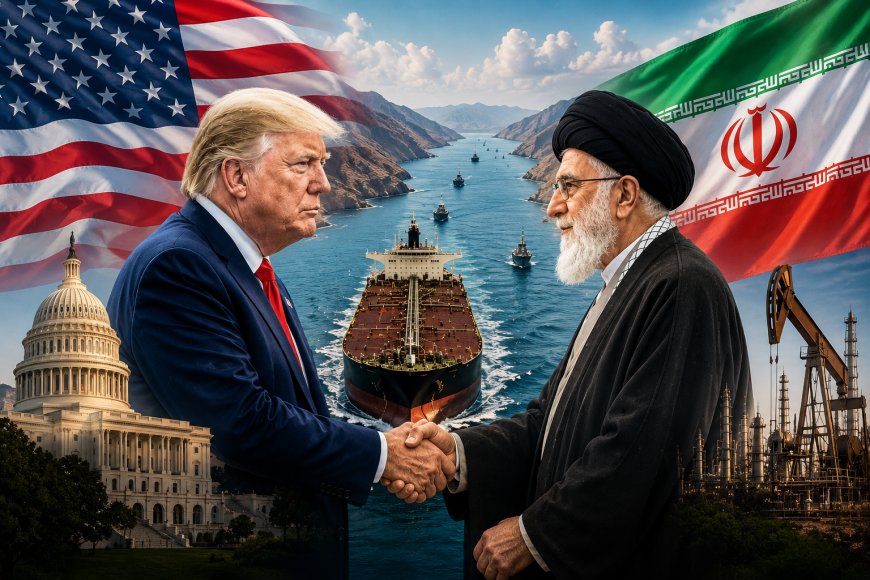
The United States and Iran have announced a framework agreement designed to end months of hostilities and reopen the strategically vital Strait of Hormuz, a move that could have significant implications for global energy markets and regional stability.
The preliminary deal, described by officials as a diplomatic breakthrough, includes plans to extend a ceasefire, restore commercial shipping through the Strait of Hormuz, and begin negotiations on a broader agreement covering sanctions relief, security concerns, and Iran's nuclear programme. The framework is expected to be formally signed in Switzerland later this week. Recent reports indicate that the agreement was facilitated through mediation efforts involving regional and international partners.
The Strait of Hormuz is one of the world's most important maritime chokepoints, carrying roughly one-fifth of global oil and liquefied natural gas shipments. Its closure during the conflict disrupted energy supplies, pushed oil prices higher, and raised concerns about inflation and economic growth worldwide. News of the agreement triggered an immediate reaction in financial markets, with oil prices falling sharply and stock markets posting gains as investors welcomed signs of de-escalation.
According to details emerging from the draft framework, Iran would reopen the Strait of Hormuz to commercial shipping while the United States would lift its naval blockade on Iranian ports. The agreement also reportedly includes a commitment by Washington not to impose new sanctions during the negotiation period, while discussions continue over the future of existing sanctions and access to frozen Iranian assets.
The framework further outlines a 60-day period of negotiations aimed at reaching a comprehensive settlement. Among the most sensitive issues are Iran's nuclear activities, uranium enrichment programme, and broader regional security concerns. Iranian officials have indicated that Tehran would maintain the current status of its nuclear programme during the talks and reaffirm its commitment not to pursue nuclear weapons, while the United States and its allies would consider measures related to sanctions relief.
Despite the optimism surrounding the announcement, analysts caution that the agreement remains a framework rather than a final peace treaty. Several contentious issues remain unresolved, and both sides must still translate broad commitments into detailed, enforceable arrangements. Previous attempts at de-escalation in the region have faced setbacks, leading some observers to warn that the path to a lasting settlement may remain fragile.
Nevertheless, the announcement marks one of the most significant diplomatic developments in the Middle East in recent years. If successfully implemented, the deal could reduce regional tensions, restore confidence in global energy supplies, and create an opportunity for wider negotiations between Washington and Tehran after years of confrontation.
What's Your Reaction?
 Like
0
Like
0
 Dislike
0
Dislike
0
 Love
0
Love
0
 Funny
0
Funny
0
 Angry
0
Angry
0
 Sad
0
Sad
0
 Wow
0
Wow
0