


































China Builds World's Largest Superconducting Magnet to Power Its 'Artificial Sun' Project
China has achieved a major milestone in nuclear fusion by developing the world's largest superconducting magnet for its Artificial Sun project. The breakthrough is expected to strengthen plasma confinement and accelerate the country's pursuit of clean, limitless fusion energy.

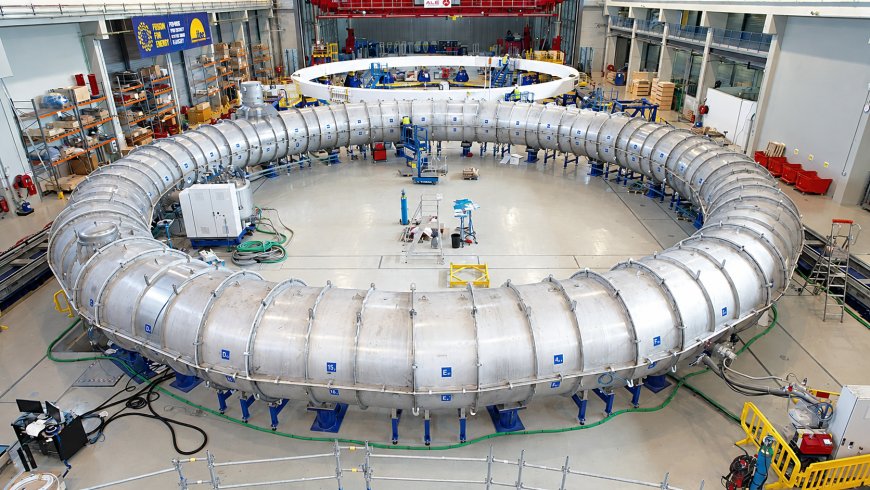
China has marked another significant milestone in the global race for clean energy by successfully developing the world's largest superconducting toroidal field magnet for its ambitious Artificial Sun (Nuclear Fusion) project. The achievement is expected to enhance the country's capability to sustain ultra-high-temperature plasma, bringing commercial fusion energy a step closer to reality.
The newly developed magnet has been designed for use in China's next-generation fusion reactor and has successfully completed engineering tests before integration into the experimental system.
What is China's Artificial Sun?
Despite its name, the Artificial Sun is not an actual sun. It is a nuclear fusion reactor designed to recreate the same energy-producing process that powers the Sun. Inside the reactor, hydrogen isotopes are heated to temperatures exceeding 100 million degrees Celsius, forming plasma. Powerful superconducting magnets then confine this plasma without allowing it to touch the reactor walls, enabling scientists to study sustained nuclear fusion. Unlike conventional nuclear reactors based on fission, fusion produces significantly less radioactive waste and has the potential to generate virtually unlimited clean electricity.
World's Largest Superconducting Magnet
According to Chinese researchers, the newly built superconducting magnet is the largest of its kind ever developed for a fusion reactor.
Some of its key highlights include:
- Weighs approximately 582 tonnes
- Around 30% larger than comparable fusion magnets currently in operation
- Offers nearly three times greater magnetic energy storage capacity
- Manufactured using entirely indigenous Chinese technology and superconducting materials
- Designed to maintain powerful magnetic fields required for long-duration plasma confinement
The successful completion of this magnet represents one of the most technically challenging components of China's fusion program.
Why is the Magnet So Important?
Fusion reactions require plasma to remain extremely stable at temperatures far hotter than the Sun's core. Since no material can physically contain such heat, superconducting magnets generate intense magnetic fields that suspend the plasma in mid-air inside a doughnut-shaped chamber called a tokamak. The stronger and more stable these magnetic fields are, the greater the chances of sustaining fusion reactions for longer durations—an essential step toward producing commercial electricity.
Global Fusion Race Intensifies
China's breakthrough comes as several countries continue investing heavily in nuclear fusion research. Major international projects, including Europe's ITER reactor, as well as research initiatives in the United States, Japan and South Korea, are working toward achieving commercially viable fusion power. China has consistently expanded its investment in fusion technology through its EAST (Experimental Advanced Superconducting Tokamak) program and newer next-generation reactors aimed at extending plasma operation times and improving reactor efficiency.
Potential Impact on Future Energy
If commercial fusion becomes viable, it could revolutionize global energy production by providing:
- Nearly limitless clean energy
- Minimal greenhouse gas emissions
- Reduced dependence on fossil fuels
- Enhanced long-term energy security
- Lower levels of long-lived radioactive waste compared to conventional nuclear power
Although commercial deployment remains years away, each technological breakthrough—including advanced superconducting magnets—brings scientists closer to making fusion power a practical reality. China's successful development of the world's largest superconducting magnet represents a major engineering and scientific achievement in nuclear fusion research. While commercial fusion energy is still under development, the breakthrough strengthens China's position in the global race to develop one of the most promising clean energy technologies of the future.
What's Your Reaction?
Like
0
Dislike
0
Love
0
Funny
0
Angry
0
Sad
0
Wow
0