































Why Russia Wants the BrahMos Missile in Its Military Arsenal
Russia is exploring the induction of the BrahMos supersonic cruise missile into its armed forces, highlighting the growing strategic value of a weapon jointly developed by India and Russia. The move underlines BrahMos' reputation as one of the world's fastest and most versatile cruise missiles.

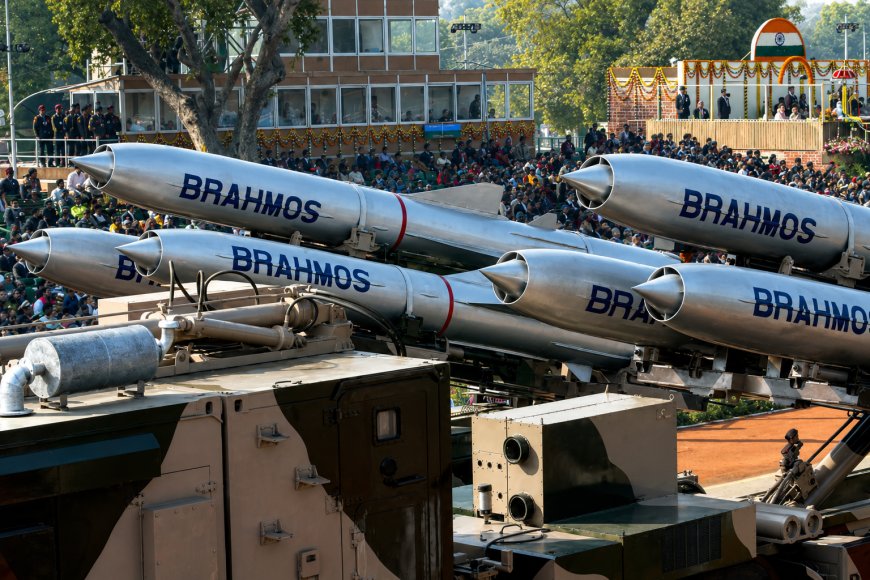
For more than two decades, the BrahMos missile has symbolised defence cooperation between India and Russia. Now, in a development that has drawn international attention, Russia itself is considering inducting the missile into its armed forces.
The possibility was revealed by BrahMos Aerospace Chief Jaiteerth Joshi, who said discussions are underway with Russian authorities regarding the missile's future role within Russia's military. According to him, Moscow is keen to expand its requirements and is exploring ways to strengthen production capacity to meet emerging operational needs. Recent statements from BrahMos Aerospace indicate that talks between the two countries are actively progressing.
The development is notable because BrahMos is not merely an Indian weapon. It was created through a joint venture between India's Defence Research and Development Organisation (DRDO) and Russia's NPO Mashinostroyenia. Since its first successful test in 2001, the missile has evolved into one of the most capable cruise missile systems in service, deployed by the Indian Army, Navy and Air Force.
Military analysts point to three key reasons behind Russia's interest.
The first is speed. BrahMos travels at nearly three times the speed of sound, making it significantly faster than many conventional cruise missiles. Its supersonic speed reduces enemy reaction time and increases the probability of successfully reaching its target.
The second factor is versatility. The missile can be launched from land, sea, air and submarine platforms. This flexibility allows armed forces to deploy it across multiple combat scenarios, from naval warfare to precision strikes against high-value land targets.
The third advantage is precision. BrahMos has built a reputation for accurate strikes against strategic targets while maintaining a relatively low flight profile, making interception difficult. Defence experts often regard it as one of the most effective conventional deterrence weapons currently available.
Russia's interest also comes at a time when the BrahMos programme is entering a new phase. India and Russia are jointly working on smaller and more advanced variants, including the BrahMos-NG (Next Generation) and a future hypersonic version commonly referred to as BrahMos-II. These projects are expected to deliver greater speed, improved stealth characteristics and enhanced strike capabilities.
Beyond military capability, the missile has also become a significant export success story. The Philippines has already signed a contract for the system, while Vietnam and several other countries have either entered agreements or expressed interest in acquiring it. The growing international demand has transformed BrahMos from a bilateral defence project into one of India's most successful defence exports.
For Russia, inducting BrahMos would represent more than just the acquisition of a missile. It would demonstrate confidence in a system that has matured through decades of Indo-Russian cooperation and has emerged as a globally recognised weapon platform.
As discussions continue, the prospect of Russia deploying a missile that it helped create alongside India marks a unique chapter in modern defence collaboration. It also highlights how BrahMos has evolved from a joint research project into a weapon system sought after by militaries around the world.
What's Your Reaction?
 Like
0
Like
0
 Dislike
0
Dislike
0
 Love
0
Love
0
 Funny
0
Funny
0
 Angry
0
Angry
0
 Sad
0
Sad
0
 Wow
0
Wow
0